Beef cattle diseases: IBR, BVD, TB and bluetongue compared
IBR, BVD, bovine TB and bluetongue are the beef cattle diseases farmers ask about most. They spread in different ways and show different signs, and some are under official control. We compare them here and explain what to do when you buy animals or suspect disease.
verifiedFrom the team that has organised work on poultry farms for years.
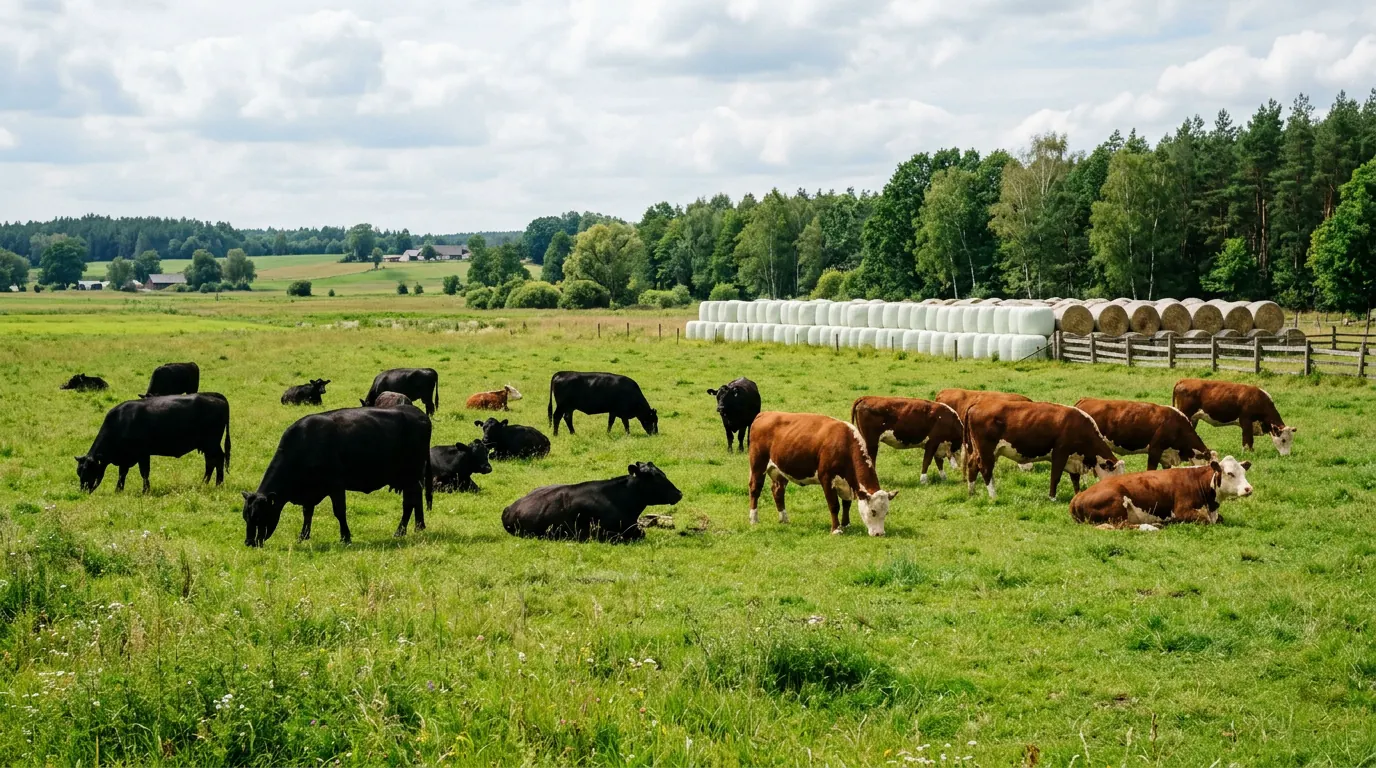
The beef cattle diseases that raise the most questions are IBR (infectious bovine rhinotracheitis), BVD (bovine viral diarrhea), bovine tuberculosis and bluetongue. They differ in how they spread, what signs they cause and whether the state runs an official control program. Below we compare them briefly and say what to do in the herd. We do not diagnose or choose treatment from a description: your vet, who knows your animals, decides on medicine and dose. For each disease we say where the data comes from. See also our guides to IBR, BVD and bluetongue.
The table in short
IBR: caused by the BoHV-1 virus. Signs: fever, cough, discharge from the nose and eyes, and in cows abortions and lower milk yield. Spread: direct contact and droplets. BVD: caused by the BVDV virus. Signs: fever, diarrhea, inflamed mucous membranes, abortions, weak calves. Spread: secretions of sick animals, including animals persistently infected before birth. TB: caused by Mycobacterium bovis. Signs are often scarce for a long time: weight loss, a chronic cough, enlarged lymph nodes. Spread: through the airways, and people can be infected too. Bluetongue: a virus carried by insects (tiny Culicoides midges). Signs: fever, swelling and blue discoloration of the tongue and the mucous membranes of the mouth, loss of condition. Spread: insect bites, not direct contact.
IBR and BVD: respiratory and reproductive disease
IBR (infectious bovine rhinotracheitis)
IBR is caused by the BoHV-1 virus. In cattle it shows as fever, cough, discharge from the nose and eyes, and loss of appetite. Pregnant cows may abort, and the herd may see lower milk yield and performance. The virus stays in the body after recovery, so an animal can be a carrier with no visible signs. That is why, when you bring in new animals, an antibody test counts, not just observation. Your vet makes the diagnosis and decides on vaccination.
BVD (bovine viral diarrhea)
BVD is caused by the BVDV virus. The worst case is a calf infected in the womb: it is born persistently infected, sheds the virus all its life and infects the herd. In adult cattle the signs are fever, diarrhea, weakness and abortions. Describing control rules, Teagasc (Ireland's agriculture and food development authority) names testing animals at purchase and isolating new animals as the basic measures. If you suspect infection, call your vet, who will take the right samples.
Bovine TB and bluetongue
Bovine tuberculosis
Bovine TB is caused by Mycobacterium bovis bacteria. The disease develops slowly, so it may show no clear signs for a long time: the animal loses weight and has a chronic cough, and lesions in the lymph nodes are found at the slaughterhouse. TB can infect people too, so animals suspected of the disease must not be sold without a veterinary check. In Poland bovine TB is under official control. The county veterinary officer (powiatowy lekarz weterynarii) gives the details and reporting duties.
Bluetongue
Bluetongue is carried by blood-sucking insects, tiny midges of the genus Culicoides. It does not pass directly between animals, and the risk rises in warm, humid weather when insects are most numerous. Signs are fever, swelling and blue discoloration of the tongue and the mucous membranes of the mouth, and loss of condition. If you see these signs in several animals, tell your vet as soon as possible. Limiting contact with insects lowers the risk but does not replace a diagnosis.
Tests when buying cattle
What the Teagasc manual recommends
In its manual for beef farmers, Teagasc sets out a rule: ideally buy only animals tested for BVD virus before purchase, and keep them in isolation for 28 days after purchase. If that is not possible, test on arrival and also isolate for 28 days. For IBR the manual advises a blood test for antibodies 28 days after arrival. For Johne's disease it advises a blood test and a faecal test. Agree the range of tests with your vet, because it depends on the situation in your region and herd.
Grazing together with sheep
Teagasc points out that grazing cattle and sheep together can spread diseases between the species, including BVD, Johne's disease and leptospirosis. Decide on such grazing after talking to your vet. Mixed grazing also has advantages: sheep eat weeds that cattle refuse, and a lower cattle stocking density on a given area dilutes gastrointestinal worms. Always weigh the benefits against the risk of disease.
Calving and calves: the most exposed moment
Calving is a high-risk period
Teagasc describes calving as a high-risk event for both the cow and the calf. Difficult, delayed births raise the risk of infection for the dam. A newborn calf is exposed to many infections that lead to navel infection, diarrhea and pneumonia. Keep the calving pen bedding clean and dry and watch calves in their first days. If a calf is weak or has diarrhea, call your vet right away, because a quick response often matters for how the illness goes.
Observation and records
A daily check of the herd covers appetite, behavior, breathing and dung. Record every case with the date, ear tag number and signs. These notes help your vet judge faster whether it is a single case or a herd problem. Record the medicines given and withdrawal dates in the Treatment and withdrawal module. You can also link animal data with registers through IRZplus integrations (IRZplus is ARiMR's online animal register).
What to do in the herd when you suspect disease
Isolation and reporting
Isolate sick or suspect animals from the rest of the herd if conditions allow. Limit the movement of people and equipment between groups, and arrange the work so healthy animals are handled first and sick ones last. Report the suspicion to your vet, who will decide on tests and on whether to notify the county veterinary officer. Do not move animals to another farm without your vet's consent.
Biosecurity and withdrawal periods
A biosecurity plan covers rules for vehicle entry, washing and disinfecting equipment, access to feed and water, and contact with wildlife. Write it up in the biosecurity plan generator and put it in place step by step. When you treat animals, remember the withdrawal period: the time after a medicine is given during which you must not sell milk or meat. Your vet and the medicine leaflet give the length, and it is worth keeping the record in your herd documents. For the rules and paperwork, see regulations for beef cattle keepers.
Frequently asked questions
How do you recognize IBR in cattle?add
IBR causes fever, cough, discharge from the nose and eyes, and loss of appetite. Other respiratory diseases look similar, so appearance alone is not enough for a diagnosis. Your vet will run an antibody test or take other suitable samples.
Is BVD dangerous for the whole herd?add
Yes, especially because of animals persistently infected before birth, which shed the virus all their lives. That is why, when you buy animals, Teagasc recommends testing and isolating new animals for 28 days.
Does bluetongue spread from cow to cow?add
Not directly. Insects carry the virus, so the risk rises in warm, humid months. Report a suspicion to your vet and talk to them about limiting contact with insects.
Is bovine TB under official control?add
In Poland bovine TB is under official control. The county veterinary officer gives the reporting duties and rules, and the Chief Veterinary Inspectorate (Główny Inspektorat Weterynarii, GIW) publishes information. Rules change, so check the current position on the GIW website.
How many days should you isolate bought cattle?add
Teagasc gives 28 days after purchase, both when the animal was tested before purchase and when it was tested on arrival. Set the isolation plan for your herd with your vet.
Does the withdrawal period apply to milk and meat from cows?add
Yes. The withdrawal period is the time after a medicine is given during which you must not sell milk or meat from that animal. Your vet and the medicine leaflet give the length, and you should record it in your herd documents.
Sources & resources
- linkTeagasc — Teagasc Beef Manual — Section 6: Nutrition
- linkTeagasc — Teagasc Beef Manual — Section 7: Animal Health
- linkChief Veterinary Inspectorate (Główny Inspektorat Weterynarii) — gov.pl/web/wetgiw
- linkNational Research Institute of Animal Production (Instytut Zootechniki PIB) — izoo.krakow.pl
Prepared by: DlaFerm Team based on data from the sources listed · Publisher: INSTA-TECH sp. z o.o.
Do you keep a beef herd and want treatment under control?
The Treatment and withdrawal module keeps the medicines you gave, withdrawal dates and vet contacts in one place. Create a free farm account in DlaFerm.pl or get in touch, and we will show you how it works in practice.
Phone
+48 796 258 151