IBR in cattle: symptoms, vaccination, herd status
IBR (infectious bovine rhinotracheitis) is a viral disease, and the virus stays in the animal after infection. The signs are easy to confuse with other respiratory diseases, and herd status is set by tests and records. We explain how to recognize the disease, how to lower the risk when you buy animals and how to talk to your vet about vaccination.
verifiedFrom the team that has organised work on poultry farms for years.
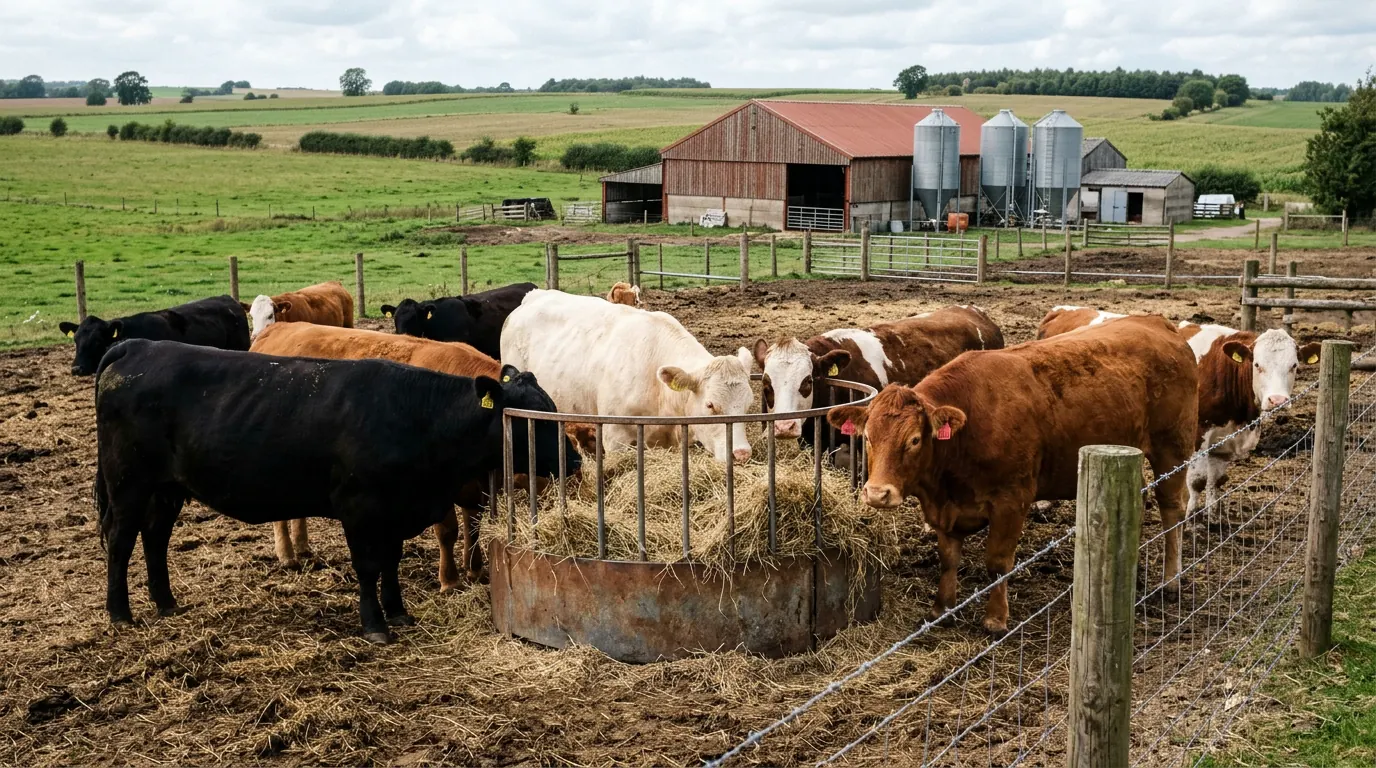
IBR is caused by a herpesvirus known as BoHV-1. The disease mainly attacks the respiratory system, and in pregnant cows it can lead to abortions. The key point is that the virus stays in the body after infection. An animal can look healthy and still infect the rest of the herd. That is why herd status is set by tests and documents, not by observation alone. Below we cover symptoms, how the virus spreads, buying animals, vaccination and how to check your herd. For a wider overview, see our beef cattle disease table.
Symptoms of IBR in cattle
Respiratory signs
The first sign is often a high fever, dullness and loss of appetite. The animal sneezes, coughs and has red nasal membranes. There is discharge from the nose and eyes, sometimes drooling. In severe cases cows stand with their necks stretched out and struggle to breathe. This picture is easy to confuse with other respiratory diseases. When several animals fall ill at once, call your vet instead of treating them yourself.
Reproductive signs
In pregnant cows IBR can cause abortions, often late in pregnancy. In bulls the infection affects the reproductive organs and can lower semen quality. In the herd you will see sudden, repeated abortions or calves that are weak at birth. A single abortion does not have to mean IBR, but a series of abortions in a short time needs a quick check with your vet and samples.
Why signs can stay hidden
After the animal recovers, the virus stays in the body and can become active under stress, for example during transport, weaning, calving or a feed change. A cow that looks healthy can then shed virus into her surroundings. So watch not only the sick animals but the whole group after such events.
How IBR gets into a herd
Direct contact and secretions
The virus spreads through respiratory and nasal secretions. Animals catch it through contact on shared pasture, in the pen or at the feeder. The risk grows when the herd is mixed and animals are kept together in tight conditions. Limiting contact with strange animals is the first step of protection.
Buying calves and other animals
KPODR Minikowo (a regional agricultural advisory center in Poland), in its guide to rearing beef calves, notes that calves bought straight from a farm usually have fewer health problems than those from a livestock market. They are not moved through several places and have not met strange herds. The authors stress that it is best to buy from farms that run biosecurity programs against IBR and BVD. At a market, the health status of calves stays unknown.
Quarantine and testing after arrival
The Teagasc Beef Manual (section 6) advises buying only animals tested before purchase and keeping them isolated for 28 days. For IBR, the manual points to a blood test for antibodies done 28 days after arrival. The manual is Irish, so agree the plan for your own herd with your vet.
Vaccination and the decision with your vet
When to consider vaccinating
Discuss IBR vaccination with your vet, especially if the herd has had cases of the disease or abortions, or if you buy animals regularly. The vet chooses the product, schedule and timing based on the animals' age, the herd's status and the risk. Vaccination reduces the effects of infection but does not remove the need for biosecurity and isolation of new animals.
Recording doses and withdrawal periods
Record every vaccine dose with the date, batch number, dose and the name of the person who gave it. The vet sets the product and dose. The vaccine dose calculator only helps you work out the amount according to the leaflet. A withdrawal period applies to products that can enter the food chain. Check it in the leaflet and with your vet, and enter the date in the treatment and withdrawal records so you do not send an animal to slaughter too early.
Herd status: how to establish it
Blood test and results
Herd status for IBR is set by a blood test for antibodies. Your vet takes the samples and interprets the results. Keep the result in the herd documents together with the test date. One result refers to a specific animal at the moment of sampling, so if problems keep coming back, repeat the test.
Records in IRZplus
You keep animals and their movements in registers, including IRZplus, ARiMR's online animal register (ARiMR is Poland's Agency for Restructuring and Modernisation of Agriculture). Herd data must match your own records. We describe the registration rules in our guides: IRZplus login and herd registration and herd records and IRZplus. Record animal movements right when you buy or sell, so you can quickly rebuild the herd's history.
What status means in practice
We do not give a legal act number here, because we do not have a reliable, current act on IBR. You can check the legal state as of 22.11.2026 in ISAP, Poland's online legal acts database (isap.sejm.gov.pl). Requirements for a specific herd are confirmed by the district veterinarian (powiatowy lekarz weterynarii). A status needed for a sale or to join a program is always confirmed by an official vet, not by a note in a notebook.
Everyday biosecurity
New animals and visitors
Limit access of strangers to the barn and pens. Keep every new animal separate, following your vet's advice, and only then move it into the group. Equipment such as a feed cart or a portable drinker should not move between farms without washing. The biosecurity plan generator helps you write down the rules for the whole farm.
Observation and records
Record every case of fever, cough or abortion with the date and ear tag number. Such a record shows your vet whether the problem affects one animal or the whole group. After herd events such as transport or weaning, watch the group for several days and note every change in behavior.
What to do if you suspect the disease
First steps
If you suspect an infectious disease, call your vet right away and do not wait for improvement. Until the vet has assessed the animals, limit animal movements and do not bring new animals into the herd. Do not give medicines without a prescription, because they can mask symptoms and make diagnosis harder.
Where to find official information
Information on officially notifiable diseases and current rules is on the website of the Chief Veterinary Inspectorate (Główny Inspektorat Weterynarii, gov.pl/web/wetgiw). Check the regulations in ISAP. Knowledge from these sources and your vet's opinion together form the basis for decisions on the farm. Other diseases to know are covered in our guide to bluetongue in sheep and cattle.
Frequently asked questions
Can IBR in cattle be cured?add
The virus stays in the body after infection, so the disease usually cannot be removed overnight. Your vet chooses symptomatic treatment and decides how to handle the sick animal. Record the course of the disease, because it helps in assessing the herd.
How do you recognize IBR in a cow?add
Most often you see fever, cough, discharge from the nose and eyes, and a drop in appetite and milk yield. Pregnant cows may abort. The signs are not specific, so diagnosis needs testing, not observation alone.
Is IBR vaccination mandatory?add
We do not state a legal requirement here, because we do not have a reliable, current act on this disease. Check the legal state as of 22.11.2026 in ISAP and with your district veterinarian. Decide on vaccination in your herd together with your vet.
How long should new cattle be kept in isolation?add
The Teagasc Beef Manual points to 28 days of isolation after arrival and an IBR antibody blood test done after 28 days. Set the plan for your own farm with your vet, because the manual's rules are Irish.
Do calves need an IBR test after purchase?add
Animals bought from farms with a known health status need fewer tests than those from a market. The Teagasc manual advises a blood test after arrival, and the choice of option and timing is up to your vet.
How much does an IBR test cost?add
The price depends on the laboratory, the number of samples and whether the vet orders the test as part of official action. Check the current amount with your vet or the chosen laboratory before samples are taken.
Sources & resources
- linkTeagasc — Teagasc Beef Manual — Section 6: Nutrition
- linkTeagasc — Teagasc Beef Manual — Section 7: Animal Health
- linkKPODR Minikowo — Rearing beef calves (guide, authors from SGGW)
- linkChief Veterinary Inspectorate — gov.pl/web/wetgiw
- linkPoland's online legal acts database — isap.sejm.gov.pl
Prepared by: DlaFerm Team based on data from the sources listed · Publisher: INSTA-TECH sp. z o.o.
Running a beef herd and want to keep track of withdrawal periods?
The DlaFerm "Treatment and withdrawal" module helps you record medicines and vaccines and their withdrawal dates in one place. Create a free farm account and enter the first event from your own herd.
Phone
+48 796 258 151