BVD in cattle: symptoms, testing and control
BVD (bovine viral diarrhea) can cause diarrhea, fever and breeding problems in beef cattle, but it often shows no clear signs. Only a lab test confirms it. The best protection is to control new animals and call your vet quickly. Below we cover symptoms, testing and control.
verifiedFrom the team that has organised work on poultry farms for years.
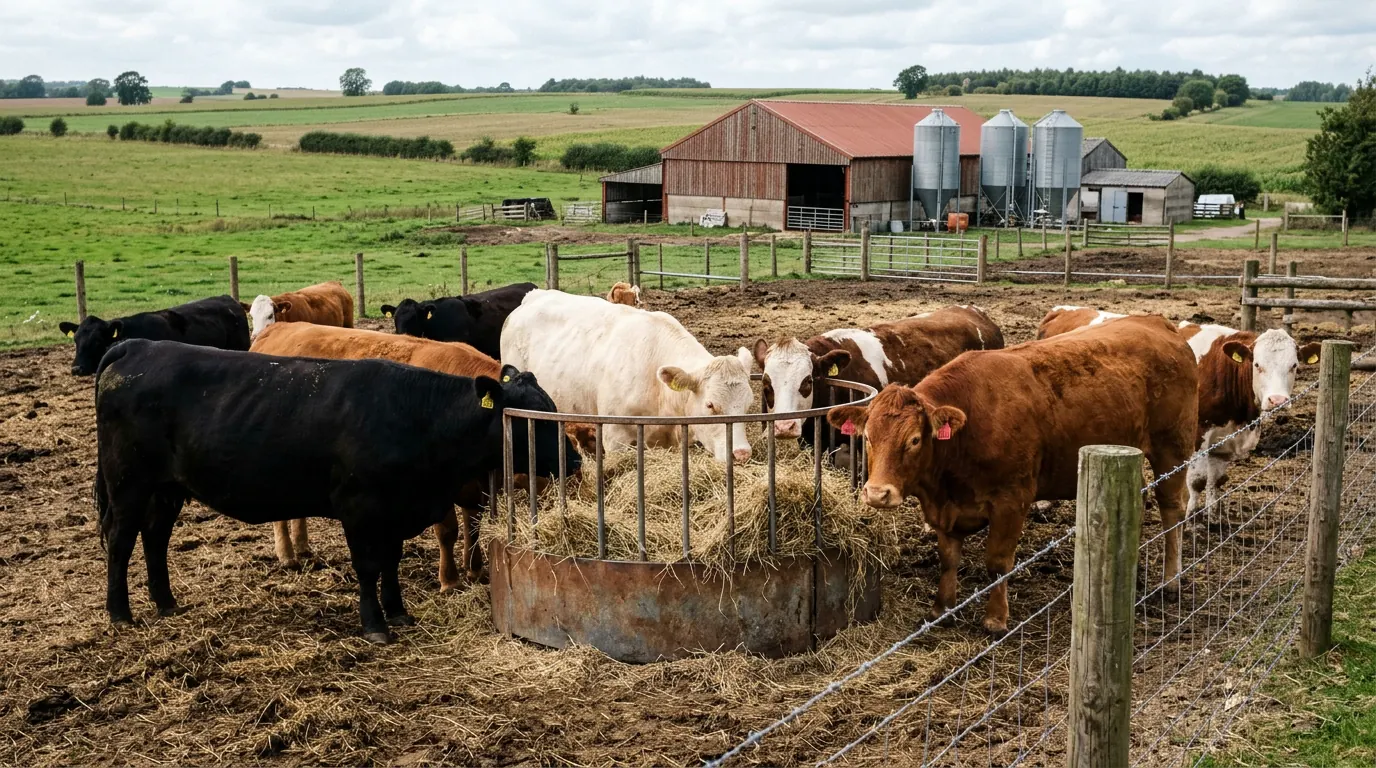
BVD is caused by a virus from the pestivirus family. In cattle it can cause diarrhea, fever, lower milk yield, fertility problems and abortions. Many infections show no clear signs, so you cannot reliably spot the disease by eye. The virus spreads mainly between animals, so herd protection rests on testing, control of new animals and quick reporting of suspected cases.
Why BVD is hard to handle in a herd
The biggest risk is a persistently infected animal (PI for short). A calf can be born infected if its dam caught the virus early in pregnancy. Such an animal can shed the virus all its life while looking healthy. It keeps feeding the infection in the herd and usually hides in the statistics as healthy. So even a healthy-looking herd can carry a hidden shedder, and the rules for buying cattle matter as much as treatment.
BVD symptoms in cattle
How the disease runs
Most often you see fever, diarrhea, discharge from the nose and eyes, poor appetite and lower milk yield in cows. Some animals develop lesions on the mucous membranes of the mouth and nose, and weaker immunity makes secondary infections easier. Young calves get the worst of it. Some infected animals show no signs at all, so a herd with no disease does not mean a herd without the virus. An early sign can be a change in behavior: the animal drifts away from the group and eats less. We describe how to catch such changes in recording herd behavior with cameras.
Breeding problems
BVD can cause abortions, stillborn fetuses, weak calves and lower fertility in the herd. You usually cannot tell at once whether the virus is the cause, because other factors produce similar problems. So keep records of calvings, abortions and heat detection results. They let you spot a pattern before the problem becomes serious. Detecting deviations in herd data helps with this analysis.
How to confirm BVD in a herd
Lab tests instead of guesswork
To find the virus and to judge the body's response to infection, samples are taken from animals, for example blood or ear tissue, and tests look for the virus or for antibodies. Each method has a different use and its result is read differently. Your vet, who knows your herd, chooses the test, the way samples are taken and the interpretation. Do not draw conclusions from a single result without talking to your vet.
Keep results in one place
Link each test result to the animal's ID number, the sampling date and the name of the vet who ordered it. That makes it easy to find positive animals and check their dams and offspring. You can keep animal data in one place through the IRZplus integration (IRZplus is ARiMR's online animal register, run by Poland's Agency for Restructuring and Modernisation of Agriculture), and log health events in the treatment records module.
Buying cattle and BVD risk
Test before purchase or on arrival
Teagasc (Ireland), in its manual for beef producers, recommends buying only animals tested for the BVD virus before purchase, then keeping them in isolation for 28 days after purchase. The second option is to test on arrival and isolate for 28 days. Decide together with your vet, because the choice depends on your situation and where the cattle come from.
Isolation after arrival
Isolation means a separate place, with no contact with the herd's pasture, water trough or feed, and no shared equipment or clothing. The same goes for trolleys, vehicles and the people who handle the animals. Write a plan for handling new animals and keep it, for example in the biosecurity plan generator. Staff need to know the rules, so the staff app keeps them always at hand.
Controlling BVD in the herd
What to do after an infection is found
After a positive result, do not move animals without talking to your vet, and do not bring new animals into the herd. Ask the vet which animals need separating and which tests to repeat. A keeper's duties come from the rules on controlling infectious animal diseases. Check the legal state as of 22.11.2026 in the Internet System of Legal Acts (ISAP) and with your district veterinarian (powiatowy lekarz weterynarii).
Contact with other species and herds
Grazing cattle together with sheep can help diseases spread. The Teagasc manual says sheep can be a source of BVD, Johne's disease and leptospirosis, and that co-grazing can spread them between the two species. Do not run shared pastures with other herds without your vet knowing, and protect equipment and feed from contact with strange animals.
Treatment and withdrawal period
Your vet chooses the treatment for animals with symptoms, including the drug and dose. After a drug is given, respect the withdrawal period: milk and meat must not be sold before it ends. Record each treatment, its date and the end of the withdrawal period in the treatment and withdrawal module, so you do not mix up dates at sale.
BVD and other cattle diseases
Do not confuse BVD with lumpy skin disease
BVD does not cause the skin nodules and swellings typical of lumpy skin disease (LSD). LSD virus is carried mainly by biting insects, and signs include a high fever above 40°C and nodules on the head, neck and udder. PODR Szepietowo (a Polish agricultural advisory center), in its leaflet, reminds keepers to contact the district veterinarian at once with such signs. The same rule applies to suspected BVD. See also our overview of beef cattle diseases.
What to do if you suspect it
Do not wait for signs to pass on their own. Note which animals are sick, since when, what signs they have and whether new animals joined the herd recently. Call your vet and describe the situation. This information speeds up diagnosis and helps the vet choose the right tests.
Frequently asked questions
Is BVD dangerous to humans?add
BVD virus infects mainly cattle. For questions about the health of people who work with infected animals, ask your vet or an occupational health doctor.
How do cattle catch BVD?add
The virus spreads through direct contact with secretions from infected animals and through contaminated objects, equipment or clothing. A persistently infected animal, for example a calf born infected after early-pregnancy infection of its dam, sheds the virus all the time and is the main source of infection in a herd.
Can cattle with no symptoms be infected?add
Yes. Many infections show no signs, so a herd with no disease may still carry the virus. Only a lab test, done after talking to your vet, gives certainty.
How many days should I isolate purchased cattle?add
Teagasc recommends 28 days of isolation after purchase, whether animals were tested before purchase or on arrival. Agree the scope and method of isolation with your vet.
Can I vaccinate my herd against BVD?add
Your vet decides on vaccination, the product and the schedule after assessing the disease situation in your herd. Do not base this on general advice from the internet.
What should I do if I suspect BVD in my herd?add
Contact your district veterinarian, do not move animals and do not bring new animals into the herd. Write down the symptoms and the dates they appeared to help diagnosis.
Sources & resources
- linkTeagasc — Teagasc Beef Manual — Section 6: Nutrition
- linkTeagasc — Teagasc Beef Manual — Section 7: Animal Health
- linkPODR Szepietowo — Lumpy skin disease (LSD) leaflet (Z. Marciniak)
- linkChief Veterinary Inspectorate (Główny Inspektorat Weterynarii) — gov.pl/web/wetgiw
- linkInternet System of Legal Acts (ISAP) — isap.sejm.gov.pl
Prepared by: DlaFerm Team based on data from the sources listed · Publisher: INSTA-TECH sp. z o.o.
Do you keep a beef cattle herd?
DlaFerm modules help you record treatments, withdrawal periods and animal data in one place, including the <a href="/ewidencja-leczenia-i-karencja-lekow">treatment and withdrawal module</a>. Create a free farm account or get in touch and see how it works for your herd.
Phone
+48 796 258 151