Dairy and dual-purpose cattle breeds: HF, Jersey, Simmental (compared with beef breeds)
Dairy breeds such as HF and Jersey are kept mainly for milk. Simmental is a dual-purpose breed, and beef breeds are chosen for daily gain and carcass muscling. We show how to compare these breeds and how crossbreeding changes the results of a beef herd.
verifiedFrom the team that has organised work on poultry farms for years.
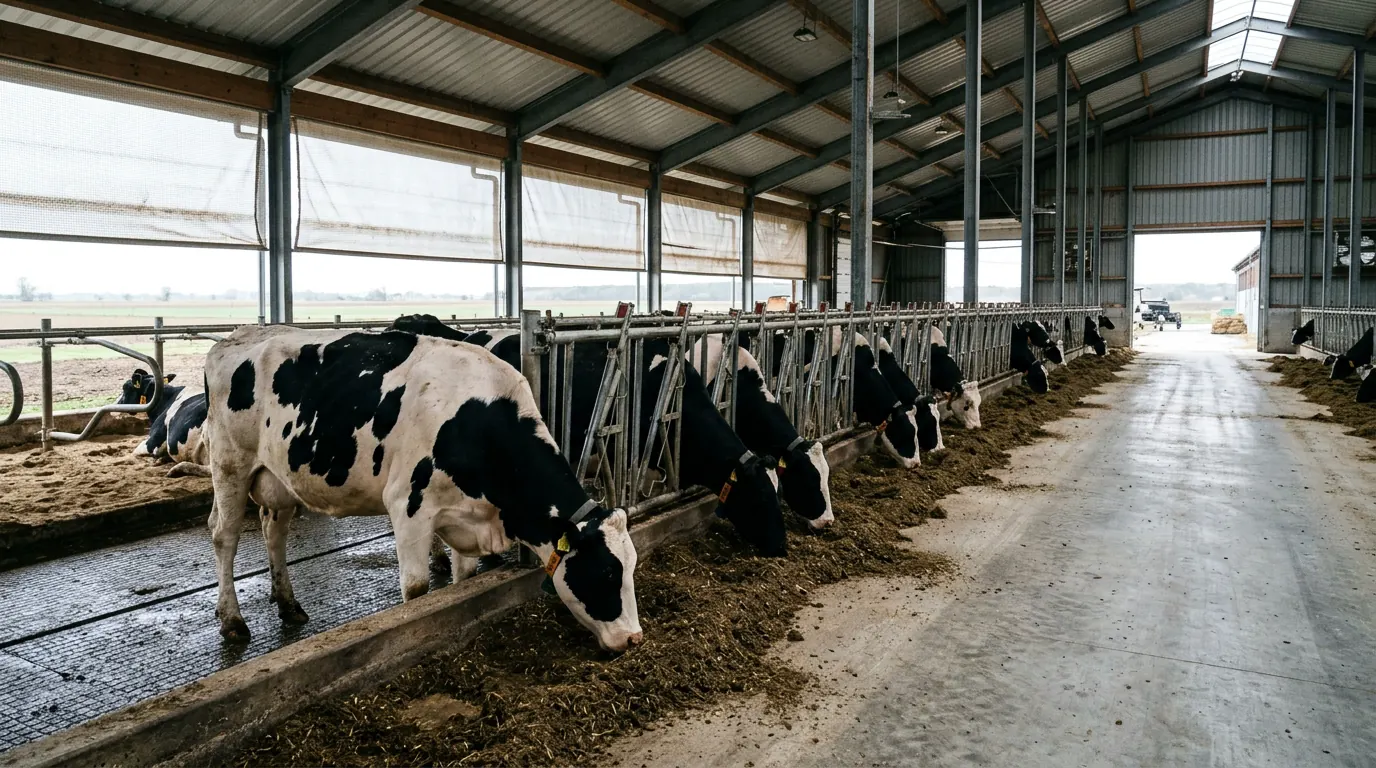
The most common dairy breed in Poland is the Polish Holstein-Friesian (HF). According to a study by IZ PIB, Poland's National Research Institute of Animal Production (J. Trela et al., WZ 2011), the breed made up 94.38% of cattle under milk recording in 2010, and the black-and-white variety alone made up 91.50%. Besides HF, farmers keep Jersey, Simmental and a few other breeds. For a beef farmer one question matters: which dam breed or which bull gives the best calves for fattening on your feed and pasture?
Where these numbers come from
The same IZ PIB paper reports that in 2010 Poland had 2540 thousand cows, of which 580 thousand were under milk recording. Simmental made up 1.54% of the population, and cattle of other breeds and crosses 2.74%. The data are more than a decade old, so treat them as a picture of direction, not of the current state. You can check current figures with ARiMR (Poland's Agency for Restructuring and Modernisation of Agriculture) and in IZ PIB publications.
Dairy breeds and their codes
Holstein-Friesian (HF)
According to the ARiMR list of codes, HF has two color varieties: black-and-white (code HO) and red-and-white (code RW). It is the most numerous dairy breed in Poland and the most common dam in terminal crossing. Her calves by beef bulls usually perform differently in fattening than crosses out of beef dams, so in beef herds HF cows are treated as starting material for crossing, not as the target breed. HF cows need good feeding and careful attention at calving, because high milk yield puts a strain on the body.
Jersey
Jersey has the code JE. It is a dairy breed with a smaller frame than HF, known for high fat and protein content in the milk. It is less common in Poland than HF. In a beef herd, Jersey usually appears as the dam of crossbred calves. How those calves perform depends on the bull, so before you decide, compare gains in your own records with calves from other dams. More in our guide to the Jersey dairy cow.
Other dairy breeds
The ARiMR list also includes Brown Swiss (BS), Ayrshire (AY), Guernsey (GU), Montbéliarde (MO) and Normandy (NO). Each has different milk and body traits. When you buy a heifer or cow, check the breed code and pedigree in the documents, because they are the basis for the register entry and for sale.
Simmental: a dual-purpose breed
What crossbreeding studies showed
IZ PIB describes the results of crossing HF cows with Simmental bulls (Choroszy et al., 2004; Choroszy and Choroszy, 2007, cited in the IZ PIB monograph). Crossbred cows out of HF dams gave lower but satisfactory milk yield, with a higher protein content. These cows had good muscling and a sound udder. In crossbred bull calves, fattening traits improved: higher daily gain, higher dressing percentage, and carcasses graded into higher muscling classes. The authors consider dual-type Simmental bulls a breed well suited to terminal crossing.
What this means in practice
If you have a dairy herd and want to raise the value of calves for fattening, Simmental is a sensible choice of bull. Code SM identifies the breed in documents. Do not assume Simmental replaces beef breeds in every respect, though. In the studies it gave less milk than HF, and your choice depends on what you want to sell: calves for fattening or heifers for rearing. One season is not enough to judge a breed, so compare data over several years. Read more about the Simmental breed.
Dairy, dual-purpose and beef breeds compared
The differences in short
Dairy breeds (HF, Jersey) are chosen for milk yield and composition. Dual-purpose breeds (Simmental) combine average milk with good meat. Beef breeds (Limousin, Charolais, Angus: codes LM, CH, AN and AR) are kept for gain and carcass muscling. Milk is secondary in them, because the cow raises her calf on pasture. A dairy cow has different feed needs and a different workload than a beef cow, and that shows in your costs every year. See also beef cattle breeds and profitability.
What to work out before you decide
Before you choose a breed for your herd, work out three things: how many calves you plan to sell for fattening, what weight they will reach at slaughter age, and whether your pastures can carry cows with calves. On poor pasture, large-framed beef cows may not pay. Comparing results from your own records gives a better picture than opinions on forums. Plan the timing of placements and the calving cycle before the season with the placement and cycle planning module.
Grading up and terminal crossing
Grading up (displacement crossing)
The model described by IZ PIB (P. Wójcik, A. Czubska, WZ 2014) means consistently mating cows of the starting breed to a beef bull, for example Limousin. Heifers from the first cross (R1) carry up to 50% beef blood, in later generations R2 up to 75%, R3 up to 87.5% and R4 up to 93.7%. According to the plan, offspring with more than 90% beef blood appear in the fourth year. The method is slow, but it gradually turns the herd into a beef herd.
Terminal crossing
Terminal crossing is simpler: a dairy cow mated to a beef bull gives F1 calves. The authors describe it as a solution with very good fattening and individual traits. It does not change the makeup of the dam herd, however, so the cows stay dairy. If you want to keep dairy cows and sell calves for fattening, this model gives a faster result than changing the breed of the herd.
Pasture and feeding a crossbred herd
Stocking rate by paddock
IZ PIB (K. Bilik et al., WZ 2014) gives stocking rates by paddock quality in a table. For cows with calves the values are 3.2 head/ha on a very good paddock, 2.4 head/ha on an average one and 1.3 head/ha on a poor one. For young fattening cattle weighing 200–350 kg the authors give 5.1, 3.9 and 2.2 head/ha respectively. The figures apply to organic farming and the assumptions of the study, so on your own farm start by assessing the forage yield.
Feeding cows with calves
The mother cow in the IZ PIB model is a medium-frame beef cow of about 500 kg body weight, calving in February and rearing the calf to about 250 kg. Dairy cows and crosses have higher energy needs in lactation, so on the same paddock they give a different result. Rations and feed composition are set by a vet or a nutrition adviser. We advise recording feed use and gains, so you can compare results year to year in online production indicators.
Identification, health and withdrawal periods
Identification and records
Animals must be tagged and registered as the rules require. Check the current requirements with ARiMR. You enter the breed code from the list in the documents at every calf sale. Herd records can be linked to IRZplus, ARiMR's online animal register, and the details are described in the integrations with IRZplus and sensors module.
Disease and withdrawal periods
Report any suspected disease to your vet right away. The vet chooses the medicine and the dose. After every treatment, record the date, the product name and the withdrawal period, because milk and meat have different withdrawal times. In DlaFerm you keep treatment records in the treatment and withdrawal module, which helps you keep to the dates before slaughter and sale.
Frequently asked questions
What is the most common dairy cattle breed in Poland?add
HF is the most common dairy breed. According to IZ PIB, in 2010 it made up 94.38% of cattle under milk recording. The yield of a single cow depends on the line, feeding and housing, not on the breed name alone.
Can a Jersey cow be used for beef production?add
Jersey is not a beef breed. In a beef herd it serves as the dam of crossbred calves, and how the calves perform depends largely on the bull. Before you decide, compare the gains of calves out of Jersey dams with calves from other dams in your records.
What is grading up in cattle breeding?add
It is the gradual mating of cows of the starting breed to a beef bull, with each generation carrying more beef blood: 50%, 75%, 87.5% and 93.7%. According to IZ PIB, offspring with more than 90% beef blood appear in the fourth year of the plan.
Does Simmental give both good milk and good meat?add
Simmental is a dual-purpose breed. In IZ PIB studies, crosses out of HF cows had lower but satisfactory milk yield with a higher protein content, and the bull calves had better fattening traits. It is a compromise, not a fully beef breed.
How do I check a cattle breed code?add
The breed code comes from the ARiMR list of letter codes for cattle breeds, for example HO for black-and-white HF, JE for Jersey or SM for Simmental. The code in the animal's documents is the basis for sale and for the register entry.
Sources & resources
- linkARiMR — List of letter codes for cattle breeds
- linkIZ PIB — Livestock keeping and breeding over 70 years. Cattle Breeding Department, Sheep and Goat Breeding Department
- linkIZ PIB — WZ — 60 years of IZ work on beef cattle (J. Trela et al.), WZ XLIX(2011)4:11–56
- linkIZ PIB — WZ — Breed selection and breeding work in beef herds under organic conditions (P. Wójcik, A. Czubska)
- linkIZ PIB — WZ — Feeding beef cattle under organic farming conditions (K. Bilik et al.)
Prepared by: DlaFerm Team based on data from the sources listed · Publisher: INSTA-TECH sp. z o.o.
Do you run a dairy herd or crosses with a beef bull?
The integrations module for IRZplus and sensors helps you collect herd data in one place. Create a free farm account at DlaFerm.pl and start with your animal records.
Phone
+48 796 258 151