Białogrzbieta (White-Backed) Cattle: a Native Polish Breed
Białogrzbieta (White-backed cattle) is a native Polish cattle breed, listed by ARiMR (Poland's Agency for Restructuring and Modernisation of Agriculture) under the code BG. It is one of four breeds covered by national genetic resource conservation programs. We explain its status, where to get pedigrees and how to run a herd of białogrzbieta cows in practice.
verifiedFrom the team that has organised work on poultry farms for years.
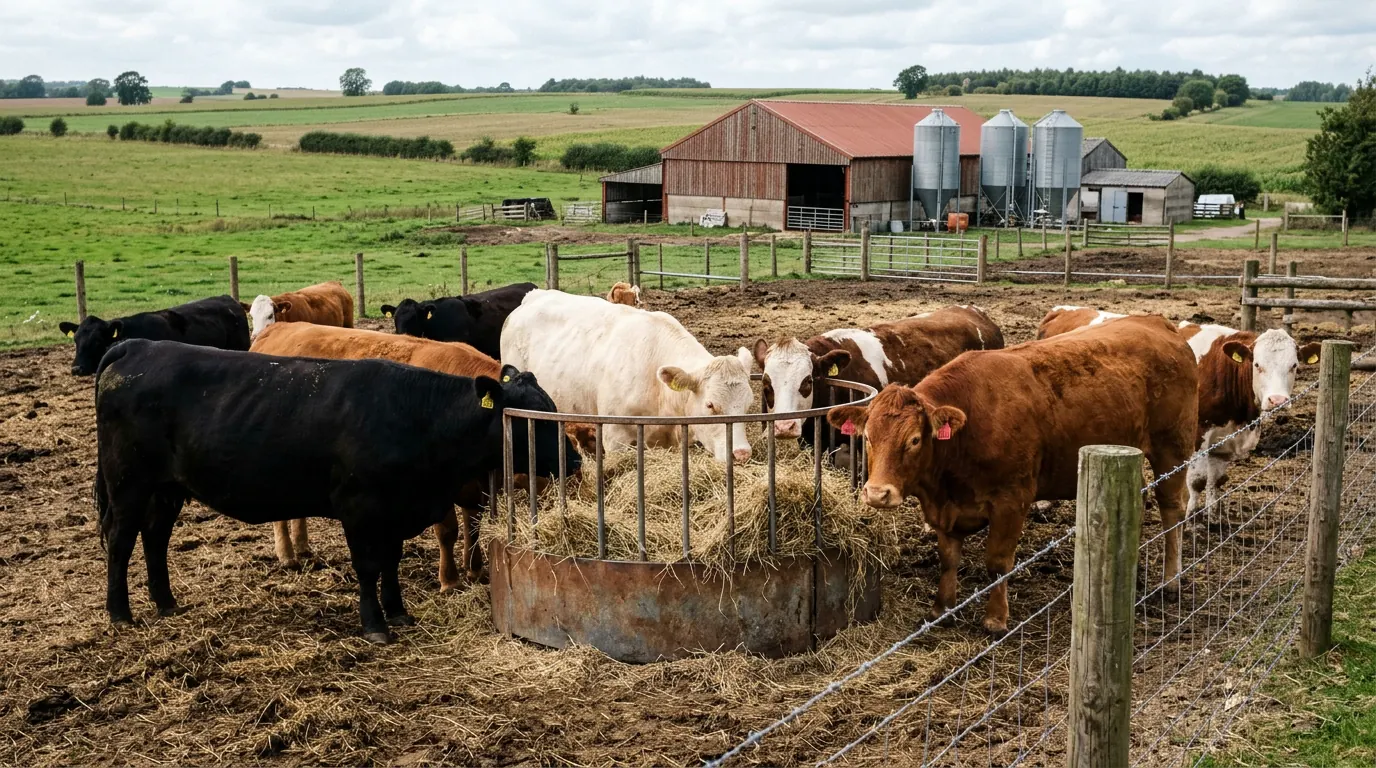
Białogrzbieta is a native Polish cattle breed. In the ARiMR list of letter codes it appears as BG, "bydło białogrzbiete" (white-backed cattle). According to a publication of the Instytut Zootechniki PIB (National Research Institute of Animal Production), the breed is one of four native breeds covered by national genetic resource conservation programs, alongside Polish Red, Polish Red-and-White and Polish Black-and-White. For a keeper this means the herd book and pedigrees matter well beyond a single farm.
Where the name comes from and where to find data
The name points to the white back of the animal. You can check the detailed breed standard and performance traits in the breed book, which, according to the IZ PIB publication, is kept by the University of Life Sciences in Lublin (Uniwersytet Przyrodniczy w Lublinie). The code BG also appears in the ARiMR list, so use it in notifications and identification as the list sets out. We describe a similar approach to native breeds in Polish native chicken breeds, and the historical background in the history of Polish poultry farming.
A native breed in the national conservation program
Four breeds under protection
Cattle genetic resource conservation programs in Poland cover four native breeds: Polish Red (RP), białogrzbieta (BG), Polish Red-and-White (ZR) and Polish Black-and-White (ZB). According to the Instytut Zootechniki PIB, in 2019 the programs covered almost 9000 cows kept on more than 800 farms. The figures apply to all four breeds together, not to białogrzbieta alone. The Instytut Zootechniki PIB coordinates the work together with the bodies that keep the herd books.
Genetic material and the reserve bank
The Instytut Zootechniki PIB describes the collection of cattle biological material, including a genetic reserve bank. The work was done with MCB Krasne and SHiUZ Bydgoszcz. The stored material backs up national improvement and conservation programs. You cannot build such a bank on your farm, but you can keep complete data on every animal. A breed in a program is assessed from documents, so gaps in your herd records quickly become a problem.
Pedigree and records for białogrzbieta cows
Who keeps the herd book
The herd book for białogrzbieta is kept by the University of Life Sciences in Lublin, according to the Instytut Zootechniki PIB. The pedigree of a cow, calf or bull lets you trace ancestry through generations. When you buy an animal, ask the seller for documents and the identification number, not just how it looks. Record calvings, births and herd events from day one, because filling in data later is hard and mistakes creep in.
Assessing performance
In its work on assessing the performance and breeding value of beef cattle, the Instytut Zootechniki PIB describes how performance recording data feed into selection. Summaries from the Polish Beef Cattle Breeders and Producers Association (Polski Związek Hodowców i Producentów Bydła Mięsnego), with data for 2007–2016, show that the number of animals of each breed in the population changes over time. For a białogrzbieta keeper the lesson is practical: assessment results come from the records you keep in your herd.
Running a suckler herd in practice
Cow with calf
In a suckler herd the cow's condition before calving affects how the calving goes and how the calf develops. Plan the calendar of calvings, vaccinations and treatments so they do not pile up in the same week. Keep dates of births and treatments in one place, which makes it easier to monitor the following cycles. For planning, use the production planning module, which helps you set a schedule for the whole year.
Health and withdrawal periods
Record every treatment with the date, the name of the medicine and the animal's number. The medicine and dose are always chosen by a vet. Also record the withdrawal period, because without it you cannot set a safe date for selling milk or live animals. The treatment and withdrawal module in DlaFerm.pl tracks these dates in one place and shows which animals are still under withdrawal.
Feed, organic farming and meat quality
Fat composition in the meat
In a study on the slaughter characteristics of beef from organic farms, the Instytut Zootechniki PIB compares the fatty acid profile of crossbred and purebred cattle. The share of saturated, monounsaturated and polyunsaturated acids differs between the groups, as does vitamin E content. The takeaway for a białogrzbieta keeper is simple: breed and origin are one factor in meat quality, next to feeding and age at slaughter.
Organic farming in practice
The Instytut Zootechniki PIB describes breed choice and breeding work in beef herds under organic conditions, and feeding in that system. One example is the organic farm Glinna at ZD IZ PIB Kołbacz (an experimental unit of the institute). For native breeds such studies are a good starting point for a feeding plan. Check the requirements for organic farming in the current rules in ISAP (Poland's online legal acts database). Have feed rations set by an adviser or a vet, matched to the age and condition of the animals.
Welfare, transport and obligations
Welfare on pasture and in transport
In its opinions on beef cattle welfare, EFSA (the European Food Safety Authority) looks at keeping cattle on outdoor yards, access to shelter and animal behavior on pasture. Cows on pasture need water, a place to rest and shelter from wind and rain. Council Directive 2008/119/EC sets minimum standards for the protection of calves, and EFSA also describes cattle welfare during transport. Before loading, check the animals' health and the transport documents.
Legal state as of 22.11.2026
We describe the legal state as of 22.11.2026. You can check national rules in ISAP, the Internetowy System Aktów Prawnych, and information on veterinary supervision is published by the Chief Veterinary Inspectorate (Główny Inspektorat Weterynarii). Before you decide, ask your county veterinary officer or an adviser. Part of your herd data can be passed to external systems through the IRZplus and sensor integrations module (IRZplus is ARiMR's online animal register), which cuts down manual re-typing.
Frequently asked questions
What is a białogrzbieta cow?add
A białogrzbieta cow is a cow of the białogrzbieta (white-backed) breed, a native Polish cattle breed. In the ARiMR list the breed has the code BG. It is one of four breeds covered by national genetic resource conservation programs.
What is the ARiMR code for białogrzbieta cattle?add
In the ARiMR list of letter codes for cattle breeds, the breed has the code BG and the name "bydło białogrzbiete". Use this code as the list sets out in notifications and records. You can find the current version of the list on the ARiMR website.
Who keeps the herd book for białogrzbieta cattle?add
According to the Instytut Zootechniki PIB, the herd book for białogrzbieta is kept by the University of Life Sciences in Lublin. The Instytut Zootechniki PIB coordinates the conservation programs. Check pedigrees every time you buy an animal.
How many cows are in the native breed conservation programs?add
In 2019 the cattle genetic resource conservation programs covered almost 9000 cows on more than 800 farms. The figure applies to all four breeds together, not to białogrzbieta alone. The data come from an Instytut Zootechniki PIB publication.
How much does a białogrzbieta cow cost?add
We do not give prices, because they change and depend on the animal's age, origin and documents. Agree the price directly with the breeder or with an organization that works with the breed. When you judge an offer, check the pedigree and the records.
Can white-backed cattle be kept on pasture?add
Pasture keeping needs water, shelter from wind and rain and a place to rest. EFSA describes welfare requirements for beef cattle on outdoor yards and pasture. Agree a grazing plan with an adviser and a vet.
Sources & resources
- linkARiMR — List of letter codes for cattle breeds
- linkIZ PIB — Farm animal keeping and breeding over 70 years. Cattle Breeding Department, Sheep and Goat Breeding Department
- linkIZ PIB — Wiadomości Zootechniczne — Breeding work in a beef cattle herd (Z. Choroszy et al.), WZ L(2012)1:11–20
- linkIZ PIB — WZ — Slaughter characteristics of beef from organic farms (P. Wójcik, J. Walczak)
- linkEFSA AHAW Panel — Welfare of beef cattle (EFSA Journal 23:9518)
- linkInternetowy System Aktów Prawnych (Poland's online legal acts database) — isap.sejm.gov.pl
Prepared by: DlaFerm Team based on data from the sources listed · Publisher: INSTA-TECH sp. z o.o.
Do you keep a herd of białogrzbieta cows?
The treatment and withdrawal module and the IRZplus integrations help you keep herd records in one place. Create a free farm account in DlaFerm.pl or get in touch, and we will show you how it works in practice.
Phone
+48 796 258 151