Watusi cattle (ankole-watusi): the breed with huge horns
Watusi are African cattle with horns as thick at the base as an adult's arm. In Poland they are rare and kept more for looks than for production. We cover the breed's origin, how the horns are built and what to prepare before you buy.
verifiedFrom the team that has organised work on poultry farms for years.
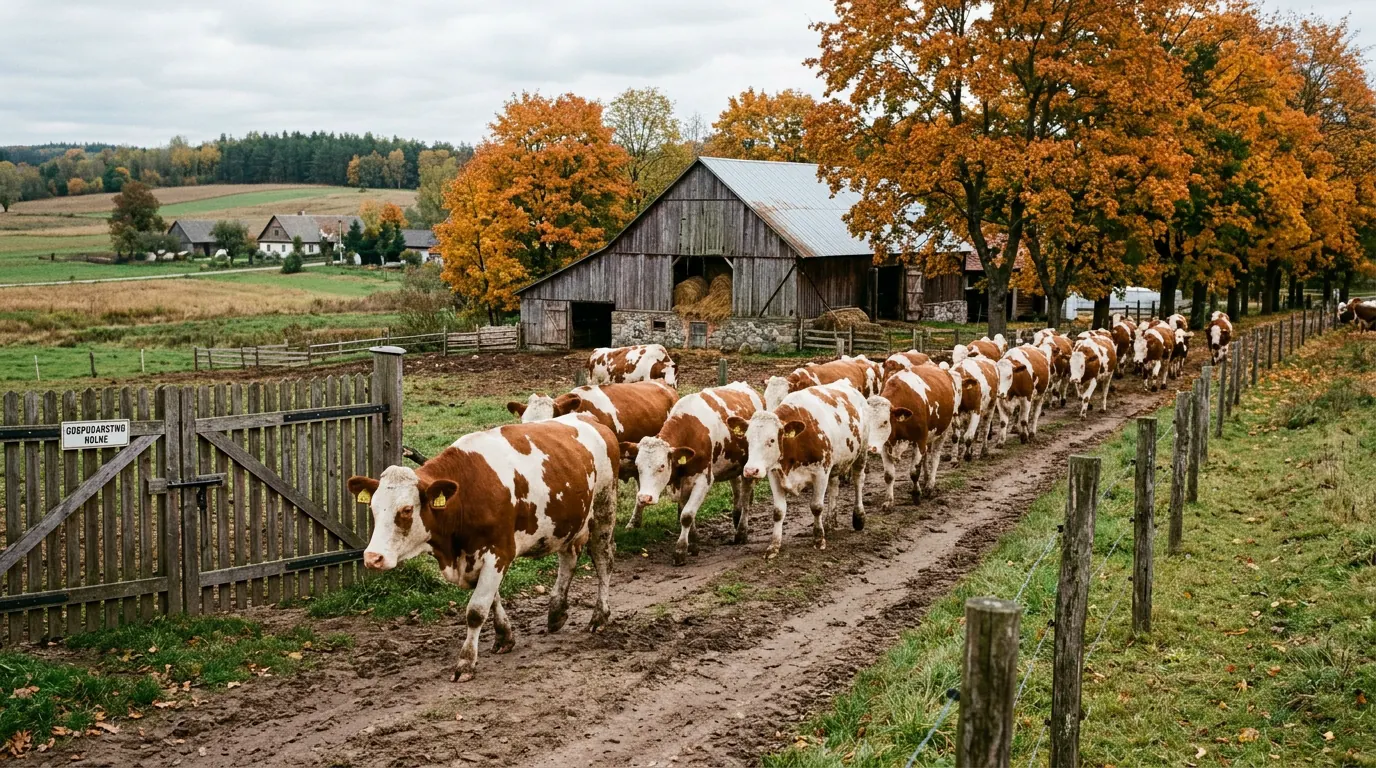
Watusi, also called ankole or ankole-watusi, is a cattle breed from East Africa. You recognize it by its horns: long, lyre-shaped and very thick at the base. The animal is slim and tall, and the coat ranges from red and brown to spotted. In Poland you find it in a few herds, where it serves as an attraction, not as a breed for typical beef production.
Ankole or watusi: why two names
The name "ankole" comes from the historic kingdom of Ankole in today's Uganda. "Watusi" is used for cattle from Rwanda and Burundi, tied to the Tutsi people who traditionally kept them. In breed catalogs and in herds outside Africa the two names are usually joined as "ankole-watusi". For a keeper in Poland the difference matters when you look for animals and papers: sellers use one name or the other, so ask about the bloodline and the country of export.
Who this breed is for
Watusi mainly interest keepers who want a rare, recognizable animal in the herd, for example on an agritourism farm. If you run finishing or a suckler herd for the slaughterhouse, look at breeds from the Polish studies of IZ PIB (the National Research Institute of Animal Production), such as Limousine or Charolaise. Watusi will not match them on daily gain or carcass yield.
Where watusi come from
Herding cattle of the Great Lakes
Ankole and watusi come from the Great Lakes region of East Africa. Herders kept them as animals of social value: the herd meant wealth, and milk and blood served as food. The breed belongs to the sanga type, which arose from crossing African cattle with zebu. We describe traits typical of zebu, such as tolerance of heat and water shortage, under the zebu breed. The animals walked across wide pastures, so selection favored sound legs, hardiness and the ability to live on poor feed.
Animals in Western herds
Outside Africa, watusi went to zoos and then to private herds in North America and Europe. There keepers bred lines that kept the look and temperament of the original cattle. As a rule the breed is not kept for mass production, so it has no uniform performance standard like the beef breeds in national breeding programs. You can find a breed description in the farm animal breed atlas on Poland's Integrated Educational Platform (Zintegrowana Platforma Edukacyjna), and the history of cattle breeding in Poland in the IZ PIB monograph listed in our sources.
Watusi horns: what they are and what they do
How the horns are built
Watusi horns reach sizes not seen in other cattle breeds. They are hollow inside, with a very thick base, and curve into a lyre shape or a wide arc. They grow throughout the animal's life, and their size depends on the line, age, feeding and health. In show herds, symmetrical horns with clearly curved tips and a large circumference at the base are prized. We give no exact measurements, because the literature differs between sources and lines.
Do the horns cool the animal
It is often said that the horns help the animal shed heat because a lot of blood flows through them. You will meet this explanation in breed descriptions and in keepers' materials, but do not treat it as certain. What is certain is that the breed comes from a hot climate and tolerates heat well. Horns are also used to mark rank in the herd, and with poor pen layout they can injure other animals or people.
What watusi cattle are used for
Meat and milk
In Africa, ankole cattle gave milk and meat for the family, not for the market. Outside Africa, watusi are kept mainly for looks. The build is slim and the muscling lighter than in beef breeds developed for finishing. Daily gain, carcass yield and feed needs have no reliable, widely available norms in Poland, so if you plan to sell animals for slaughter, work out the profit from your own results. Dual-purpose or beef breeds from national programs, for example Shorthorn, give a more predictable result.
Hardiness and modest needs
Coming from dry rangeland made the watusi an animal that copes with poor feed and short spells without water. That does not mean it needs no good feed in the Polish climate. In winter it needs a dry bed, shelter from wind and good-quality bulky feed. Adjust rations and composition to the animal's category. For beef cattle guidance see the OODR Łosiów leaflet (an advisory center in Poland) and the Teagasc feeding manual from the source list.
Keeping watusi in Poland
Barn, fencing and stalls
Watusi horns jam in standard stalls, in feed barrier frames and in narrow passages. Plan wide gates, wide spaces at the feed table and a handling pen with a roomy passage. Fencing must withstand an animal that can lean on a fence with its horns. When you assess a herd before buying, check legs and hooves. An EFSA report on beef cattle welfare cites guidance under which a cow with lameness score 3 on a 5-point scale is not fit for transport. That applies to watusi too.
Same duties as any cattle
Watusi come under the same rules as other cattle: ear tag identification, registration in the IRZ system run by ARiMR (Poland's Agency for Restructuring and Modernisation of Agriculture), the animal register book and biosecurity. Check current requirements with ARiMR and the district vet (powiatowy lekarz weterynarii). You give medicines only on a vet's order, the vet chooses the drug and dose, and you keep to the withdrawal period. Treatment records are easy to keep in the treatment and withdrawal module.
Calves and the first hours of life
The Teagasc manual guidance is for beef cattle and applies to any breed. A calf must get colostrum as soon as possible after birth, because it is the source of antibodies. If the calf does not suckle on its own, Teagasc gives a colostrum dose of 5% of birth weight, about 2 liters for a calf weighing 40 kg, within about an hour of birth. After 6–8 hours the calf should suckle its dam or get a second feed. Watusi are a rare breed, so discuss your calving plan with a vet.
Watusi versus other big-horned breeds
The closest cousin in looks is the American Texas Longhorn, also known for long horns. It has better described meat traits and a longer history in production. For work on pasture without extra feeding, Galloway fits, and for small farms with modest land requirements, Dexter. When you choose a breed, check whether breeding support exists and whether the animals can be sold on the market, not only shown. You can also browse other rare cattle breeds.
Frequently asked questions
What are watusi cattle?add
Watusi, or ankole-watusi, is a cattle breed from East Africa. It is known for very large, hollow horns. In Poland it is rare and found mainly in show herds.
Are watusi and ankole the same breed?add
In practice, yes. Ankole is a name from a region in Uganda, and watusi is a name tied to Rwanda and Burundi. Outside Africa the two are joined as ankole-watusi.
What are watusi cattle used for?add
Traditionally they gave milk and meat for the herder's family. Today in the West they are kept mainly for looks. There are no Polish performance norms for them like those for beef breeds in breeding programs.
Do watusi need a special barn?add
No rule requires a different type of barn, but the horns make standard stalls and gates hard to use. Plan wider passages, strong fencing and a handling pen.
Do the same rules apply to watusi as to other cattle?add
Yes. Identification, registration in the IRZ system and keeping a register all apply. Check current requirements with ARiMR and the district vet. The legal state we rely on is 23.11.2026.
How do you feed a watusi calf after birth?add
Colostrum in the first hours is what matters most. For beef cattle Teagasc gives 5% of birth weight, about 2 liters for a 40 kg calf, within about an hour of birth. Set the plan together with your vet.
Sources & resources
- linkZPE / MEiN (Integrated Educational Platform) — Farm animal breeds, interactive atlas (e-material ROL.11)
- linkIZ PIB — Keeping and breeding farm animals over 70 years. Cattle Breeding Department, Sheep and Goat Breeding Department
- linkTeagasc — Teagasc Beef Manual — Section 7: Animal Health
- linkEFSA AHAW Panel — Welfare of beef cattle (EFSA Journal 23:9518)
- linkARiMR — gov.pl/web/arimr
Prepared by: DlaFerm Team based on data from the sources listed · Publisher: INSTA-TECH sp. z o.o.
Keeping a rare cattle breed and need to track treatments?
The treatment and withdrawal module in DlaFerm lets you record treatments and withdrawal dates in one place. Create a free farm account or get in touch.
Phone
+48 796 258 151