Dexter cattle breed: traits, keeping and fattening
Dexter is a small Irish cattle breed kept for both meat and milk. Its value on your farm depends on your production goal, not on the animal's build alone. We cover the breed's traits, how to manage a suckler herd and fattening, and what to check before you buy.
verifiedFrom the team that has organised work on poultry farms for years.
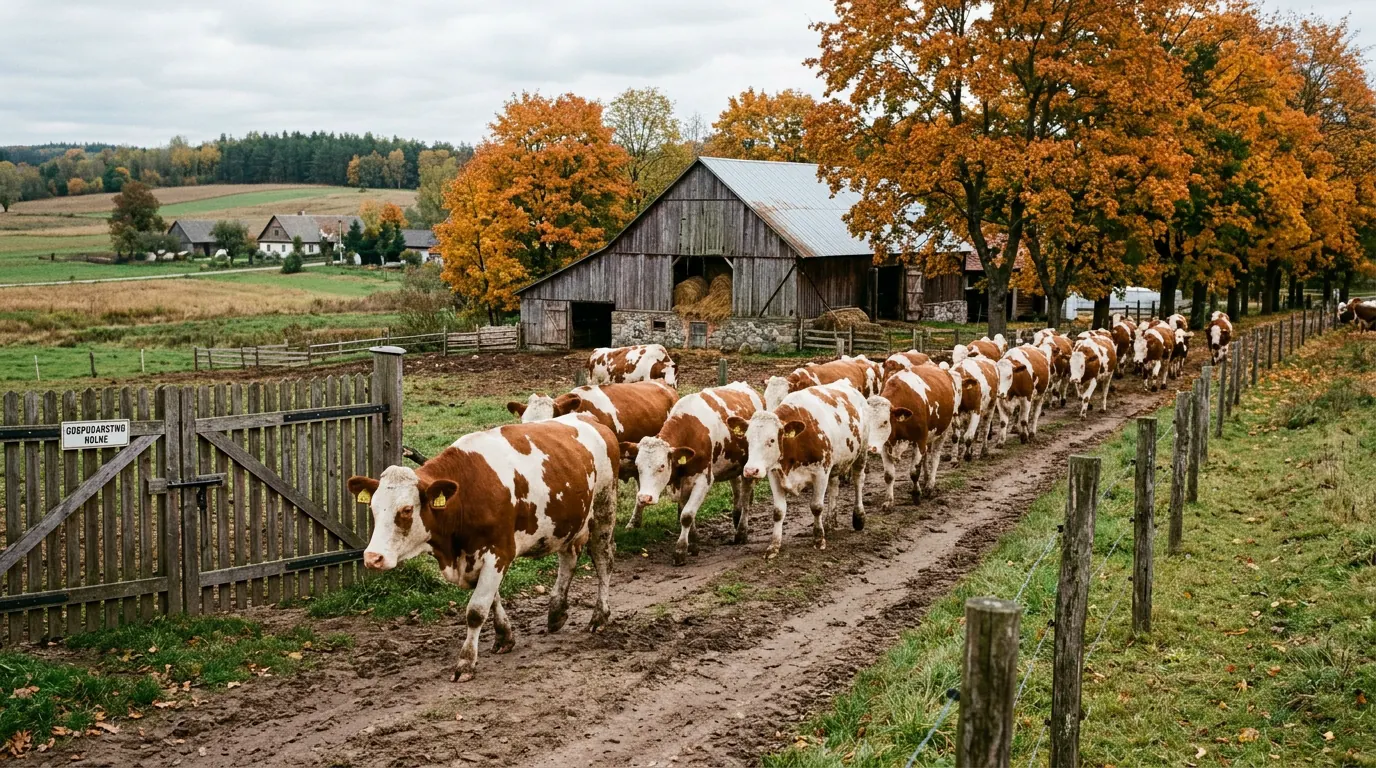
Dexter is a small Irish cattle breed with dual use: it is kept for meat and for milk. In the list of breed letter codes of Poland's ARiMR (Agency for Restructuring and Modernisation of Agriculture), it is marked DR. In Polish beef herds, Dexter is less common than breeds such as <a href='/rasa-limousine'>Limousine</a> or Charolaise, so good records and knowledge of the breed's traits matter even more. For a wider view of the sector, see our page on <a href='/bydlo-miesne'>beef cattle</a>.
What the IZ PIB data say
Studies from the National Research Institute of Animal Production (IZ PIB) show that beef performance results depend on breed, age at slaughter and feeding. Publications on beef cattle are dominated by large breeds such as Limousine and Charolaise, so separate results for Dexter are rare. For that reason we give no carcass yield figures for this breed. Instead we describe principles you can check against your own animals and records.
Build, color and temperament
Build
Dexter is clearly smaller than most beef breeds used in Poland. It has short legs, a broad chest and a compact frame. When you assess an animal, look at the proportion of body to legs, because it affects carcass weight relative to live weight. The breed can be polled or horned, and the choice depends on your breeding goal and on safety in the pen.
Color and papers
Dexter comes in black, red and dun. Color does not affect performance, but it matters when you buy, because it must match the pedigree papers and the entry in the identification system. For reporting, the <a href='/integracje-irzplus-czujniki'>IRZplus integration</a> (IRZplus is ARiMR's online animal register) keeps your animal data in one place.
Meat and milk in one herd
Meat production
Dexter gives lighter carcasses than the large beef breeds. Profit depends on the price per kilogram of carcass or live weight, and that changes weekly. Check quotes at slaughterhouses and livestock markets. For direct sales, the retail price and processing cost also count. You can compare scenarios in the calculators on our <a href='/narzedzia'>tools for farmers</a> page.
Milk production
Dexter cows are known for good milk yield relative to body weight. With dairy use, though, calf rearing changes, and so does the plan for milking and weaning. Before you choose a direction, work out how much time and how many people you can give to daily animal care.
Suckler herd and breeding
Choosing cows and bulls
When you choose a bull, go by pedigree and performance recording, not looks alone. Performance recording of beef cattle is run by the Polish Association of Beef Cattle Breeders and Producers, and IZ PIB describes the assessment methods in a 2018 paper (WZ LVI(2018)3). Avoid mating related animals and record the parentage of every calf.
Calving and herd plan
Plan the date you put the bull in with the cows so that calves are born in a favorable season and someone can watch the calving. This requires a record of heats and calvings. For details of mating plans, see the advisory materials of WMODR Olsztyn (a regional agricultural advisory center) on reproduction in beef herds. You can organize the dates with <a href='/planowanie-wstawien-i-cyklu'>placement and cycle planning</a>.
Rearing and fattening Dexters
Feeding
IZ PIB papers on feeding beef cattle stress that the quality of roughage, such as hay, silage and pasture, matters a lot for efficiency, especially where concentrates are limited. A feeding adviser sets the ration plan. You should note the ration composition and weight gains so you can compare results between groups of animals.
Fattening to slaughter
The IZ PIB materials we use mostly cover large breeds, so your own weighing is the best source of data for Dexters. If you weigh animals at placement and before slaughter, you build your own gain figures. You can then work out whether fattening pays instead of relying on other farms' results.
Welfare, treatment and duties
Calf protection
Council Directive 2008/119/EC sets minimum standards for the protection of calves across the EU. The requirements are transposed into national law, so before rearing calves, check the current rules with your county veterinarian (powiatowy lekarz weterynarii). In practice, inspections cover bedding conditions, access to water and feed supply, so it is worth having them written in your herd records.
Treatment and withdrawal
The vet always chooses the medicine and dose. Your job is to record every treatment with its date and withdrawal period before the animal goes to slaughter. Entries in the <a href='/ewidencja-leczenia-i-karencja-lekow'>treatment and withdrawal records</a> help you avoid selling meat with a drug still in the body.
Notifiable diseases
Lumpy skin disease (LSD) is an infectious disease reported to the county veterinarian. The Podlasie agricultural advisory center PODR Szepietowo has prepared a leaflet on it. If you suspect the disease, do not wait: isolate the animal and contact a vet. EFSA (the European Food Safety Authority) also describes beef cattle welfare rules in its opinions.
Running the herd in a system
Identification and documents
Every animal must have ear marking and an entry in the database. Data from tags and pedigrees help when you buy, sell or face an inspection. The <a href='/integracje-irzplus-czujniki'>IRZplus and sensor integration</a> module describes how to link herd data with the registers.
Team work
With a larger herd, set a clear split of tasks: who weighs animals, who checks calvings and who keeps the records. Your team can make day-to-day entries from the barn in the <a href='/aplikacja-dla-pracownikow'>employee app</a>, while you keep oversight of all the data.
Frequently asked questions
Is Dexter a beef or a dairy breed?add
Dexter is a dual-purpose breed, kept for both meat and milk. The direction you choose depends on your farm's main goal. Work out both scenarios before you decide.
What is the breed code for Dexter cattle at ARiMR?add
In the ARiMR list of letter codes, the Dexter breed is marked DR. You use the code in herd records and animal marking. You can check the current list on gov.pl.
How much does a Dexter cow cost?add
The price depends on the animal's age and sex, its pedigree and the region. It also changes over time, so we give no amounts. Check current offers with breeders of this breed and their organizations.
Is Dexter good for beef fattening?add
Yes, but the carcass is smaller than with large beef breeds. Work out whether fattening pays from your own weighing and current selling prices. Record weight at placement and before slaughter.
How do I protect Dexter calves?add
Calf protection rules come from Directive 2008/119/EC and national law. Agree the details with your county veterinarian. Provide dry bedding and access to water and feed.
Sources & resources
- linkARiMR — List of letter codes for marking cattle breeds
- linkIZ PIB — Wiadomości Zootechniczne — Breeding work in a beef cattle herd (Z. Choroszy et al.), WZ L(2012)1:11–20
- linkIZ PIB — WZ — Current state and prospects of beef cattle farming and breeding in Poland (H. Grodzki et al.), WZ LIII(2015)2:77–87
- linkIZ PIB — WZ — New methods of assessing the performance and breeding value of beef breeds (Z. Choroszy et al.), WZ LVI(2018)3:17–23
- linkEU Publications Office — Council Directive 2008/119/EC laying down minimum standards for the protection of calves
Prepared by: DlaFerm Team based on data from the sources listed · Publisher: INSTA-TECH sp. z o.o.
Do you keep a beef cattle herd?
The treatment and withdrawal records in DlaFerm.pl help you keep track of treatments and the dates before slaughter. Create a free farm account or get in touch, and we will show you how it works in practice.
Phone
+48 796 258 151