Rare cattle breeds: white park, santa gertrudis, dutch belted
A rare breed is one with few animals in Poland, where a bull, semen or a proven herd are hard to find. White park, santa gertrudis and dutch belted are not among the 13 breeds covered by Poland's performance testing of beef bulls. We explain what that means for buying, ear tagging and choosing pasture.
verifiedFrom the team that has organised work on poultry farms for years.
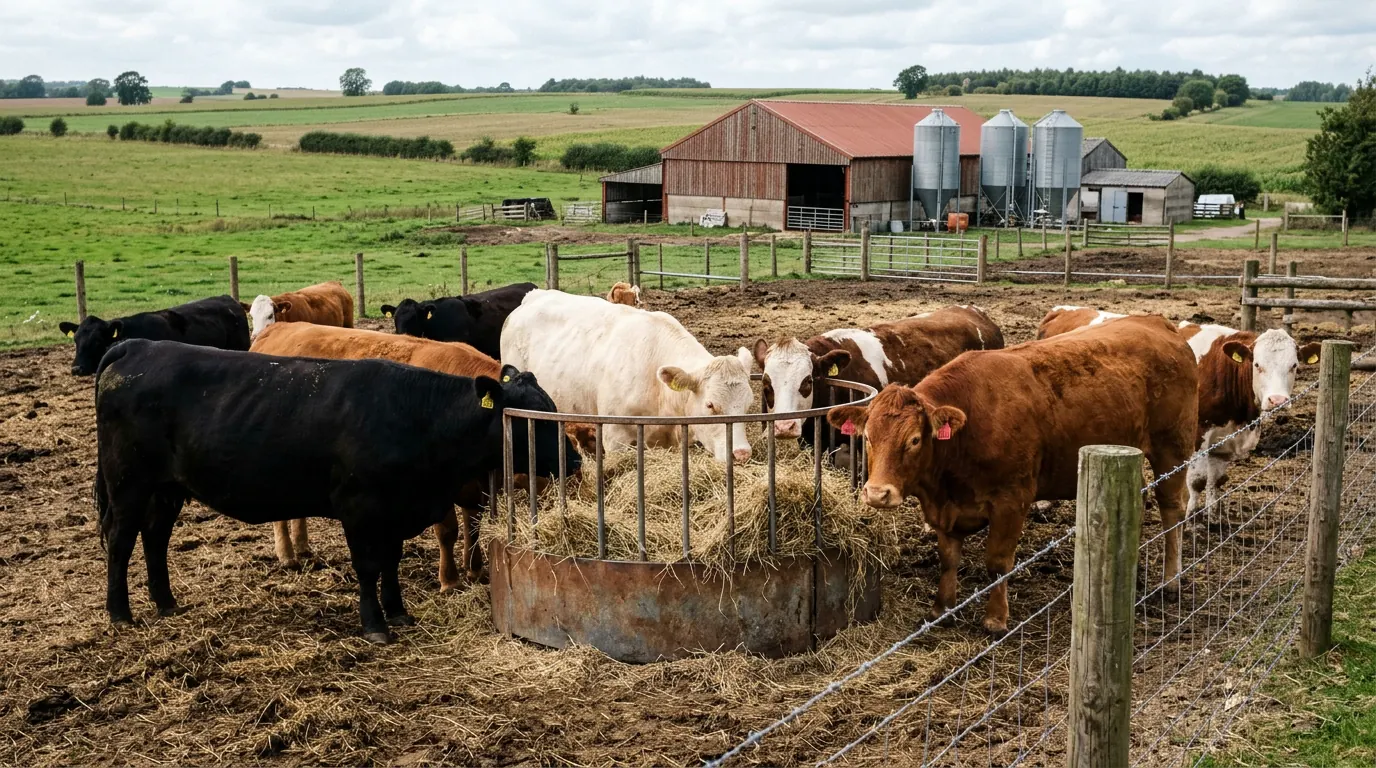
A rare cattle breed is one with few animals kept in Poland, and limited access to bulls, semen and experienced breeders. There is no official list of "rare breeds", so we describe it in practical terms: the breed is not one of the main beef breeds in Polish herds and has no performance testing of its own. Since 2007 that testing has been run by the Polish Beef Cattle Breeders and Producers Association (Polski Związek Hodowców i Producentów Bydła Mięsnego) together with IZ PIB (the National Research Institute of Animal Production). It covers 13 breeds: black and red angus, blond d'aquitaine, charolaise, galloway, hereford, highland, limousine, piemontese, salers, simmental (simental), wagyu and welsh black.
White park, santa gertrudis and dutch belted: what we know
White park, santa gertrudis and dutch belted are not on the list of breeds tested by IZ PIB. In the letter code list of ARiMR (Poland's Agency for Restructuring and Modernisation of Agriculture) you will find only santa gertrudis, with the code SG. There are no national figures on weight, dressing percentage or prices for these breeds, so we describe their traits and point out what to check with the seller. Get exact data on conformation and performance from the breeders' association or from the animals' pedigrees.
Who a rare breed suits
Rare breeds are most often chosen by keepers of small herds on grassland, by those who sell meat directly, or by people who want to preserve a native type of animal. A commercial herd needs easy sales and a predictable live price, and rare breeds usually do not offer that. Before you buy the first animal, compare it with the breeds you know from the overview of Polish cattle breeds, and work out who will buy your calves.
White park: light-colored cattle
General traits
White park is an old British breed with a white coat and dark markings, usually on the ears, muzzle and legs. Keepers value it for its looks and its attachment to pasture, not for high meat yield. National data on body weight, daily gain and dressing percentage for this breed are not published. If you want to know gain, ask the seller for herd records: calf weights at weaning and weights at one year. The table in our guide to cattle weight by chest girth lets you check animals' weight yourself when you have no scale.
Breed code in documents
The ARiMR letter code list has no separate code for white park. It has codes for crosses with beef breeds (MM) and for crosses without beef breeds (MS). We do not claim that either one should be entered when you buy a white park. Ask your local ARiMR office before the animal joins your herd, because the breed code goes into the register and into sales documents.
Santa gertrudis: the only one of the three with an ARiMR code
Origin and the SG code
Santa gertrudis is a beef breed developed in Texas by crossing zebu cattle with shorthorn. In the ARiMR list it has the code SG, next to brahman (BR), brangus (BN), beefmaster (BM) and braford (BO), breeds of similar origin. If you are interested in the zebu line itself, read about the zebu breed and its needs.
Polish winter and pasture
Breeds from hot climates cope worse with damp, mud and frost than British breeds. There is little experience of keeping santa gertrudis in Poland, so plan wintering carefully. Provide a dry, wind-sheltered cattle shelter and a hard-standing area at the feeder. On pasture, follow the rules in our guide to grazing cattle: stocking rate, fencing and paddock rotation. Before buying, ask the breeder how the source herd was wintered.
Dutch belted: black cattle with a white belt
Appearance and use
Dutch belted cattle have a black or dark coat with a wide white belt around the body. The breed comes from the Netherlands and is sometimes kept as a dairy type. There are no national data on its milk yield or gain. To understand the difference between dairy and beef types, see our comparison of dairy and dual-purpose cattle breeds.
Crosses and identification
The belted coat is easy to find in crossbreds, and only breeding documents confirm a pure pedigree. Check that the seller has a certificate of origin and that the animal's parents are entered in a herd book. The ARiMR list has no separate code for dutch belted, just as for white park. If in doubt, ask your local ARiMR office which code to enter. The integrations with IRZplus (ARiMR's online animal register) and sensors in DlaFerm help when you want records and reports in one place.
Other breeds that are easy to overlook
Breeds with a code but no performance testing
The ARiMR list includes, among others, longhorn (LO), highland cattle (HI), dexter (DR), murray-grey (MG), south devon (SD), tarentaise (TA), aubrac (AU), tyrol grey (AL), pinzgau (PZ), romagnola (RN), marchigiana (MR), gelbvieh (GV) and Hungarian steppe cattle (WS). Of these, only highland is on the list of breeds tested by IZ PIB. For small herds, dexter and galloway are interesting; read about them in the pages on the dexter breed and the galloway breed.
A breed with a genetic defect
Being rare does not protect a breed from health problems. The EFSA report on beef cattle welfare (2025) describes Belgian Blue cattle with double muscling. These animals are more prone to muscle diseases such as white muscle disease and muscular dystrophy, and need more selenium in the feed than other beef breeds. Before buying a breed with extreme muscling, ask your vet about its typical risks and nutritional needs.
What to check before buying a rare breed
Documents and identification
Ask for the certificate of origin, the parents' ear tag numbers and the movement document. Agree with your local ARiMR office which breed code to enter in the register. Rare-breed animals are often sold between breeders over long distances, so plan transport in line with EFSA recommendations for moving cattle and discuss quarantine for new animals with your vet. Also test dung for parasites; we cover worming in our guide to worms in cattle.
Sales and profitability
For a breed with no performance testing, it is harder to prove animal quality to a buyer. Calf and live prices change weekly, and rare breeds seldom have public price quotes. Check prices at meat plants, with dealers and at your regional ODR (agricultural advisory center), and work out your margin from your own feed costs. If you plan to sell meat directly, line up buyers first and only then decide herd size.
Frequently asked questions
What are the rare cattle breeds in Poland?add
There is no official list of rare breeds. In practice they are the breeds outside the 13 covered by IZ PIB performance testing, for example white park, dutch belted, santa gertrudis or longhorn. You will find the full list of breed codes in the ARiMR list.
Does santa gertrudis have a breed code at ARiMR?add
Yes. In the ARiMR letter code list, santa gertrudis has the code SG. Next to it are, among others, brahman (BR), brangus (BN) and beefmaster (BM).
What breed code should I enter for white park and dutch belted?add
The ARiMR list has no separate codes for these breeds. Ask your local ARiMR office before the animals join your herd, because the code goes into the register and sales documents.
Which beef cattle breeds does IZ PIB test?add
Since 2007, performance and breeding value testing has been run by the Polish Beef Cattle Breeders and Producers Association together with IZ PIB. It covers black and red angus, blond d'aquitaine, charolaise, galloway, hereford, highland, limousine, piemontese, salers, simmental, wagyu and welsh black.
Are rare breeds suitable for keeping on pasture?add
Many keepers choose them for small herds on grassland. For heat-loving breeds such as santa gertrudis, prepare a shelter and a dry wintering area. We cover stocking rate and rotation in our guide to grazing cattle.
Can a rare breed have health problems?add
Yes. EFSA describes, for example, that double-muscled Belgian Blue cattle are more prone to muscle diseases and need more selenium. Before buying, ask your vet about the typical risks of the breed.
Sources & resources
- linkARiMR — Letter code list for marking cattle breeds
- linkIZ PIB — WZ — New methods of assessing the performance and breeding value of beef cattle (Z. Choroszy et al.), WZ LVI(2018)3:17–23
- linkIZ PIB — WZ — Current state and prospects of beef cattle keeping and breeding in Poland (H. Grodzki et al.), WZ LIII(2015)2:77–87
- linkEFSA AHAW Panel — Welfare of beef cattle (EFSA Journal 23:9518)
- linkZPE / MEiN (Integrated Educational Platform) — Farm animal breeds: interactive atlas (e-material ROL.11)
Prepared by: DlaFerm Team based on data from the sources listed · Publisher: INSTA-TECH sp. z o.o.
Want animal records and reports in one place?
The IRZplus and sensor integrations module in DlaFerm helps you keep herd data in order, even when you keep rare breeds next to standard ones. Create a free farm account or get in touch, and we will show you how it works.
Phone
+48 796 258 151