Worms in cattle: deworming and gut parasites
Worms cut weight gain and feed use, and the signs are easy to miss. Your vet builds the deworming plan from the animals' age, the grazing season and a faecal test. You watch the herd, keep records and track withdrawal periods.
verifiedFrom the team that has organised work on poultry farms for years.
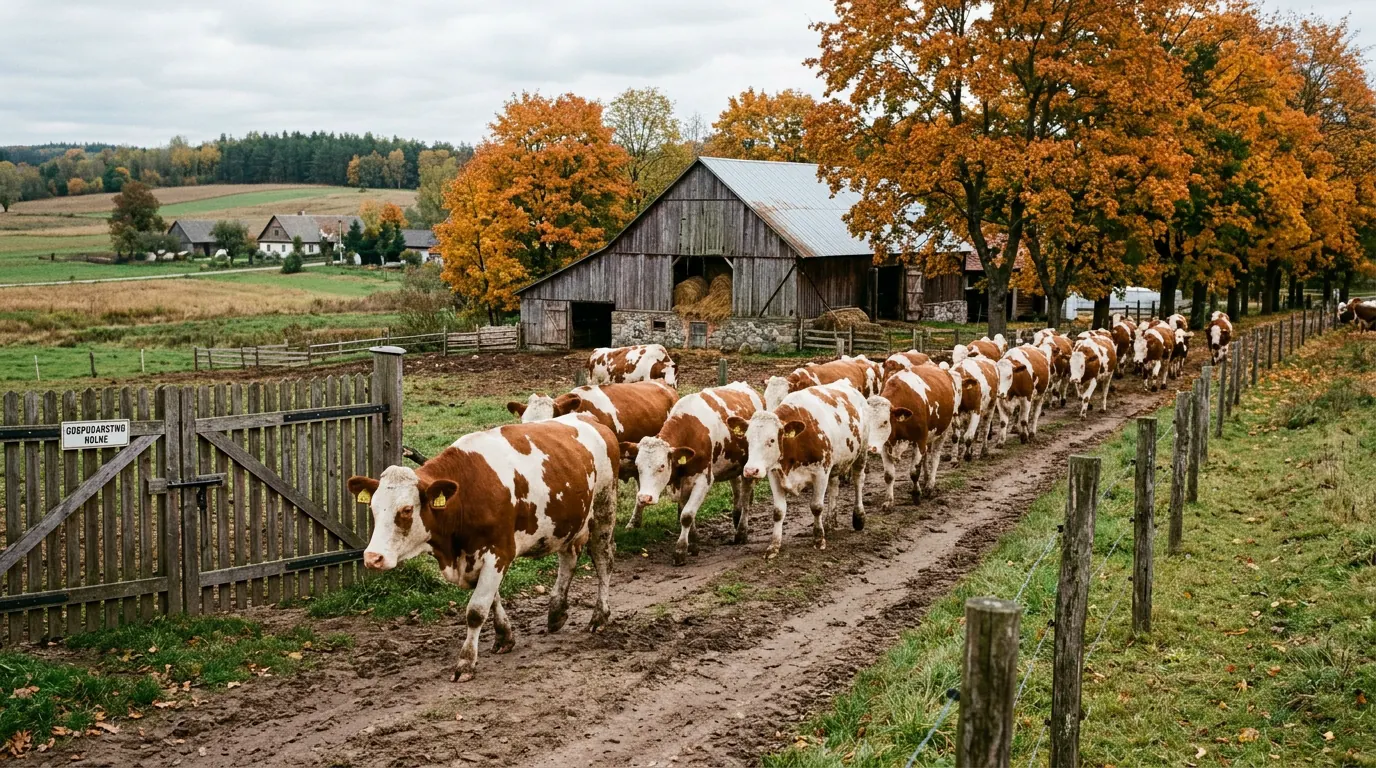
Worms in cattle are parasites of the gut, lungs and liver. They cut weight gain, weaken immunity and lower feed use. The most common are gastrointestinal roundworms, lungworm (hoose), liver fluke and tapeworms. No single deworming scheme fits every herd. Your vet sets the program from the parasite species, the animals' age, the way you graze and faecal test results. You are responsible for observation, records and dates. Only the vet chooses the drug and the dose. Below we explain how to spot the problem and limit it in a beef herd, especially at pasture, where cattle grazing favors infection.
Why parasites matter in a beef herd
Beef cattle are kept in large groups, often on pasture, where parasite larvae can survive in the sward for a long time. Animals eat them with the grass. Young calves, which are still building immunity, are most at risk. Signs are often vague: the animal moves less, eats less, has a poorer coat and grows slower. In finishing cattle this means a longer fattening period and poorer feed use. In suckler cows it means uneven body condition before and after calving. According to Teagasc, the most economically significant parasitic infestation is roundworms in the gut, and younger animals are more likely to be affected. Parasites cost you most through lost weight gain you do not see right away, not through sudden deaths.
The most common worms in cattle
Gastrointestinal roundworms
This is the most common group of parasites in young cattle at pasture. Adult worms live in the gut and their eggs leave with the dung onto the field. Larvae hatch, climb grass blades and wait to be eaten. Infection rarely shows up suddenly: you may see loose dung or diarrhea, lower weight gain and a dull coat, and the loss of condition may show only later. If you suspect worms, ask your vet for a faecal test for eggs before you start deworming blindly.
Lungworm and liver fluke
Lungworm attacks the bronchi and lungs. You see it as coughing, especially when animals are driven or move, and as fast breathing in calves at pasture. According to Teagasc, open-mouth breathing is common, and a faecal test may be needed to tell hoose from other respiratory diseases. Liver fluke lives in the bile ducts of the liver and is linked to wet, boggy meadows where the intermediate snails live. Signs of both are easy to confuse with respiratory and digestive infections, so your vet should confirm the diagnosis in the herd and advise what to do next.
Deworming in practice
A plan instead of deworming at fixed intervals
Calendar deworming without tests leads to needless treatments or misses the moment when parasites do the most harm. A plan based on the animals' age, the grazing season and faecal test results works better. Your vet decides which groups need treatment, which product and when. Record every treatment: the date, the group of animals, the product name, the batch number and the date the withdrawal period ends. These records are the basis for safe sales of animals and meat.
Withdrawal period before slaughter
Every antiparasitic drug has a withdrawal period: the time after which an animal can go to slaughter with no drug residue in the meat. The product leaflet gives the value and your vet confirms it. Never shorten it or count it from memory. Check rules on medicines and animal records in Poland's ISAP (Internetowy System Aktów Prawnych, the online legal database). We describe the legal position as of 22.11.2026, but confirm it at the source before you decide. Keep treatment records in one place, with clear dates of administration and end of withdrawal, so you can check an animal is ready before transport.
Preventing infection at pasture
Rotation and stocking rate
The longer animals stay on the same ground, the more larvae build up in the sward. Rotating paddocks, meaning moving the herd to fresh ground before the pasture is trampled and fouled with dung, reduces exposure. Too many animals on a small area has the same effect. Record which paddocks the herd used and when, because it helps you plan grazing and judge risk. We describe how to divide a pasture in our guide to cattle grazing.
Feeding and hygiene
Animals in good condition cope better with infection, so a good ration is part of prevention. Place water troughs and feeding spots so dung cannot foul them, and feed on a clean surface. A shelter or roofed pen gives a dry place to rest and keeps bedding cleaner. When you plan a cattle shelter, set aside a separate calf corner that is easier to keep clean.
Calves and suckler cows
Calves
Calves fall ill most often in the first months of life, when immunity is still weak and contact with grass and dung is close. Your vet sets the deworming plan for calves together with you, based on age and season. For calves running with their mothers, the ration can include concentrate and hay, not only the dam's milk. A healthy calf grows evenly and has a smooth coat, which you can see on the daily herd check.
Suckler cows
Suckler cows around calving and lactation are under more nutritional stress, so parasites show up more easily in them. Condition before calving affects feed use and the calves' weight gain. Plan deworming of suckler cows as part of the whole herd program, not separately. You can read about the system where calves stay with their mothers in our guide to the suckler cow.
Records and checking results
What to record
Record the date of every test and treatment, the faecal test result, the product name, the dose set by the vet, the batch number, the group of animals and the date the withdrawal period ends. Record observations too: coughing, diarrhea, falling weight gain and changes in condition. After a few seasons this history shows which paddocks are risky and when infections return. You keep treatment and withdrawal records in the treatment and withdrawal module, which watches dates before you sell animals.
Checking after treatment
After deworming, watch the herd and, if needed, ask your vet for a repeat faecal test, usually after the interval the vet sets for that product. No improvement on the recommended treatment may mean parasite resistance or a wrong diagnosis, so always discuss the result with your vet. Do not change the product or dose on your own. Written results also help when you talk to your vet about the next plan.
Frequently asked questions
How do you tell if cattle have worms?add
The most common signs are loose dung or diarrhea, lower weight gain, a dull coat, coughing on exertion and weakness. The signs are vague, so they are not enough for a diagnosis. Your vet orders the faecal test.
How often should you deworm beef cattle?add
There is no fixed, universal interval. The plan depends on the animals' age, the grazing season and faecal test results. Your vet sets the dates for your herd.
What is a withdrawal period after deworming?add
It is the time after which an animal can go to slaughter with no drug residue in the meat. The product leaflet gives the value and your vet confirms it. Record the end date of the withdrawal period for every treatment.
Can you deworm cattle without a vet?add
The vet chooses the drug and dose, because a wrong product or dose may not work or may leave residues in the meat. Report a herd problem right away, before you start any treatment.
How do you prevent worm infection at pasture?add
Rotate paddocks, do not overstock the pasture and do not let animals graze heavily fouled areas. Keep resting places dry and the ration good. Prevention does not replace the plan agreed with your vet.
Where can you check current rules on cattle medicines in Poland?add
Check rules on veterinary medicines and animal records in Poland's ISAP (Internetowy System Aktów Prawnych). We describe the legal position as of 22.11.2026, but confirm it at the source or with your vet before you decide.
Sources & resources
- linkTeagasc (Ireland) — Teagasc Beef Manual — Section 7: Animal Health
- linkEFSA AHAW Panel — Welfare of beef cattle (EFSA Journal 23:9518)
- linkIZ PIB — Livestock farming and breeding over 70 years. Cattle Breeding Department, Sheep and Goat Breeding Department
- linkChief Veterinary Inspectorate (Główny Inspektorat Weterynarii) — gov.pl/web/wetgiw
- linkISAP, Poland's online legal database — isap.sejm.gov.pl
Prepared by: DlaFerm Team based on data from the sources listed · Publisher: INSTA-TECH sp. z o.o.
Do you run a beef herd and want to track withdrawal periods?
The treatment and withdrawal module in DlaFerm.pl records treatments, withdrawal end dates and check dates. Create a free farm account and see how it works in practice.
Phone
+48 796 258 151