Cattle shelter: low-cost housing for finishing cattle and suckler cows
A cattle shelter is a roofed, open-sided building where finishing cattle and suckler cows have a dry place to rest, access to feed and water, and cover from rain and wind. It can be simple and cheap, but in Poland it must meet the regulation on minimum conditions for keeping cattle. We show what to check before you build, how to plan lying areas and bedding, and what drives the cost.
verifiedFrom the team that has organised work on poultry farms for years.
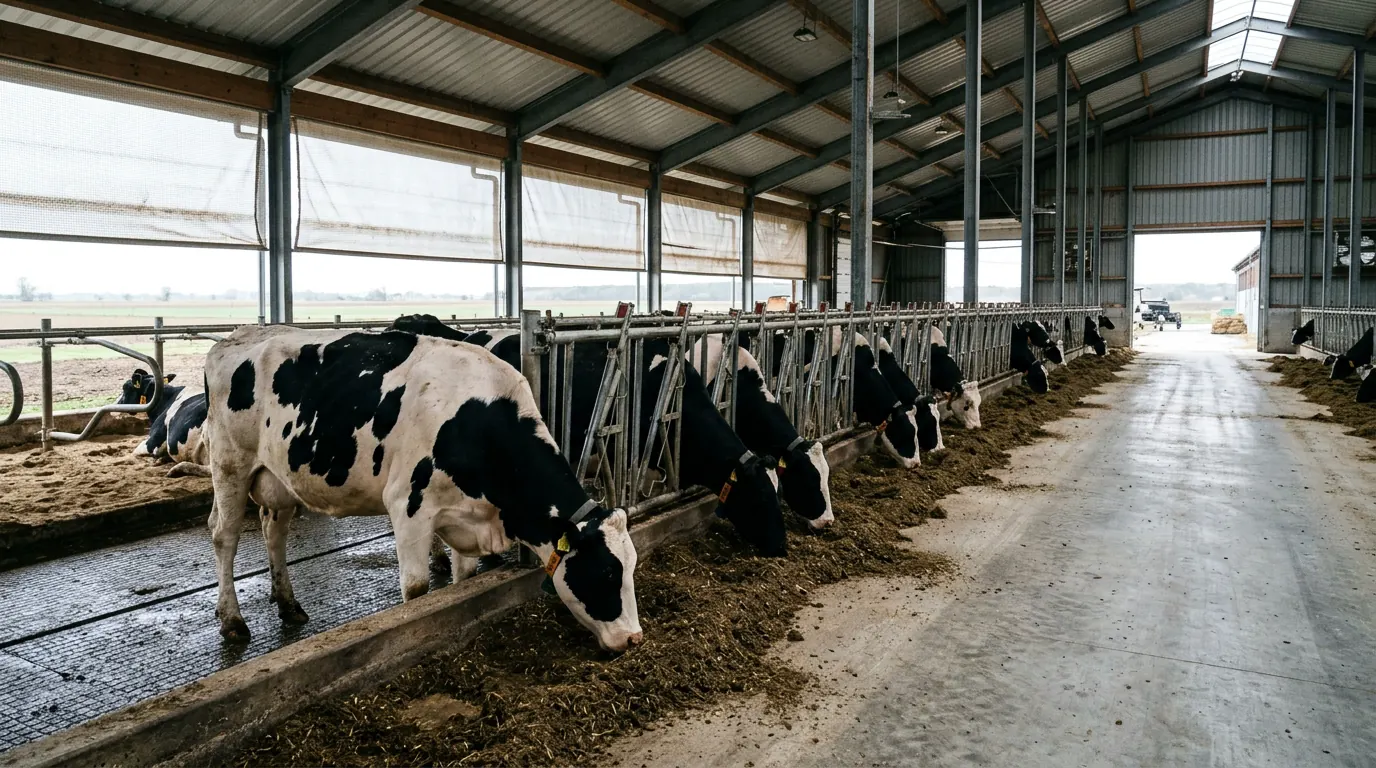
A cattle shelter is a roofed building, open on one or more sides, where animals get cover from rain, sun and cold wind. For finishing cattle and suckler cows it is the cheapest way to provide a dry resting place, as long as it meets the minimum conditions for keeping cattle and is well designed. A simple structure still needs thought: wind direction, roof edge height, type of bedding and how you drain water off the roof.
What the rules say
Minimum conditions for keeping cattle in Poland are set by the Ministry of Agriculture's regulation on minimum conditions for keeping farm animal species, consolidated text (Dz.U. 2019 poz. 1966, Poland's Journal of Laws), legal state as of 22.11.2026. Section 11 lists three ways of keeping loose cattle: with separate lying areas, without separate lying areas but on bedding, and without lying areas and bedding. The provision excludes calves, so separate rules apply to them. Before you build, read the regulation in ISAP (Poland's legal database) and discuss your plan with a vet or the county veterinary officer.
A low-cost shelter: what drives the price
Structure and roof
The cheapest shelter is usually posts, purlins and a single-pitch roof of sheet metal or panels, open on the pen side. The roof should extend past the walls so rain does not soak the feed and the drinker. The wider the span, the more expensive the structure, so plan the width to fit the group with spare room at the feeder and drinker. Make the windward wall solid or partly closed, and secure the opening on the pen side for winter. Before you buy materials, check with your municipal office that the site does not conflict with the local land-use plan.
How much it costs
The price depends on materials, on whether you build it yourself or hire a contractor, and on transport and labor in your region. Building material prices change often, so we do not give amounts. Compare at least two offers and work out the cost per animal place. Keep invoices for materials and services in KSeF invoicing (Poland's national e-invoicing system) so building costs are collected in one place. To judge whether a shelter pays off, use the sample calculation of farm income from beef production published by ODR Lubań (a regional agricultural advisory center). It shows results at different intensity levels, not ready-made figures for your farm.
Lying areas and bedding in a shelter
Option with lying areas
The regulation allows loose housing of cattle with separate lying areas. Separate lying areas are not required for finishing cattle and bulls, and bedding remains the basic choice. Keep lying areas dry and clean, and change them more often when the bedding is damp. When designing, separate the lying zone from the feeding zone, because animals rest more willingly in a dry, sheltered spot. Before you choose a layout, read Section 11 of the regulation in full.
Pregnant cows and bulls
You may not keep bulls, or cows and heifers more than 7 months pregnant, without lying areas and bedding. In practice, a shelter with a bare floor suits only some groups. For cows in late pregnancy, plan bedding for the whole wait until calving. Keep the bull separately in a pen so he does not compete for feed and lying space with younger groups. At every herd check, make sure the animals have a clean, dry surface to lie on. Settle the details with your vet.
Feed and water at the shelter
Roughage
According to an IZ PIB (Poland's National Research Institute of Animal Production) publication on feeding beef cattle in organic systems, roughage is the basis of feeding for suckler cows and young finishing cattle: green forage in summer, and silage and hay in winter. A roof keeps rain off feed stored inside the shelter. Keep silage and hay as close to the feeding place as you can and check their condition regularly. Feed silo monitoring makes it easier to track stock levels.
Suckler cows and calves
At the organic Glinna farm in Kołbacz, suckler cows are used only for breeding and rearing calves. It is a good example of why suckler groups are best kept apart from finishing cattle. The regulation excludes calves from Section 11, so separate rules apply to them; check these before you move calves into a shelter. Provide separate feeders so younger animals can reach feed without fighting adults.
Water
Water must be available at all times, including winter. Place the drinker in a dry spot, away from the entrance and the feeder, so mud from hooves does not foul the water. In frost, check daily that the water is not freezing and the watering system works. Dirty water quickly cuts appetite, so clean drinkers on a fixed schedule.
Ventilation, yard and herd health
Ventilation without drafts
A shelter is open, so natural ventilation works on its own, but wind direction decides whether the air actually changes. Put the inlet low and the outlet higher, under the ridge, because damp air rises. Avoid a stream of cold air over the lying areas, because drafts encourage colds. For winter, close only some openings with screens, not all at once.
Yard and mud
The yard in front of the shelter should have a hard-surfaced part under the feeder and drinker so animals do not stand in mud. Provide drainage for roof water around the shelter. Limit visits by outsiders to the farm in line with biosecurity rules. If you suspect disease, isolate the animal and call a vet. The vet chooses the medicine and dose; you keep the treatment record and watch the withdrawal period. Entries in the treatment and withdrawal record help you avoid mixing up dates.
Records and inspections for a shelter
What inspectors check
Inspectors of the Chief Veterinary Inspectorate (Główny Inspektorat Weterynarii, GIW) check whether animals are kept in line with the minimum conditions and whether documentation is kept. It helps to have a description of your buildings, including the shelter, and records of animal condition in the farm documents. You can keep animal data through the IRZplus integration (ARiMR's online animal register), which cuts manual re-typing. GIW publishes current requirements on gov.pl.
Team working with the animals
If more than one person works at the shelter, decide who checks bedding, drinkers and animal condition, and record it in one place. A shared worker app lets staff report problems without waiting for the owner, and the manager sees what has been done. Inspection records also make the conversation with your vet at a herd check easier.
Frequently asked questions
Does a cattle shelter have to have lying areas?add
It depends on the housing option. The regulation (Dz.U. 2019 poz. 1966) allows loose housing with separate lying areas or without them on bedding. Separate lying areas are not required for finishing cattle and bulls. Cows more than 7 months pregnant need lying areas or bedding.
Can pregnant cows be kept on a bare floor?add
No. The rule bans keeping bulls, and cows and heifers more than 7 months pregnant, without lying areas and bedding. This group must be on bedding or in a separate lying area. Settle the pen layout with your vet.
How much does a cattle shelter cost?add
We do not give amounts, because material and labor prices change often and differ by region. Cost depends on the structure, roof material, span and whether you build it yourself. Compare several offers and work out the cost per animal place.
Is a shelter enough for suckler cows with calves?add
A shelter can house suckler cows, but the regulation excludes calves from Section 11, so separate rules apply to them. Before you move calves in, check the requirements for that group in the regulation text. For adult suckler cows, provide bedding and a dry, roofed corner.
How does a shelter affect winter feeding?add
A roof protects feed and makes the feeder easier to reach in rain and snow. According to IZ PIB, the basis of feeding for suckler cows and young finishing cattle is roughage, with silage and hay in winter. Keep stock close to the feeding place, check its condition, and discuss feeding changes with your vet or adviser.
Sources & resources
- linkMinistry of Agriculture / Journal of Laws — Regulation on minimum conditions for keeping farm animal species, consolidated text (Dz.U. 2019 poz. 1966)
- linkIZ PIB — WZ — Feeding beef cattle in organic farming (K. Bilik et al.)
- linkIZ PIB — WZ — Beef cattle farming at the Glinna organic farm — ZD IZ PIB Kołbacz
- linkODR Lubań (PODR publication) — Sample calculation of farm income from beef production (different intensity levels)
- linkChief Veterinary Inspectorate — gov.pl/web/wetgiw
Prepared by: DlaFerm Team based on data from the sources listed · Publisher: INSTA-TECH sp. z o.o.
Want shelter costs and herd health in one place?
The treatment and withdrawal module in DlaFerm.pl helps you keep treatment records and watch withdrawal periods for every animal group. Create a free farm account and see how it works in practice.
Phone
+48 796 258 151