Heck cattle: the back-bred aurochs
Heck cattle were developed in Germany in the 1920s and 1930s. The Heck brothers crossed old, primitive breeds to recreate the extinct aurochs. The result looks like an aurochs, but it does not bring the species back genetically. We describe the origin, traits, needs and uses of these cattle.
verifiedFrom the team that has organised work on poultry farms for years.
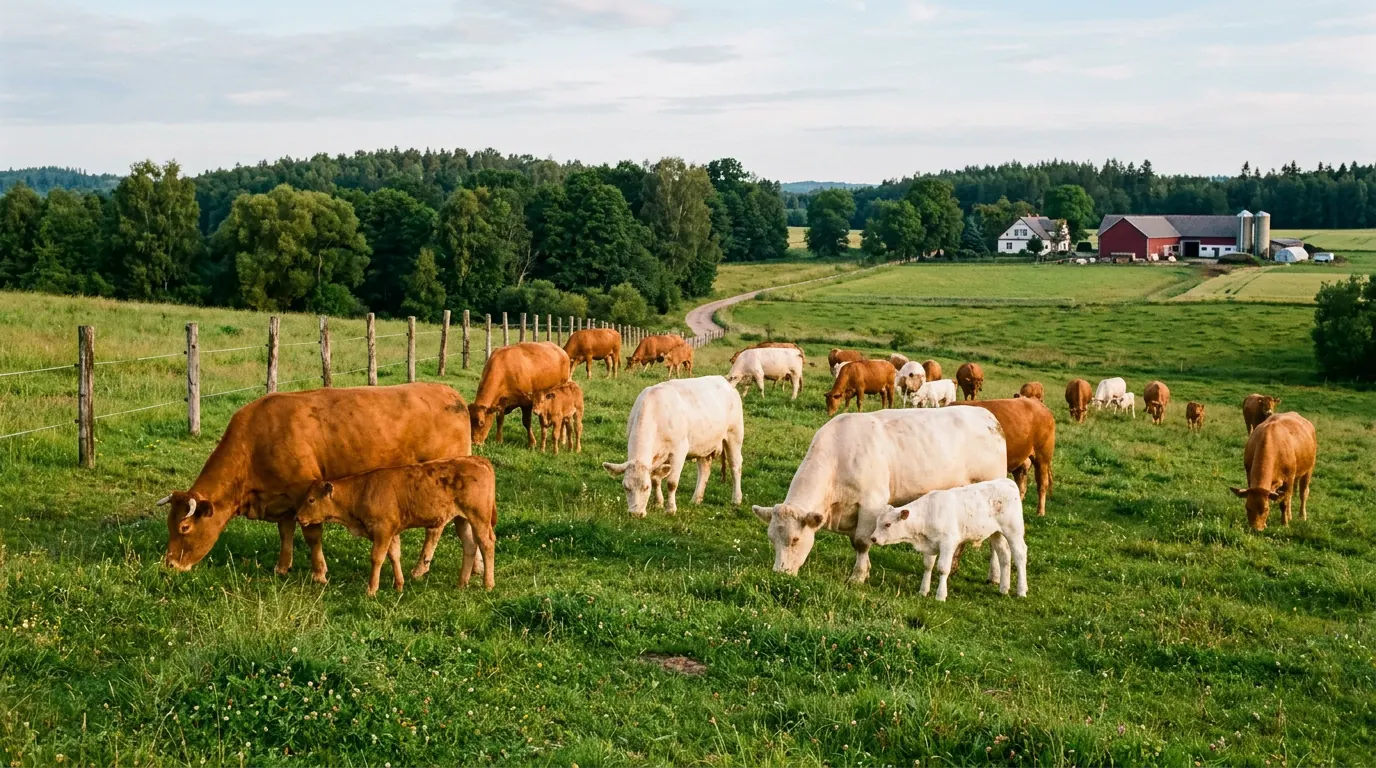
Heck cattle are a breed developed in the 20th century to recreate the look of the aurochs, the wild ancestor of today's domestic cattle. They are not aurochs and not clones. They come from crossing old breeds chosen for their resemblance to the aurochs: long, forward-pointing horns, dark bulls with a light stripe along the back, and a slim, long-legged build. Today they are kept mainly for conservation grazing, in zoos and in nature reserves.
Why recreate the aurochs
The last aurochs died in 1627 in the Jaktorów Forest near Warsaw. The species disappeared because people cleared forests, drained meadows and hunted the animals. After it vanished, only crossbred traits remained in domestic herds. Heinz and Lutz Heck, who ran the zoos in Berlin and Munich, wanted to bring back an animal similar to the aurochs. They used genes that had survived in old cattle breeds from different regions of Europe.
Where Heck cattle come from
Back-breeding
The Heck brothers used what is called back-breeding. They picked animals with aurochs-like traits, such as horns, color and body shape, scattered across different old breeds. They paired them and selected offspring for resemblance to the aurochs. The program used several primitive breeds from southern and eastern Europe and from the British Isles. Descriptions differ on which breeds took part, so if you buy animals for a herd, ask about the pedigree of the specific line.
Aurochs recreated, but not resurrected
The name "back-bred aurochs" describes the aim of the breeding, not its result. Aurochs genes died out with the species and selection cannot restore them. Heck cattle look like aurochs but remain domestic cattle with traits chosen by people. We therefore describe them as a primitive breed with a wild look. You will find similar descriptions in the livestock breed atlas of Poland's Integrated Educational Platform (Zintegrowana Platforma Edukacyjna), which lists breeds side by side by production type.
What Heck cattle look like and how they behave
Build and color
Heck cattle are slimmer and longer-legged than typical beef breeds. Beef breeds have a broad, deep body and short legs, while the Heck has the outline of a free-living animal. Bulls are dark, almost black, with a light stripe along the back. Cows are reddish brown. The horns are long and curve forward, which sets them apart from polled breeds. With long horns, follow safety rules similar to those for Texas Longhorn, where horns also shape the layout of feed barriers and passages.
Temperament and handling
These cattle are alert, quick and more skittish than beef or dairy breeds kept close to people for generations. Bulls can be aggressive, and cows with calves defend their young hard. Handling facilities must therefore be solid: a high fence, a narrow race and a crush to hold the animal during procedures. Keepers who have only had calm breeds should plan for this before buying the first animals.
What Heck cattle are used for
Conservation grazing
The main value of these cattle is that they can stay outdoors all year and feed on vegetation that demanding breeds avoid. They eat grasses, sedges and shrub shoots. Their hooves break up the ground and create spots where pioneer plants can germinate. That is why Heck herds are kept to protect meadows, peat bogs and wetlands. If you are looking for animals to manage rough land on your farm, compare them with other breeds in the catalog, for example Shorthorn.
Meat value
Heck cattle grow more slowly than beef breeds selected for gain. In its beef system guidance, Teagasc says that profit in beef production depends on reaching a high carcass weight at a young age. Primitive animals usually do not meet that goal. The meat is lean and dark, but the yield per animal is small. If beef is your aim, look at the breeds in our article on beef cattle, and treat the Heck as an addition to conservation grazing, not as a finishing animal.
Housing and feeding
Pasture and wintering
Heck cattle tolerate cold and damp well, so they often winter on pasture, as long as they have a dry place to lie, shelter from wind and a steady water supply. In winter they need bulky feed: hay or grass silage. With good paddocks and a low stocking rate, extra feeding stays limited, but a ruminant's gut still needs fiber every day, as we explain in how many stomachs a cow has. Set the stocking rate by sward quality, not by the number of hectares. See also our guide to grazing cattle on pasture.
Health and parasites
Animals on pasture for the whole season are exposed to external and internal parasites. In hot months biting insects are a big problem, as we describe in the article on horse flies and warble flies. A vet sets the worming program and the treatment, choosing the medicine and dose. Observe the withdrawal period: you must not use meat or milk from a treated animal until the withdrawal period given for the medicine has passed.
Registration and legal requirements
Whether you keep Heck cattle for conservation grazing or as a hobby, they count as cattle under the animal identification and registration rules. That means ear tags, entries in the herd register and reports in IRZplus, ARiMR's online animal register. For details and current requirements, as of 23.11.2026, check with Poland's ARiMR (Agency for Restructuring and Modernisation of Agriculture) and your county veterinary office (powiatowy inspektorat weterynarii). According to EFSA, there is currently no separate EU law on the welfare of beef cattle. Directive 98/58/EC on the protection of farmed animals applies, so you must provide water, feed, shelter and care. See also rules and documents for beef cattle keepers.
Frequently asked questions
Are Heck cattle real aurochs?add
No. They are domestic cattle bred by crossing old breeds so that they look like the aurochs. The genes of the extinct species did not return, so this is a recreation of the look, not of the animal itself.
Who created Heck cattle?add
Heinz and Lutz Heck, directors of the zoos in Berlin and Munich. They worked on it in the 1920s and 1930s.
When did the aurochs go extinct?add
The last female died in 1627 in the Jaktorów Forest near Warsaw. Historical studies commonly give this date.
What are Heck cattle kept for?add
Most often for conservation grazing on meadows, peat bogs and other land of high natural value, and for zoos and reserves. Their value for meat production is small.
Are Heck cattle dangerous?add
They can be skittish and defensive, especially bulls and cows with calves. They need strong fences and equipment to restrain animals. We advise inexperienced keepers to start with calmer breeds.
Do Heck cattle have to be registered?add
Yes. They follow the same tagging and registration rules as any cattle. Check current requirements with ARiMR and your county vet.
Sources & resources
- linkZPE / MEiN (Integrated Educational Platform) — Farm animal breeds, interactive atlas (e-material ROL.11)
- linkTeagasc (Ireland) — Teagasc Beef Manual — Section 3: Beef Systems
- linkEFSA AHAW Panel — Welfare of beef cattle (EFSA Journal 23:9518)
- linkARiMR — gov.pl/web/arimr
- linkIZ PIB — Farm animal keeping and breeding over 70 years. Cattle Breeding Department, Sheep and Goat Breeding Department
Prepared by: DlaFerm Team based on data from the sources listed · Publisher: INSTA-TECH sp. z o.o.
Register your animals in one place
The IRZplus and sensor integrations module in DlaFerm helps you keep animal data and reports in order. Create a free farm account or get in touch with us.
Phone
+48 796 258 151