Horseflies and warble flies: protecting cattle on pasture
Horseflies and warble flies are two different insects that cut gains and damage hides during the grazing season. You protect the herd by watching it on pasture, rotating paddocks and following a plan agreed with your vet. Below we describe the signs, the losses and the withdrawal rules.
verifiedFrom the team that has organised work on poultry farms for years.
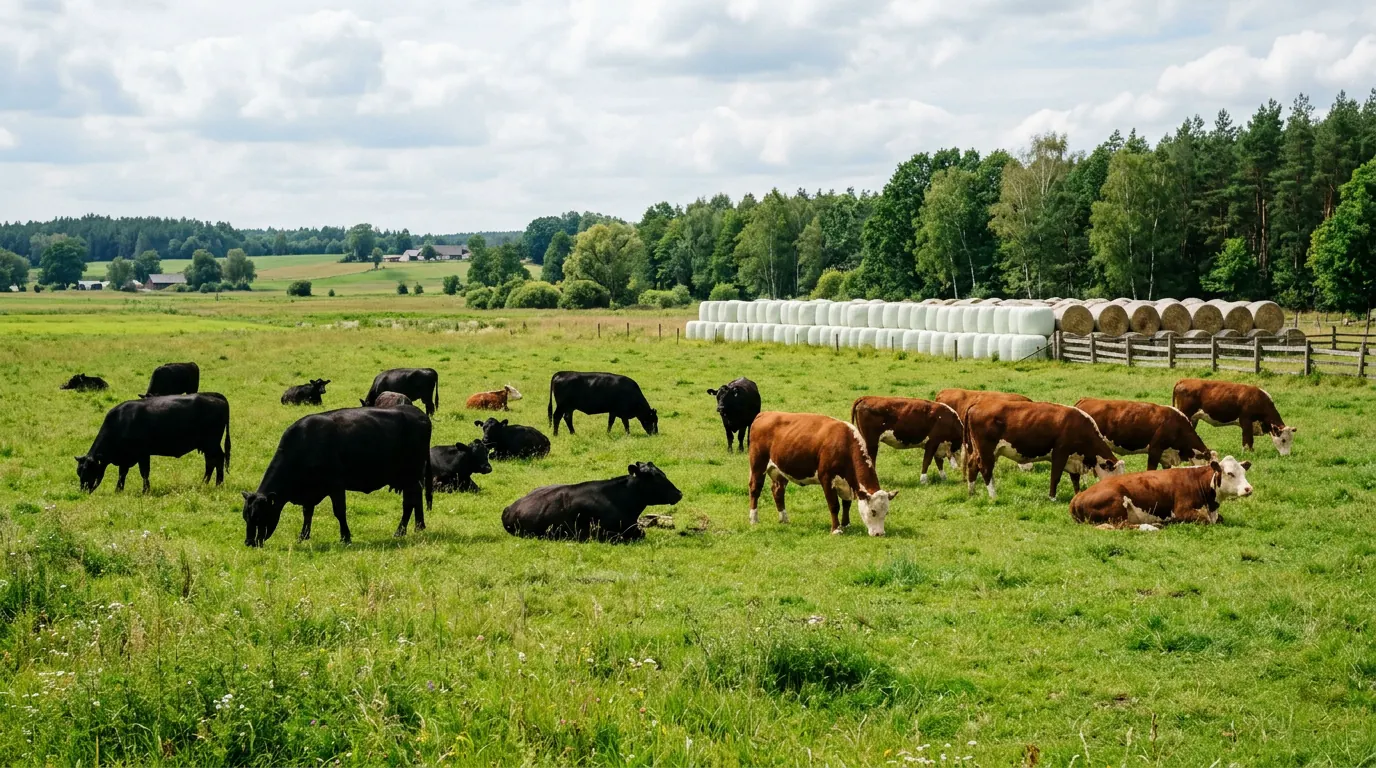
Horseflies and warble flies are two different insects that attack cattle on pasture in the warm part of the year. Horseflies feed on the blood of adult animals and scatter the herd during the day. The warble fly lays eggs on the hair of the legs, and its larvae develop under the skin of the back. Protection rests on three things: watching the herd, managing the pasture, and a veterinary plan chosen by your vet.
Horseflies and warble flies: two different problems
Horseflies: pain and a restless herd
Horseflies (family Tabanidae) are flies whose females suck cattle blood. The bite is painful and the spot often bleeds. Animals become restless, swish their tails, bunch together or look for shade. Instead of grazing, they lose time running from the insects. When pressure is heavy, even good pasture does not give its full effect because the herd keeps moving. Horseflies are most active on warm, sunny days.
Warble fly: larvae under the skin
The adult warble fly lays eggs on the hair of the animal's legs. The larvae migrate through the tissues and settle under the skin of the back, where they form typical lumps with a small breathing hole. The skin there is damaged. After slaughter, holes and defects lower the value of the hide. You usually see the lumps in winter and spring, and the damage builds up over many months after infestation. If you are unsure, tell your vet.
How to recognize an attack in the herd
Signs while grazing
Watch the herd on hot, still afternoons. Restlessness, tail swishing, bunching in shade, standing in water and animals lying down instead of grazing are typical signs that insects are bothering them. Note which part of the pasture the herd gathers in and compare it with the weather. That tells you whether to change paddock or provide shade.
Signs on the back in winter and spring
At every herd check, run your hand along the backs of cows and young stock. Lumps with a small hole at the base may mean warble fly larvae. Do not squeeze them out on the farm. Report the lesions to your vet, who will decide whether and when to treat. Record the number of affected animals in each age group, because it helps when you plan the next season.
What you lose when insects bother the herd
Gains are money
According to a 2011 summary by the National Research Institute of Animal Production (IZ PIB), Simmental heifers in their first grazing season gained 734 g per day on average, from 266 kg at turnout to 382 kg at the end of grazing. The data come from one genetic group and the conditions of that period, so use them as a reference point, not a standard for your herd. Every day the herd spends running from insects shortens grazing time. Compare gains from previous seasons before you decide the weather alone is to blame.
Ill-thrift: when an animal does not grow
Teagasc (Ireland), in section 7 of its beef manual on animal health, defines ill-thrift as failure to maintain condition and body weight, or poor growth in young animals. The manual lists underfeeding, parasites and chronic disease among the causes. Insects are not gut parasites, but they can reduce feed intake and gains in a similar way. The same manual says good grass management, meaning plenty of green, highly digestible grass, gives animals the energy for maintenance and growth.
Prevention on pasture
Shade, water and calm
Give the herd shade in every paddock, ideally trees or a roof they can use in the hottest hours. Water should be available without animals crowding at one point. Avoid spots near standing water, where insects often gather. Animals that do not have to fight for shade and water get less restless. If there is no natural shade, plan grazing so the herd moves to cooler paddocks in the worst hours. It is worth writing the protection plan down together with your hygiene rules, for example in the biosecurity plan generator.
Paddock rotation and grass supply
Teagasc, in section 6 of its nutrition manual, recommends that in spring daily grass availability rises with the number of animals, so that animals have about 2% of body weight in grass. A grass shortage keeps the herd longer in one paddock. Plan rotation so animals do not return too early to the same part of the pasture and each paddock holds enough grass. A review of farm software can also help when you set grazing dates.
Products only on your vet's advice
Insect products, such as pour-ons, ear tags, patches, or oral and injectable products, are chosen by your vet or adviser. The choice depends on the insect species, the age of the animals and the purpose of the herd. Do not use leftover products from the cupboard or from another herd without advice. Agree the timing and method of application with your vet. Protection against horseflies and protection against warble flies are two separate plans, because the insects are active at different times of the year.
Treatments, records and withdrawal periods
Record every treatment
Record the date, product name, batch number, method of administration, number of animals and the person who did the treatment. Keep the records so you can compare them with the data in IRZplus, ARiMR's online animal register. The Treatment and withdrawal module in DlaFerm helps you assign a withdrawal period to a specific group of animals. We describe the links to the register in the module on integrations with IRZplus and sensors.
Withdrawal period: a rule, not a rule of thumb
The withdrawal period is the time from the last dose of a product until meat (and in dairy cows also milk) can be sold or sent to slaughter. Its length comes from the product leaflet and your vet's advice. You can check the medicines rules in ISAP, Poland's online database of legal acts (Internetowy System Aktów Prawnych), as of 22.11.2026. Do not work out withdrawal from memory and do not accept shortcuts like "it's usually enough". Write down the end date right after the treatment and check it before animals leave the farm.
Lumps on the skin: report before slaughter
If the herd has warble fly lesions, tell your vet before sending animals to slaughter. Holes in the hide lower its value. Skin lumps can also be a sign of other diseases, such as lumpy skin disease, described in a leaflet from PODR Szepietowo (a regional agricultural advisory center). Leave the diagnosis to your vet. Record the number of animals with lumps in each group, because it helps when you discuss the plan for the next season with your vet.
Frequently asked questions
What is the difference between a horsefly and a warble fly in cattle?add
The horsefly sucks blood and scatters the herd during the day, and its bites cause pain and stress. The warble fly lays eggs on the legs, and its larvae develop under the skin of the back and form lumps with a small hole. So they differ in where you see the damage and when they appear.
When are cattle most exposed to horseflies?add
Mostly on warm, sunny days when the insects are active. Watch the herd on hot afternoons and near water, and plan paddock moves so animals have shade. Agree the exact timing of protection with your vet.
Can you protect cattle from flies without products?add
You can reduce insect pressure with shade, access to water, paddock rotation and calm grazing. These measures do not replace a plan agreed with your vet, especially when insect pressure is heavy. If you see skin changes, tell your vet.
How do you recognize a warble fly lump on the back?add
A warble fly lump is a swelling you can feel under the skin of the back, often with a small hole at the base. Do not squeeze it out on the farm. Report it to your vet, who will judge whether it is a warble fly and what action is needed.
How long after treatment can cattle go to slaughter?add
There is no single answer for all products. The withdrawal period depends on the product, the route of administration and your vet's advice, and you can check the rules in ISAP, Poland's online database of legal acts. Write down the end date and check it before animals leave the farm.
How do you record fly treatments in farm software?add
In the Treatment and withdrawal module you record the product, the date given and the group of animals. Treatment data then sits in one place with your herd records. Start by recording one season, so you have something to compare with the next year.
Sources & resources
- linkTeagasc — Teagasc Beef Manual — Section 7: Animal Health
- linkTeagasc — Teagasc Beef Manual — Section 6: Nutrition
- linkIZ PIB — WZ — 60 years of IZ research on beef cattle (J. Trela et al.), WZ XLIX(2011)4:11–56
- linkPODR Szepietowo — Lumpy skin disease (LSD) — leaflet (Z. Marciniak)
- linkChief Veterinary Inspectorate (Główny Inspektorat Weterynarii) — gov.pl/web/wetgiw
- linkInternetowy System Aktów Prawnych (Poland's online database of legal acts) — isap.sejm.gov.pl
Prepared by: DlaFerm Team based on data from the sources listed · Publisher: INSTA-TECH sp. z o.o.
Want cattle treatments and withdrawal periods in one place?
The Treatment and withdrawal module in DlaFerm helps you record products given, dates and withdrawal periods for each group of animals. Create a free farm account and see how it works in practice, or get in touch with us.
Phone
+48 796 258 151