Cow and heifer insemination: timing, heat signs, cost
Good insemination starts with catching heat, not with the procedure itself. We cover heat signs, the rule "seen in the morning, inseminate in the afternoon; seen later, inseminate the next day", the wait after calving and what drives the cost.
verifiedFrom the team that has organised work on poultry farms for years.
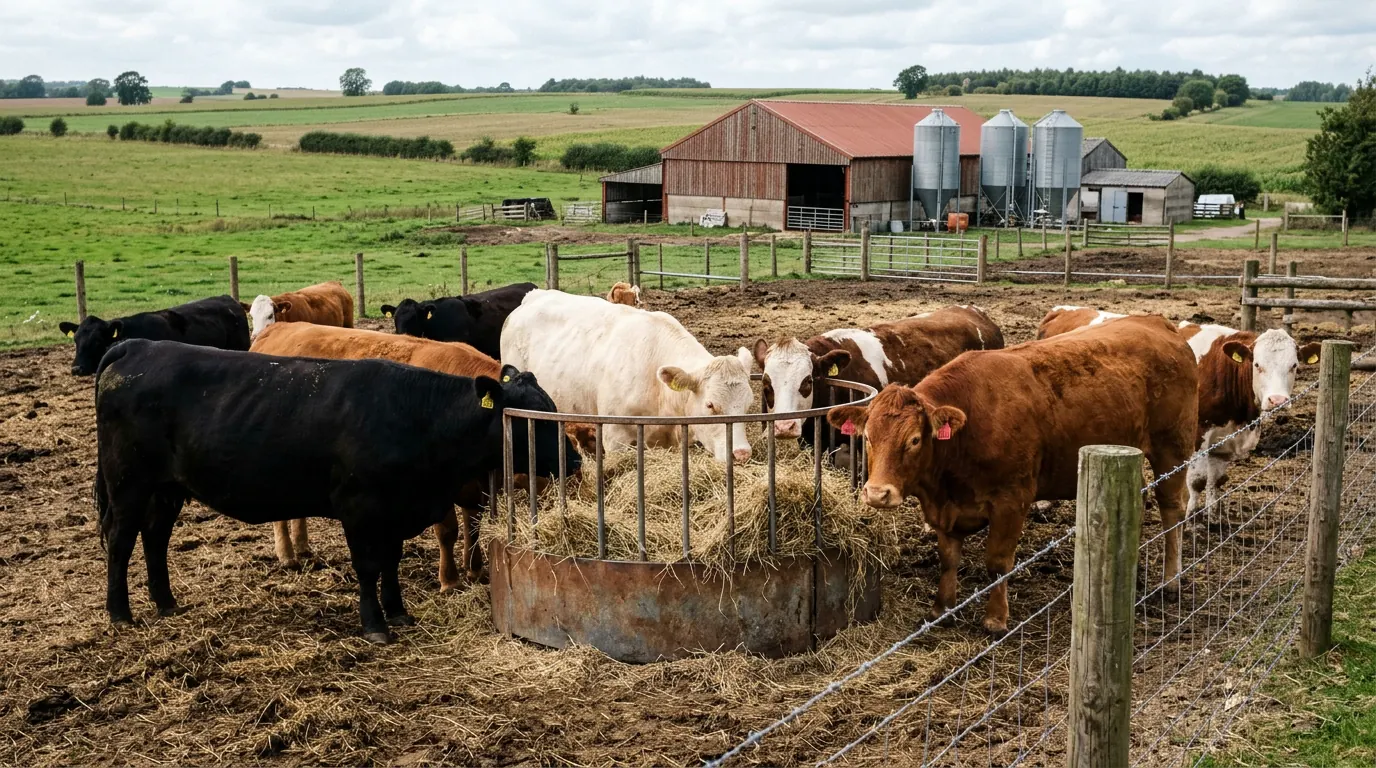
You inseminate a cow during heat, at a set time of day. Under the rule given by Geno, the Norwegian breeding cooperative, a cow showing heat in the morning is inseminated in the afternoon of the same day or early the next morning. A cow that comes into heat later in the day is inseminated the next day. After calving, wait at least six weeks.
Where most failed inseminations come from
The most common reason for a failed insemination is a wrongly judged time, not the semen. Heat often starts unnoticed, especially in a loose housing barn or on pasture. So a farmer who records heat dates and watches the herd every day gets better results than one who guesses. You then enter the result in the calving calendar described in our article on cow pregnancy and calving dates.
How to recognize heat in a cow
Signs you can see in the herd
Heat repeats every 21 days when the animal is not pregnant. The Geno guide lists several signs worth noting. Rubbed or ruffled hair at the base of the tail shows the cow is in heat or has just been. This applies to animals in loose housing and on pasture. Bleeding from the lining of the uterus appears after heat ends, usually 1-2 days later. Such a cow has already been in heat, so you look for the next one in about three weeks. Watch the herd several times a day, not only at milking or feeding.
Heat calendar and notes
Write down heat, insemination and calving dates right away, not from memory at the end of the week. Geno states that using a heat calendar raises fertility by several percent. A calendar lets you predict the next heat of a cow you missed earlier and plan days of closer observation. In a larger herd, paper notes pile up fast. You can keep herd event records in the DlaFerm farm management software.
The insemination window and timing after calving
The insemination window within a day
It is often hard to tell when heat began. Geno gives a simple rule. If you see signs in the morning, inseminate in the afternoon of the same day or early the next morning. If you see them later in the day, inseminate the next day. Write down the hour of the first signs, because everything else depends on it. If you are not qualified to do the procedure yourself, book an inseminator or a vet ahead of time so they arrive at the right time.
When to inseminate after calving
After birth, the uterus contracts, returns to normal size and cleans itself. An insemination done too early usually has to be repeated. Geno recommends waiting at least six weeks after calving. Ideally the cow goes through one full heat after calving before the next insemination. Take cows after a difficult birth or with health problems after calving to a vet. In dairy cows, feeding also affects breeding results, so read our article on ketosis in cows.
Inseminating heifers
Body weight before breeding
Development decides when to breed a heifer, not the farmer's wish. An example comes from the National Research Institute of Animal Production (IZ PIB) and its organic farm at Glinna, where Limousine suckler cows are kept. Heifers born in spring averaged 445.8 kg body weight and 125.3 cm withers height before breeding. Heifers born in summer had 406.8 kg and 120.1 cm. After calving, the same groups weighed 604.8 kg and 579.8 kg respectively. This is data from one farm and one breed, so treat it as a reference point, not a standard for your own herd. Set the target weight for your breed with a breeding adviser or a vet.
A heifer bought in calf
You do not have to inseminate every heifer yourself. You can buy an animal already in calf and shorten the time to first calving. What to look at when buying and why prices differ are covered in our article on in-calf heifers. If you plan a suckler herd, also see the cost comparison in how much a cow, bull and calf cost.
Cost of inseminating a cow
What the price of the procedure is made of
We give no amounts, because they differ between regions and semen suppliers. The bill has three parts. The first is the price of a semen dose, which depends on the bull, his breeding value and whether the semen is sexed. The second is the service of the inseminator or vet, with travel. The third is the cost of repeats if the cow does not conceive. The costliest item is often a timing mistake, because it lengthens the time to the next calving. Check current rates with your vet, an insemination station or a regional agricultural advisory center.
Beef breed semen in dairy herds
Dairy farmers often inseminate part of their cows with semen from beef breed bulls to get calves for fattening. According to an IZ PIB summary, in 2010 in Poland 77.6% of cows and heifers were inseminated, and 24.6% of cows were inseminated with beef breed bull semen. In 1980 the figures were 90.2% and 16.5% respectively. The choice of semen affects the value of the calf, so check prices in our article on slaughter cattle prices. We return to building a herd from scratch in the guide to dairy cow farming.
Barn conditions and breeding results
Flooring, space and observation
A cow on a slippery, crowded floor shows heat less often, because she fears falling. Take care of flooring, space and good lighting where the herd spends its time. When designing a barn, check dimensions and equipment in our articles on a barn for 20, 50 and 100 cows and a barn for beef cattle. Observation is easier with a fixed spot where you can see the whole herd, and one person who looks at the same animals every day.
A breeding plan in a suckler herd
In a suckler herd you want calvings grouped in one period so the calves are of similar age. This takes a plan: when to inseminate, when to put the bull in and when to wean the calves. The details are in the leaflet "Rozród w stadach bydła mięsnego" (Breeding in beef cattle herds) from WMODR Olsztyn, a regional agricultural advisory center. Also check the plan against subsidies and deadlines, which we cover in the article on cattle subsidies in 2026.
Frequently asked questions
When should you inseminate a cow after heat starts?add
If you see heat in the morning, inseminate in the afternoon of the same day or early the next morning. If you see it later in the day, inseminate the next day. This is the rule in the Geno guide. Write down the hour of the first signs.
When can you inseminate a cow after calving?add
Wait at least six weeks after calving. Ideally the cow goes through one full heat before the procedure. Inseminating too early usually means repeating it, because the uterus has not returned to normal.
How do you recognize heat in a cow?add
Rubbed hair at the base of the tail shows the cow is in heat or just was. Bleeding from the lining of the uterus appears 1-2 days after heat ends. Watch the herd several times a day and record the dates.
How often does a cow come into heat?add
Every 21 days if she has not conceived. That is why a heat calendar helps you pick days for closer observation. If heats are irregular, have your vet check the herd.
When should you inseminate a heifer?add
When she is well developed. At the Glinna farm, heifers before breeding averaged 406.8-445.8 kg, depending on birth season. This is data from one Limousine herd, so set the target weight for your own breed with an adviser or a vet.
How much does it cost to inseminate a cow?add
The price depends on the semen dose, the inseminator's or vet's service with travel, and the number of repeats. We give no amounts, because they change by region. Check current rates with your vet or an insemination station.
Sources & resources
- linkGeno (Norwegian breeding cooperative) — Heat and heat detection (Polish version)
- linkWMODR Olsztyn (gov.pl) — Breeding in beef cattle herds (leaflet)
- linkIZ PIB — WZ — Beef cattle farming at the Glinna organic farm — IZ PIB Kołbacz experimental station
- linkIZ PIB — WZ — 60 years of IZ research on beef cattle (J. Trela et al.), WZ XLIX(2011)4:11–56
- linkTeagasc — Teagasc Beef Manual — Section 4: Breeding
Prepared by: DlaFerm Team based on data from the sources listed · Publisher: INSTA-TECH sp. z o.o.
Record heats and inseminations in one place
With the DlaFerm farm management software you keep herd event records without paper notes. Create a free farm account or get in touch, and we will show you how it works in practice.
Phone
+48 796 258 151