How much does a cow, bull or calf cost?
The price of a beef cow, bull or calf depends on what the animal is for, its age, weight, condition and papers. There is no single rate, and market quotes change every week. Below we show what drives the price and how to check it before you sell or buy.
verifiedFrom the team that has organised work on poultry farms for years.
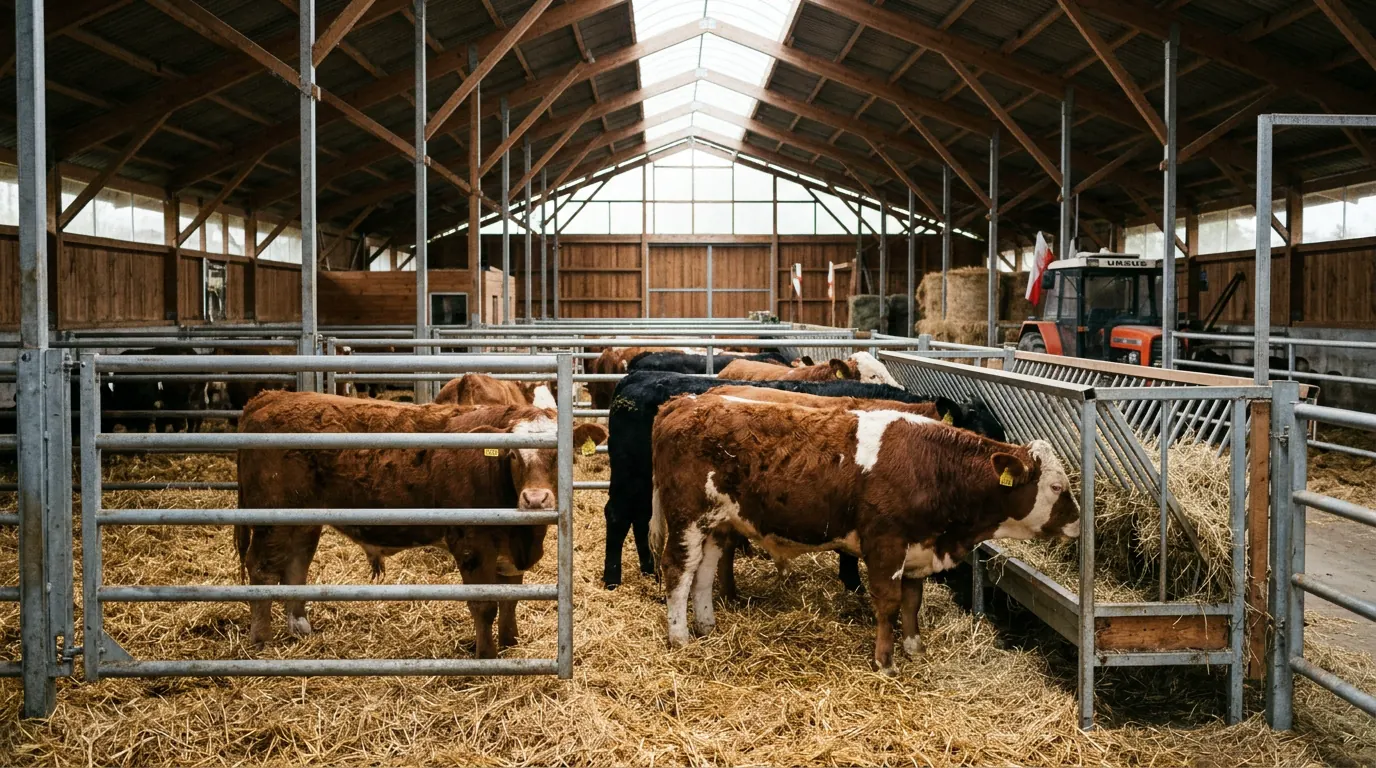
A beef cow, a bull and a calf have no single fixed price. The price depends on breed, age, body weight, condition, pedigree and whether the animal has documented breeding value. The state of the beef market adds to that. We give no amounts, because quotes change every week. Below we describe what sets the price and where to check it, as of 22.11.2026.
Why there is no single rate
A suckler cow sold for slaughter is priced differently from a breeding cow with herd book papers. A bull sold for breeding is valued by his ancestry and performance evaluation, not only by live weight. A calf weaned from the cow is priced by sex, age and gain. The closer the animal is to the slaughterhouse, the more weight counts. The closer it is to breeding, the more papers and traits count. For a closer look at the system, see our guide to the suckler cow system.
What sets the price of a cow
What the animal is for
A cow culled from the herd for slaughter is worth about the current purchase price of beef cattle, calculated on weight and carcass class. A healthy breeding cow with documented ancestry can be priced higher, because the buyer is paying for future calves. You can check purchase prices at slaughterhouses and in settlements with buyers. Compare rates for the same weight and the same class, because differences between offers often come from different weight, not a different price per kilogram. Current quotes are covered on our cattle prices page.
Age, weight and condition
A cow's body condition at calving affects how well she performs afterward. Teagasc, the Irish beef production manual, says cows in low condition (BCS below 2.0) at calving tend to return to heat later, and some cows show no heat at all in the first 60–70 days after calving. A cow that returns to cycle quickly and rears her calf is usually worth more than an animal with fertility problems. Score condition before you sell and record the weight from weighing.
Bull and calf: what adds value
Breeding bull
A bull sold into a breeding herd is priced by his performance and breeding value evaluation. IZ PIB, Poland's Institute of Animal Production, describes methods in its work on evaluating beef breeds that let you compare animals from different herds. In the AHDB manual for suckler herds (the UK's Agriculture and Horticulture Development Board), the bull check, called a Bull MOT, is listed as part of planning the breeding season. Before buying, ask for pedigree papers and the check result, not just the seller's opinion. Our guide to bull prices covers more.
Calf at weaning
A calf's price depends mostly on its weight at a given age. For spring calving, Teagasc gives bull calves of about 345 kg at 7 months (gains of 1.3–1.4 kg a day) and heifers of about 295 kg at the same age. For autumn calving, bull calves reached about 425 kg at 9 months. These figures come from the Irish system, so use them for comparison, not as a price list for the Polish market. Weighing calves at regular intervals shows whether an animal is growing as planned.
Papers and animal health
Identification and register
Every animal sold from a farm must be properly identified and registered. When the register matches what is in the herd, sale and inspection go more smoothly. You can pass data through the IRZplus integration in the DlaFerm module (IRZplus is ARiMR's online animal register, run by Poland's Agency for Restructuring and Modernisation of Agriculture), and check the details of the requirements on the ARiMR website. Missing or outdated papers lower the buyer's trust and often end in a lower price. See also the rules and documents for beef cattle keepers.
Health and price
AHDB describes how cows fed fresh, lush grass in cool, wet weather risk a magnesium shortage called hypomagnesaemia. An animal in that state can lose condition and value. A vet always decides treatment and dose. Record the withdrawal period in your treatment log, because buyers and the slaughterhouse will ask about it. A treatment record also protects you from selling an animal still within its withdrawal period.
Keeping a cow and her price
Pasture and feed
In its work on feeding beef cattle in organic farming, IZ PIB gives feed intake for a cow-and-calf unit. In two variants of the trial, averaged over two seasons, it was about 13.8 kg of dry matter a day in one and 13.4 kg in the other (data of Strzetelski et al., 2000, 2001). Pasture yield in those studies varied widely. Before you set a selling price, work out the feed cost for each calf weaned from a cow and compare it with the live cattle price. Housing costs matter too; see our guide to a beef cattle barn.
Planning the breeding cycle
Teagasc recommends limiting the breeding period to 12 weeks, and for later-calving cows suggests spreading the calving over 2–3 weeks, starting 30 days after calving. According to the manual, about 85% of cows show fertile heat by day 50 after calving. Teagasc also says that with good fertility a herd gives about 0.95 calves per cow a year. Planning of placements and cycles in DlaFerm helps you see which cows need attention before their value drops. Our herd management software page explains how.
How to check the price before you sell
Where to find current prices
Quotes for beef cattle purchase change every week and depend on the market. Check them with several buyers, at agricultural advisory centers and in publications of the ministry of agriculture. Ask for the price per kilogram of live weight and for the weighing rules, because differences in how animals are weighed can change the result of a sale. For outlook, see our cattle price forecast.
Checklist before selling
Prepare data for each animal: sex, age, weight from weighing, condition, registration papers and treatment history with withdrawal dates. Such a list lets you compare offers fairly and answer the buyer's questions fast. In a larger herd, keeping this data in one place saves time, and records are easy to export, because the farm management software in DlaFerm keeps the animal register in one place.
Frequently asked questions
How much does a dairy cow cost?add
This guide is about beef cattle. The price of a dairy cow depends mainly on milk yield, age and udder health. Check current information with milk buyers and in breeders' ads. The exact value is best set for the specific animal.
How much does a breeding bull cost?add
A bull's price depends on ancestry, performance evaluation and age. A bull for a breeding herd is priced differently from a bull for slaughter. Before buying, ask for pedigree papers and the result of the pre-breeding check.
What sets the price of a calf?add
Mostly weight at a given age, sex and condition. For spring calving, Teagasc gives about 345 kg for a bull calf at 7 months. Data from other countries is for comparison, and the market sets the price in a given week.
Does breed affect the price of a cow?add
Yes, breed affects the price, especially when selling for further breeding. Papers and performance results matter a lot too. An animal without a pedigree is usually priced by weight and condition. See our guides to Limousine and other beef breeds.
Where can I check current beef cattle prices?add
Check quotes with several buyers and at agricultural advisory centers. Ask for the price per kilogram of live weight and the weighing rules. Prices change every week, so information from a month ago may be out of date.
Sources & resources
- linkIZ PIB — WZ — Current state and prospects of beef cattle farming and breeding in Poland (H. Grodzki et al.), WZ LIII(2015)2:77–87
- linkIZ PIB — WZ — New methods of evaluating the performance and breeding value of beef breeds (Z. Choroszy et al.), WZ LVI(2018)3:17–23
- linkTeagasc (Ireland) — Teagasc Beef Manual — Section 3: Beef Systems
- linkTeagasc — Teagasc Beef Manual — Section 4: Breeding
- linkAHDB Beef & Lamb (UK) — Beef BRP Manual 5: Feeding suckler cows and calves for Better Returns
- linkIZ PIB — WZ — Feeding beef cattle in organic farming conditions (K. Bilik et al.)
Prepared by: DlaFerm Team based on data from the sources listed · Publisher: INSTA-TECH sp. z o.o.
Do you run a suckler cow herd?
The farm management software in DlaFerm helps you keep animal, treatment and placement records in one place. Create a free farm account on DlaFerm.pl or get in touch, and we will show you how it works with beef cattle.
Phone
+48 796 258 151