Cattle subsidies in Poland 2026: rates, requirements, deadlines
Cattle subsidies for 2026 depend on the conditions set in the law and on whether your herd is registered correctly. We do not quote rates or deadlines here, because they change from year to year. We show what to check before you apply to ARiMR.
verifiedFrom the team that has organised work on poultry farms for years.
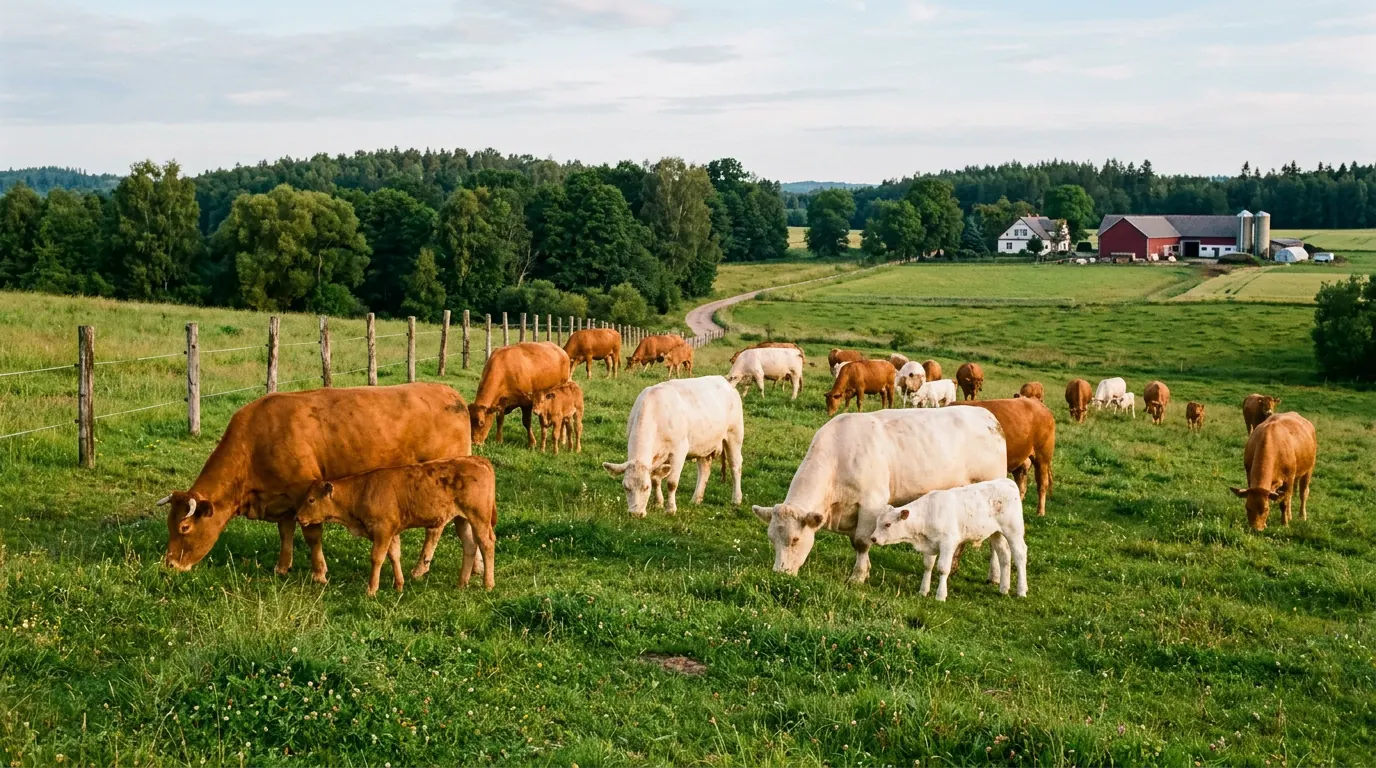
In 2026, ARiMR (Poland's Agency for Restructuring and Modernisation of Agriculture) pays beef cattle subsidies to keepers who meet the conditions in the law and file their application on time. We give no amounts or dates here, because the current legal act and the agency's notices set them, and they change from year to year. We do explain what your right to payment depends on, which documents to prepare and where to find the binding data. Legal state of this description: 22.11.2026.
Which subsidies a cattle keeper may be entitled to
Direct and area payments
Direct payments come from the EU budget and ARiMR pays them to farmers who meet the conditions. Some are tied to the area of the farm, and some to a specific action, such as keeping animals or using environmentally friendly practices. We cover the details in our overview of ARiMR direct payments. Before you apply, check which payment group your animals and land fall into, because that decides which fields of the form you fill in.
Eco-schemes
Eco-schemes are extra payments for practices that go beyond the basic requirements, for example keeping permanent grassland or managing pastures. Rates and point values change from year to year, so compare them with the current list in eco-schemes 2026 before you decide. Do not plan your budget on last season's rate. It is the most common mistake in calculations.
Conditions a cattle farm must meet
Animal registration and identification
Cattle must be registered in IRZplus (ARiMR's online animal register), and each animal must be tagged as the rules require. Differences between the animals on the farm and the database are one of the most common reasons an application gets corrected. Compare the data every month, not just before you file. You can keep the data up to date with the IRZplus and sensor integration, which helps organize the flow of information on the farm.
Cross-compliance
Payments are linked to cross-compliance (warunkowość): requirements on animal welfare, environmental protection and food safety. For calves, the minimum protection standards of Council Directive 2008/119/EC apply, covering feeding, watering and housing conditions, among other things. Breaking the requirements can reduce your payment, so go through them before the season. We explain the rules in a separate guide to cross-compliance for subsidies.
The ARiMR application step by step
What to prepare before you file
Gather your animal records, the map of your land and area, the identification numbers of your animals and your bank account details. Check well ahead that your data in the ARiMR system is up to date. If your stocking or area changed during the year, update your documents before the deadline. Enter events such as sales, purchases and deaths as they happen, because an inspection checks the records for the whole period.
Deadlines: check the notices
ARiMR announces application deadlines in its notices for each year and in legal acts. We do not give dates in advance, because they may change. Check them on the ARiMR website at gov.pl and put them in your farm calendar a few days before the end of the application window. A late report of changes usually ends in a correction of your application, and a correction can take time.
Stocking, pasture and costs versus your bottom line
Stocking rate per hectare
Teagasc (Ireland) gives target stocking rates of 1.5–1.7 cows per hectare in its manual for a spring-calving suckler system, depending on the variant. These values come from a different climate and system, but they show the principle: stocking rate and area decide how much feed you have to buy. Before you enlarge the herd for the sake of a subsidy, work out the cost of feed and pasture per animal.
Subsidy versus production costs
According to a monograph from the Institute of Animal Science (IZ PIB), payments to keepers of conservation breeds in 1999–2008 were modest and were set each year by a regulation of the agriculture minister. This shows that a subsidy has limited effect on your result if the farm cannot keep costs under control. Calculate your income from live animals, including feed, veterinary care and labor. Keep health costs in one place, for example in the treatment and withdrawal records.
Animal disease and subsidy payments
Reporting suspected disease
Report infectious diseases, for example lumpy skin disease (LSD), to your vet. Movement restrictions can make it harder to meet some commitments. Report every suspicion at once and do not wait until the end of the year. The Chief Veterinary Inspectorate (Główny Inspektorat Weterynarii) describes the general procedure on gov.pl.
Treatment and withdrawal period
Your vet always chooses the medicine and the dose. After a medicine is given, a withdrawal period applies, which sets when the animal can go to slaughter. Record every treatment, its date and the end of the withdrawal period, because inspectors ask for these documents. You can check current rules in ISAP, Poland's online database of legal acts.
Frequently asked questions
What are the cattle subsidy rates in Poland in 2026?add
We do not give rates, because a legal act sets them and they can change. Current amounts are in ARiMR notices and in the legal acts in ISAP (Poland's online database of legal acts). Check them before you file, not from earlier seasons.
When do you apply for cattle subsidies in Poland?add
ARiMR announces the deadline in its notices for each year. We do not give dates in advance, because they may change. Put the deadline in your farm calendar and file with time to spare.
Do all animals have to be registered in IRZplus?add
Yes, cattle must be registered and tagged as the rules require. Differences between the database and the herd are a common reason for corrections. Compare the data regularly, not only before you apply.
Do cattle subsidies depend on cross-compliance?add
Yes, payments are linked to cross-compliance. Breaking welfare or environmental requirements can reduce your payment. Go through the rules before the season.
How do I check if my farm qualifies for eco-schemes?add
Start with the list of practices in the current eco-scheme overview, then check the conditions for your pastures and land. If you are not sure, talk to an ODR adviser (agricultural advisory center) or an ARiMR officer.
Will subsidies cover feed costs?add
Not always. A subsidy is one part of your income, not a guarantee of it. Work out the cost of feed, pasture, veterinary care and labor before you compare your result with the payment.
Sources & resources
- linkARiMR — gov.pl/web/arimr
- linkMinistry of Agriculture and Rural Development — gov.pl/web/rolnictwo
- linkInternet System of Legal Acts (ISAP) — isap.sejm.gov.pl
- linkIZ PIB — Farm animal husbandry and breeding over 70 years. Cattle Breeding Department, Sheep and Goat Breeding Department
- linkTeagasc (Ireland) — Teagasc Beef Manual — Section 3: Beef Systems
- linkEU Publications Office — Council Directive 2008/119/EC laying down minimum standards for the protection of calves
Prepared by: DlaFerm Team based on data from the sources listed · Publisher: INSTA-TECH sp. z o.o.
Do you keep a cattle herd and want your data to match IRZplus?
The <a href="/integracje-irzplus-czujniki">IRZplus and sensor integration</a> module links your farm data with IRZplus. Create a free farm account or get in touch, and we will show you how it works on your own herd.
Phone
+48 796 258 151