In-calf heifers: what they are, prices, how to choose
An in-calf heifer is a young female in late pregnancy who will calve soon. The price depends on breed, age, origin and stage of pregnancy, not on one market rate. Below we explain the difference between a heifer and a cow and what to look for when you buy.
verifiedFrom the team that has organised work on poultry farms for years.
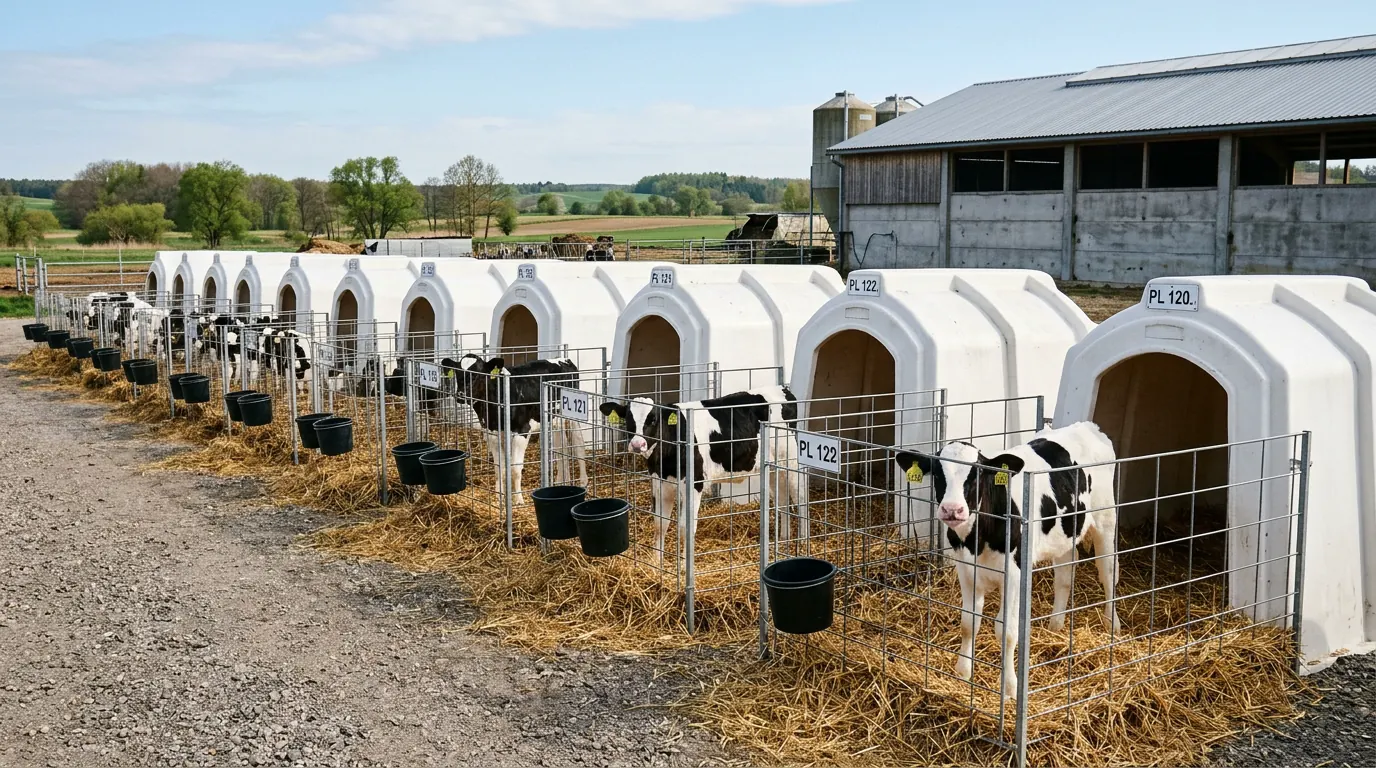
A heifer is a young female that has not yet had a calf. An in-calf heifer here means a heifer in the last months of pregnancy, while a pregnant heifer is the wider term for any heifer carrying a calf. Keepers often use the two names interchangeably, but when you buy, ask how much time is left before birth. That decides whether the animal goes straight into the cow herd and what care she needs.
Why this matters in a beef herd
In a suckler cow herd, every heifer joins the breeding herd. In one experimental herd of IZ PIB (Poland's National Research Institute of Animal Production), described in a publication marking 60 years of beef cattle work, the fourth year of the project counted 15 pregnant heifers, 55 heifers over one year and 35 heifers from half a year to one year. That split shows you have to plan replacements ahead. A heifer that calves too late delays the cycle of the whole herd. Plan calvings as part of your overall stocking and cycle planning.
Heifer, pregnant heifer and cow: the differences
From heifer to cow
A female stops being a heifer after her first calving. So when you buy, know whether the animal has yet to calve or is a cow with one calf behind her. A heifer after her first birth needs continued feeding and close watching, and her breeding results are still settling. Check the date of birth and the number of calvings in the documents before you sign a contract.
When a heifer counts as in-calf
An in-calf heifer is in the final stage of pregnancy. This is when you check her condition, look up the service date in the records and prepare the calving pen. We give no number of days before birth, because timing depends on how the pregnancy goes and on the breed. A vet or an experienced keeper sets it from the records.
Heifer prices: what they depend on
Factors that shape the price
Several things set the price of an in-calf heifer: breed or breeding line, age and body weight, documented origin, stage of pregnancy and whether the animal has entries in the records. A pedigree breeding heifer is priced differently from an animal meant for slaughter after calving. Regional demand and the cattle market also play a part. When you compare offers, ask about the same points: breed, age, stage of pregnancy and health test results.
Where to check current rates
You will find current quotes in publications of Poland's Ministry of Agriculture and Rural Development and in notices from agricultural advisory centers. Also ask a local breeder or a breeders' association about rates in your voivodeship. Always check the price on the day of purchase, not from an old offer. If you buy a heifer from a breeding program, ask about her breeding value, because it affects the price more than weight alone.
How to choose an in-calf heifer
Size and condition
Teagasc, the Irish beef manual for cattle keepers, advises that heifers should be big enough at calving and that cows and heifers should be neither too fat nor too thin. In IZ PIB measurements of F2-generation calves, withers height ran from 73.0 to 78.0 cm, depending on the season of birth. When you assess an animal in the pen, look at weight, pelvis build and overall condition.
Calving ease and genetics
With heifers, what counts is how easily they calve. A study described by EFSA (Bennett et al., 2021) compared heifers selected for calving ease with a control group in seven breed and crossbred populations. At first calving, the selected heifers had 7 percentage points fewer assisted births, and the share of calves surviving to weaning was 1.3 percentage points higher. Calves were 2.6 kg lighter at birth. Ask the breeder for calving ease data and choose an easy-calving bull, especially for heifers.
Care and feeding of a heifer before birth
Feeding in pregnancy
According to Teagasc, feeding in pregnancy should be balanced, with enough minerals and vitamins. If you do not know whether your herd lacks trace elements, ask a vet to take blood from a few animals in late pregnancy. We give no doses here, because they depend on the animal's weight, age and condition. Make sure the heifer is neither over-fat nor too thin before birth.
Birth and the calf's first hours
Teagasc advises being present at the calving of heifers, especially when birth is difficult. The calf should get colostrum, the first milk rich in antibodies, as soon as possible after birth. Keep the bedding clean where she calves, because poor hygiene encourages navel infections. If the due date passes and birth does not start, consult a vet.
Heifer records and herd health
What to record
For each heifer, keep her origin, date of birth, service date, expected calving date, condition and treatments. This data shows which heifers had hard births and helps you pick a bull for the next season. To compare tools, read how to choose farm software. We cover treatments and withdrawal periods in the module treatment records and withdrawal periods.
Identification and disease
When you buy heifers, ask for documents that confirm the animal's health and identification. Under the rules, keep identification data in the cattle register; we describe this in the module integrations with IRZplus (ARiMR's online animal register) and sensors. Diseases such as lumpy skin disease call for a quick call to a vet. If you suspect it, contact the county veterinary officer (powiatowy lekarz weterynarii). Put new animals into the herd only after quarantine, in line with your farm's implementation plan.
Frequently asked questions
What is the difference between a heifer and a cow?add
A heifer is a young female that has not yet had a calf. After her first calving she becomes a cow, even if her next pregnancy is still ahead. The difference matters for price, feeding and judging breeding results.
What is a pregnant heifer?add
A pregnant heifer is a heifer carrying a calf. The term covers animals at different distances from birth. When you buy, ask for the expected calving date and the service date.
How much does an in-calf heifer cost?add
The price depends on breed or breeding line, age, weight, origin and stage of pregnancy. We give no amounts, because they change fast. You can check current rates in publications of the agriculture ministry, at advisory centers and with local breeders.
How do I choose a heifer that calves easily?add
Look at the animal's size and condition and at calving ease data in her family. Research described by EFSA shows that selecting for calving ease reduces the number of assisted births. Also ask about the bull that served the heifer.
How do I prepare a heifer for calving?add
Give a balanced diet with enough minerals, clean bedding and a quiet calving place. Make sure the calf gets colostrum after birth. A vet or feeding adviser sets the doses and the ration.
When should I call a vet during calving?add
Call a vet when labor has not progressed for a long time, the calf is not breathing or the heifer is clearly in distress. A due date that passes without birth also needs a consultation. Do not delay the decision, because waiting raises the risk for both animals.
Sources & resources
- linkIZ PIB — WZ — 60 years of IZ work on beef cattle (J. Trela et al.), WZ XLIX(2011)4:11–56
- linkIZ PIB — WZ — Breed selection and breeding work in organic beef cattle herds (P. Wójcik, A. Czubska)
- linkIZ PIB — WZ — Beef cattle farming at the Glinna organic farm, IZ PIB Experimental Station Kołbacz
- linkEFSA AHAW Panel — Welfare of beef cattle (EFSA Journal 23:9518)
- linkTeagasc — Teagasc Beef Manual — Section 7: Animal Health
Prepared by: DlaFerm Team based on data from the sources listed · Publisher: INSTA-TECH sp. z o.o.
Running a suckler herd and planning heifer calvings?
The module for integrations with IRZplus and sensors helps you keep your animal data in one place. Create a free farm account or get in touch, and we will show you how it works in practice.
Phone
+48 796 258 151