Ketosis in cows: signs and prevention
Ketosis is an energy imbalance that most often hits a cow around calving, when her energy needs rise and her appetite falls. She starts burning her own body fat, and the ketone bodies this produces put a strain on her system. We describe the signs, the causes and what you can do in your herd before the disease develops.
verifiedFrom the team that has organised work on poultry farms for years.
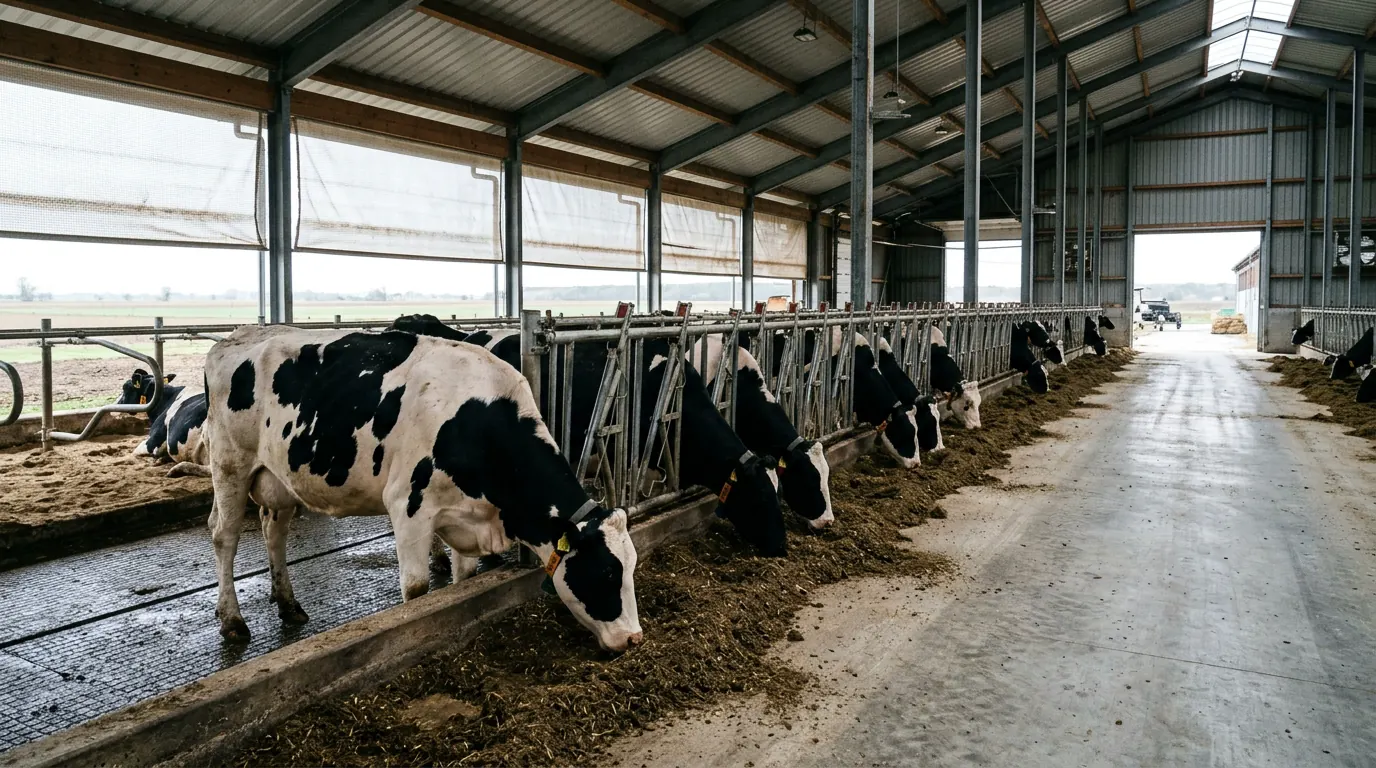
Ketosis in cows is a metabolic disease. The cow does not get enough energy from her feed and starts burning stored body fat at a high rate. The ketone bodies this produces build up in her blood and urine, and she eats less and moves more slowly. Ketosis is most often seen in the first weeks after calving, but it can also appear late in pregnancy. Below we explain how to recognize it, where it comes from and what lowers the risk in your beef herd.
Why it matters in a beef herd
Suckler cows feed their calves with their own milk, so a drop in appetite shows up at once in calf gain. You lose on two animals at the same time: the sick cow and the calf that gets less milk. The disease is easy to miss, especially in a large herd kept on pasture, where cows are seen up close less often. Treat ketosis as a herd problem, not a single case, and write your observations into your records from the start.
How to recognize ketosis in cows
First signals
Before clear signs appear, the cow usually eats less and picks through her feed. She may move away from the herd, lie down and chew cud less often, or lag behind when the herd is moved. You will often notice a change in how she treats her calf: she looks after it less, and it gains weight more slowly than its peers. In cows showing these signs, check her breath, which can smell clearly of acetone.
Advanced signs
In more severe cases the cow is dull, reacts slowly to stimuli and may have poor coordination. She may also lick objects or behave oddly. Watching alone does not confirm the diagnosis. Ketosis is confirmed by testing for ketone bodies in urine or blood, which a veterinarian carries out. If you suspect it, do not wait for it to pass on its own. Call your vet.
Why ketosis appears after calving
Energy balance around calving
According to IZ PIB (Poland's Institute of Animal Production, K. Bilik et al.), the period around calving covers about 3 weeks before and after calving, and the cow's nutrient needs are especially high then. At the same time her appetite often drops, mainly in the first days after birth. When the feed supplies too little energy, the body draws on stored fat. Breaking down fat produces ketone bodies, and an excess of them disturbs how the body works. The longer the deficit lasts, the higher the risk of disease.
Body condition and feeding
The same ration works differently on a cow in good condition and one in poor condition. According to IZ PIB, the feeding level of suckler cows is closely tied to the calving period, physiological state and body condition, and condition shows how much fat reserve the cow can use. Cows that are too fat before calving often eat worse afterward. Thin cows have few reserves to burn in an emergency. Both extremes raise the risk, so plan cow condition ahead, for example with production cycle and stocking planning.
How to lower the risk in your herd
Feeding around calving
Change the ration and its makeup gradually, especially in the last weeks of pregnancy and the first weeks after calving. The cow should always have access to good forage and water. In its Beef Manual (nutrition section), Teagasc describes feeding cows at different stages of the cycle, and IZ PIB points to adding a mineral mix during the grazing season and lactation. Set the exact ration with a feeding adviser or your vet, not from general advice.
Checking cow body condition
Score body condition regularly, ideally at several points in the cycle: before calving, at calving and in mid-lactation. Assess cows by eye and by touch, comparing them within the herd. Write the scores down so you see trends, not just a snapshot. Cows that stand out clearly from the rest are better moved to a different feeding group. Keep condition records in a farm management program, where you can easily set them against calving dates.
What to check around calving
Daily check of freshly calved cows
Every day, check whether the cow eats, how she behaves with her calf and whether she passes urine and dung as usual. Watch whether she stands at the feed, whether she leaves the herd and whether she reacts when called. When many cows calve in larger groups, name one person responsible for the check and agree what to report straight away. Reports and notes are easier to keep in the employee app, where each team member records their own observations.
Support from sensors and data
If your herd uses collars or activity sensors, a change in a cow's daily behavior is often the first sign of trouble. Sensor data only makes sense when you compare it with observations and records. Linking it to your records helps tell a short dip in activity from a real decline in health. Check which options exist in integrations with IRZplus (ARiMR's online animal register) and sensors before you start collecting data on a larger scale.
Treatment and withdrawal period: the vet's role
What the vet does
If you suspect ketosis, contact your vet, who will confirm the diagnosis and decide on treatment. It may include products that support carbohydrate metabolism or a change in that cow's feeding. Do not give the cow drugs on your own, and do not use doses from forums or old leaflets. The vet will also say whether the cow needs further checks and explain how to handle milk or meat after treatment.
Records and the withdrawal period
Record every treatment straight away: the date, the name of the drug, how it was given, who did it and when the withdrawal period ends. The withdrawal period is the time after which products from the animal can safely go to market, and it must be kept without exceptions. Records are easy to keep in the treatment and withdrawal module, which tracks deadlines and shows which animals are still under withdrawal. Before selling, check the rules in force in your district with your vet or the county veterinary inspectorate (powiatowy inspektorat weterynarii).
Frequently asked questions
Is ketosis in cows contagious?add
No. Ketosis is a metabolic disease, so it comes from an energy imbalance, not from an infection. It does not pass from cow to cow, but it can show up more often in a herd if part of the animals are fed or managed the same way and have similar condition problems.
Does ketosis affect beef cows or only dairy cows?add
The disease is best known from dairy barns, but it also occurs in suckler cows, especially around calving and in poor condition. In beef herds it is easier to miss, because cows are seen up close less often.
How do you recognize ketosis in a cow?add
The most common signals are lower appetite, dullness, moving away from the herd and less care for the calf. If ketosis is suspected, the breath can smell of acetone. The diagnosis itself needs a test done by a vet.
Can a cow with ketosis nurse her calf?add
The vet decides, after assessing the cow and the calf. A cow with ketosis eats less, so her milk and her care for the calf may be limited. The calf often needs extra observation and extra feed as the vet advises.
Can ketosis be prevented?add
There is no full guarantee, but you can clearly lower the risk. Stable feeding around calving, regular body condition scoring and daily observation in the first weeks after calving all help. Also avoid sudden feed changes.
What should you do if you suspect ketosis in your herd?add
Separate the cow from the group if you can and contact your vet. Do not wait for the signs to get worse. Write down your observations: since when the cow has eaten less, what she did with her calf and how her behavior changed. This helps the diagnosis.
Sources & resources
- linkTeagasc — Teagasc Beef Manual — Section 7: Animal Health
- linkTeagasc — Teagasc Beef Manual — Section 6: Nutrition
- linkAHDB Beef & Lamb (UK) — Beef BRP Manual 5: Feeding suckler cows and calves for Better Returns
- linkIZ PIB — WZ — Feeding beef cattle in organic systems (K. Bilik et al.)
- linkOODR Łosiów (gov.pl) — Feeding beef cattle (leaflet)
Prepared by: DlaFerm Team based on data from the sources listed · Publisher: INSTA-TECH sp. z o.o.
Do you keep a beef cow herd and want your treatment records in one place?
The treatment and withdrawal module records each treatment and tracks withdrawal deadlines for every animal. Create a free farm account and see how it looks in your own herd.
Phone
+48 796 258 151