Kunekune pigs: a small pasture breed
The kunekune is a small, calm pig breed from New Zealand. It copes well on pasture and grows slowly, and its meat is fatty and well marbled. We cover looks, housing, feeding and the duties that apply to every pig in Poland, including one kept for pleasure.
verifiedFrom the team that has organised work on poultry farms for years.
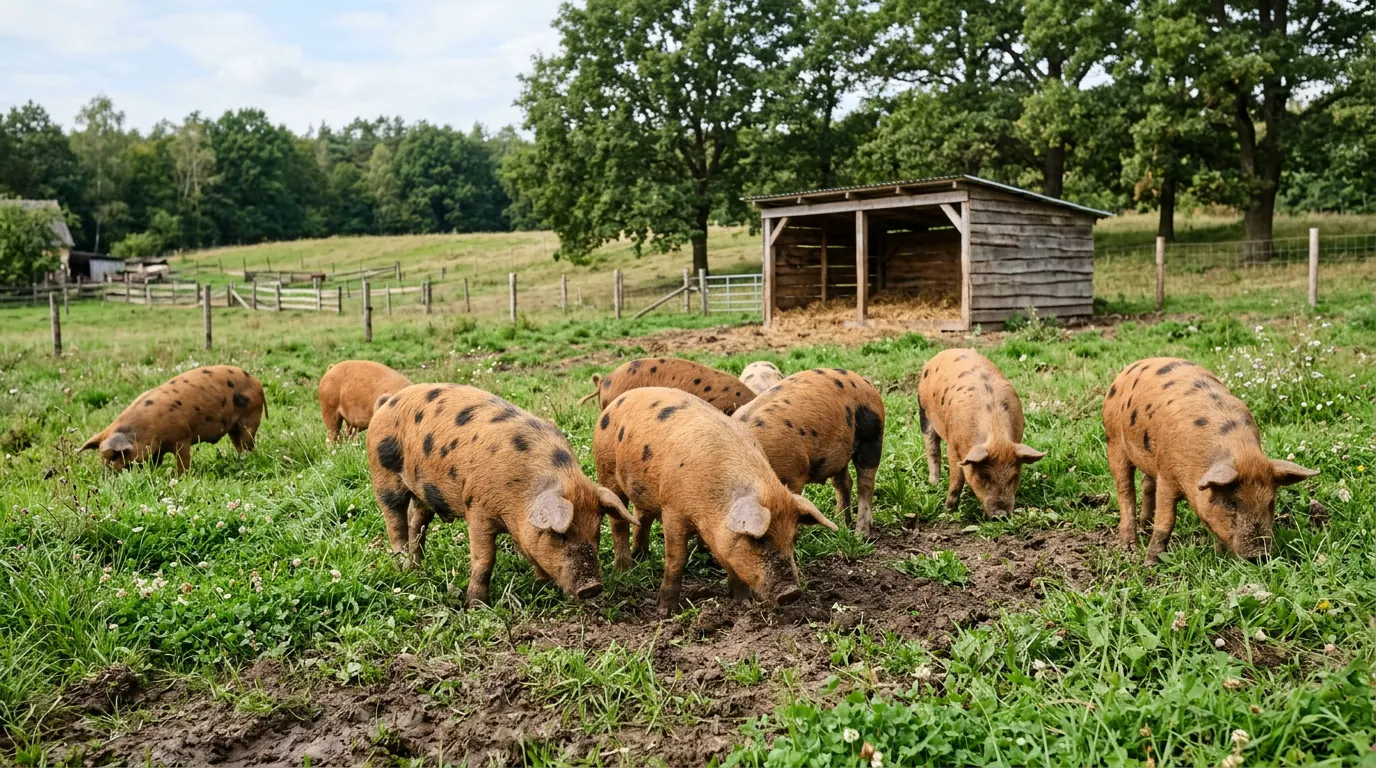
The kunekune is a small pig breed from New Zealand, kept mainly on pasture. The name comes from the Maori language and means roughly "fat and round". The pigs are low, stocky and gentle, and grass covers a large part of their needs. The breed does not suit intensive fattening, because it grows slowly and puts on fat quickly. People buy it for a small holding, for grazing, for meat quality and for its calm nature.
Why kunekune are getting popular
In Poland the kunekune is a new breed, kept mostly by small farms and keepers of rare animals. It is not one of Poland's conservation breeds such as the Złotnicka or the Puławska, which are covered by genetic resource protection programs. In use it is close to other fat and pasture breeds, for example the Mangalica. Before you buy, decide what you need the pigs for: meat for your own table, keeping the pasture down, or further breeding.
Looks and traits of the kunekune
Build and color
The kunekune has a short, slightly upturned snout, a compact body and short legs. The belly is wide and often hangs low. Colors vary a lot: black, ginger, cream, spotted and even striped. The typical feature is two fleshy growths hanging under the jaw, called wattles or tassels. They have no practical use and not every pig has them. Exact body weights and dimensions depend on the line, sex and feeding, so ask the breeder for data from their herd before you buy.
Temperament
The kunekune is considered one of the calmest pig breeds. The animals tame easily, rarely show aggression and put up well with work around the pen. Even so, an adult boar is still a strong animal and needs solid fencing and careful handling. The calm nature makes work easier, but it does not replace basic safety rules around sows with piglets.
Keeping kunekune on pasture
Pasture and rooting
Kunekune make good use of green feed and usually root less than most breeds. That does not mean the sward stays intact. At high stocking density or on wet soil, pigs will dig up any pasture. Good practice is to divide the land into paddocks and rotate the animals so the grass has time to recover. We describe plants and green forage for pigs in the article pig grass: pasture and green forage for pigs.
Fencing and shelter
Because of their calm nature, electric fencing is often enough, provided you first get the animals used to the current in a small, safe paddock. Pigs need a dry place to lie that is sheltered from wind, and shade in summer. Give them constant access to water. Build a pen that is easy to clean and disinfect. In a wet, muddy run animals fall ill more often and hygiene is harder to keep up.
What to feed kunekune
Grass and supplementary feed
Grass and other roughage cover a large part of the needs of adult kunekune in the season, but they do not replace a complete feed for pregnant and lactating sows and for young pigs. Choose the ration by age, body condition and season, ideally together with a nutrition adviser or a vet. The breed fattens easily, so check body condition and do not feed extra "just in case". Example rations for pigs in organic production are given in the Organic Pig Production Guide from the Institute of Animal Science (IZ PIB), which also shows how to combine roughage with compound feeds.
Kitchen waste
Do not feed pigs kitchen scraps or meat products. Feed of animal origin and table leftovers can carry viruses, including African swine fever (ASF). The ban applies to animals kept for pleasure too. Also watch for mold in grain and feed. We describe it in the article mycotoxins in feed.
Meat and growth rate
Why kunekune grow slowly
The kunekune has none of the traits of meat breeds such as the Pietrain or the Duroc, bred for fast gain and lean meat. Daily gain is low and the carcass carries a lot of fat. So profit in commercial production is small. In your calculation allow for a longer fattening period, which means more feed per kilogram of gain. Exact figures depend on the line and feeding, so collect your own weighing data.
Meat quality and price
Kunekune meat is fatty and well marbled, which is valued in long-cured meats and regional cooking. The price of pork from fat breeds depends on how you sell it, local demand and certification. We give no amounts, because they change with the market. Compare the offer with neighboring breeds, for example the Berkshire or Vietnamese pigs, and check that you have a buyer before you buy a herd.
Rules and biosecurity
Registration and slaughter
The rules make no difference between kunekune and other pigs. If you keep even one pig, you must meet the requirements for every pig keeper in Poland, including registration with ARiMR (the Agency for Restructuring and Modernisation of Agriculture) and keeping records. The rules on slaughter for your own use, your duties toward the district vet (powiatowy lekarz weterynarii) and the limits of non-commercial keeping are in the article can you keep pigs for your own use. The legal position we describe is valid as of 23.11.2026.
African swine fever
ASF control measures are set by the regulation of the Minister of Agriculture and Rural Development of 12.03.2026 (Dz.U. 2026 poz. 344, Poland's Journal of Laws). In restricted zones, bans or stricter conditions on free-range keeping may apply, and pasture for pigs is then especially risky. Before you set up a herd, check that your farm is not in such a zone and ask the district vet. The run fence should prevent any contact with wild boar. You can prepare a biosecurity plan in the biosecurity plan generator.
Welfare and housing conditions
Space and tails
Council Directive 2008/120/EC sets minimum standards for the protection of pigs across the EU. According to a 2022 EFSA analysis, giving each pig more space clearly lowers the risk of tail biting: for a pig of 110 kg, 0.84 m² almost halved tail biting compared with 0.65 m². EFSA notes that the results are uncertain and do not predict the outcome on a specific farm. The kunekune is smaller than commercial pigs, but the rule stays the same: the more space and bedding, the calmer the herd.
Insurance and lifespan
A small herd is worth protecting too. We describe livestock policies in the article livestock insurance. Kunekune kept as companion animals live longer than fattening pigs, which go to slaughter young. We collected data on the lifespan of domestic pigs in the article how long do pigs live.
Frequently asked questions
What is a kunekune pig?add
It is a small pig breed from New Zealand, kept mainly on pasture. It stands out for its short snout, stocky build, calm temperament and slow growth. The meat is fatty and well marbled.
Are kunekune pigs good for commercial fattening?add
Hardly. The breed grows slowly and fattens quickly, so in commercial production feed costs are high relative to carcass weight. It suits a small holding, pasture keeping and direct sales better.
What do you feed kunekune pigs?add
Grass covers a large part of the needs in the season, but pregnant and lactating sows and young pigs need supplementary complete feed. Choose the ration with a nutrition adviser or a vet. Do not give kitchen scraps or meat products.
Do you have to register kunekune pigs in Poland?add
Yes. The rules do not exempt small herds or animals kept for pleasure. Check the details of registration and records with ARiMR and the district vet.
Can you keep kunekune free-range in an ASF zone?add
In restricted zones, bans or stricter keeping conditions may apply, set out in the regulation Dz.U. 2026 poz. 344. Before buying animals, ask the district vet about the current requirements in your municipality.
How much does a kunekune pig cost?add
The price depends on origin, age, breeding line and whether you buy a piglet or a breeding animal. It is best to agree it directly with the breeder and compare several offers.
Sources & resources
- linkIZ PIB — Organic Pig Production Guide (ed. E.R. Grela)
- linkIZ PIB — Pig welfare in a sustainable animal production system (ed. A. Rekiel, G. Żak)
- linkEFSA AHAW Panel — Welfare of pigs on farm (EFSA Journal 20(8):7421)
- linkMRiRW / Journal of Laws — Regulation of the Minister of Agriculture of 12.03.2026 on African swine fever control measures (Dz.U. 2026 poz. 344)
- linkEU Publications Office — Council Directive 2008/120/EC laying down minimum standards for the protection of pigs
Prepared by: DlaFerm Team based on data from the sources listed · Publisher: INSTA-TECH sp. z o.o.
Run a small pig herd in the DlaFerm app for pig keepers
The DlaFerm app for pig keepers lets you record herd status, events and treatments in one place, even with just a few animals. Create a free farm account or get in touch with us.
Phone
+48 796 258 151