Duroc Pigs: Breed Traits and Role in Crossbreeding
The Duroc is a red-coated pig breed that comes from the United States. In commercial crossbreeding it is the sire of the market pig: it gives the offspring good growth, stress tolerance and marbled meat. We explain how to recognize the breed and where to use it.
verifiedFrom the team that has organised work on poultry farms for years.
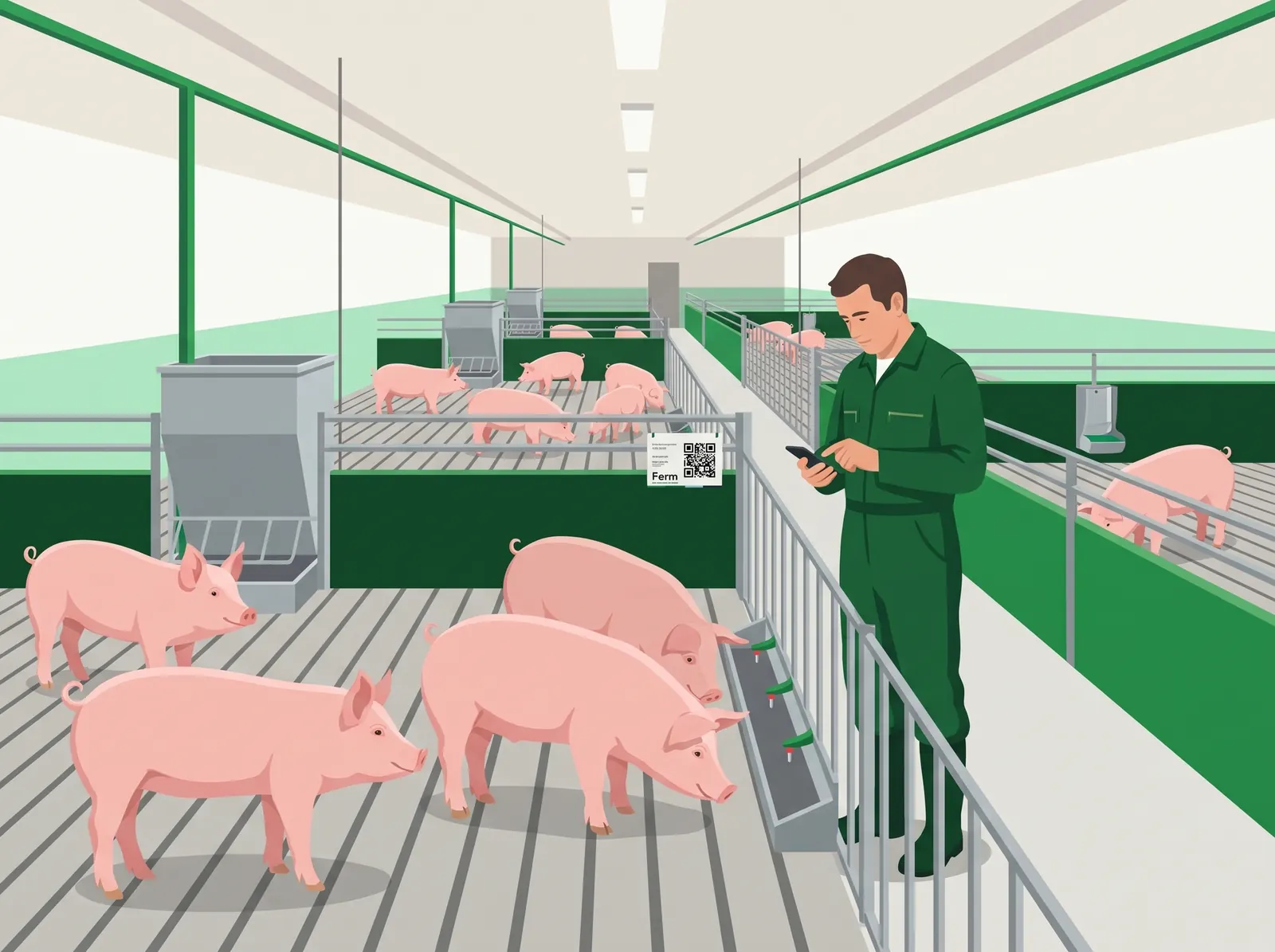
The Duroc is a pig breed with a coat from light red to dark red, developed in the United States. In Polish herds you will meet it mainly on the sire side: a Duroc boar is mated to a sow of another breed or to a crossbred sow, and the offspring go to fattening. Duroc sows are rarely used as mothers, because other breeds, for example the Wielka Biała Polska (Polish Large White), are better for efficient piglet production.
Duroc in Polish breeding programs
The Duroc is not new in Poland. According to the monograph "Chów i hodowla zwierząt gospodarskich na przestrzeni 70 lat" from IZ PIB (the National Research Institute of Animal Production), the institute's breeding program has used six breeds since 1979, including two colored ones: Duroc and Hampshire. Duroc sows and boars were crossed with the Polish Large White and with the Belgian Landrace. The selected offspring formed the line 990 herd from 1984. For an overview of all breeds used in the country, see our guide to pig breeds in Poland.
How to recognize a Duroc
Coat and build
The Duroc has a solid red coat. The shade runs from light gold to deep reddish brown. The ears are semi-drooping with tips that fall forward, and the head is medium-sized. The animal has a strong frame and sturdy legs, so it copes well with pen life and with mating. The skin is pigmented, so dark spots sometimes show up when the carcass is assessed. This is a trait of the breed, not a health problem.
Coat color of the offspring
The red color gene is passed on only partly when the Duroc is crossed with white sows. Crossbreds from a Duroc boar can therefore be reddish, spotted or light. If you sell market pigs to a plant that requires a uniform white coat, agree this with the buyer before you buy a boar. IZ PIB describes the rules for assessing breeding animals while they are alive in the publication "Ocena przyżyciowa loszek i knurów hodowlanych" (live assessment of breeding gilts and boars).
What the Duroc adds to a crossbred
Growth and feed efficiency
The Duroc is known for good daily gain and good feed conversion in fattening. That is why producers of crossbreds like to choose it as the sire. The exact values depend on the line, the feeding and the conditions in the house. IZ PIB publishes performance test results and breeding values of boars in its BLUP booklets: separately for fattening and slaughter traits and for reproductive performance.
Marbling and taste of the meat
The most often stressed advantage of the Duroc is a higher content of intramuscular fat. It gives marbled meat, meaning fine streaks of fat between the muscle fibers. After cooking the meat is juicier and has more aroma. Carcass lean meat content is lower than in the Pietrain. That is why many programs combine the two breeds: the Pietrain raises the share of lean meat, and the Duroc improves quality and stress tolerance.
Stress tolerance
Unlike stress-prone breeds, the Duroc reacts weakly with stress to driving, transport and regrouping. The offspring therefore have a lower risk of meat defects linked to pre-slaughter stress. This does not remove the need to look after welfare. The EFSA opinion "Welfare of pigs during transport" (EFSA Journal 20(9):7445) describes how to handle pigs in transport.
Duroc in commercial crossbreeding schemes
Duroc boar on maternal sows
The simplest scheme is mating a crossbred sow to a Duroc boar. The maternal sow gives large litters and milk, and the boar adds growth and meat quality. You usually get such a sow by crossing the Polish Large White with another maternal breed. All F1 offspring go to fattening and none are kept for breeding, because the traits split in the next generation.
Duroc with Pietrain or Hampshire
In three-breed programs the Duroc often stands on the sire side together with another breed. A crossbred Duroc × Pietrain boar combines lean meat with stress tolerance. An alternative is the Hampshire, also a colored breed with good lean meat content. For herds aimed at premium meat and outdoor keeping, the Berkshire is also considered. Always agree the choice of sire with the buyer of your market pigs and with a breeding adviser.
Why not as a mother
Duroc sows farrow fewer piglets than maternal breeds and give less milk. Keeping such sows as a pure breed only makes sense in breeding herds that sell boars. In a commercial herd it is better to buy a ready maternal sow and cross her with a sire-line boar.
Fattening Duroc crossbreds
Diets for Duroc progeny
Topigs Norsvin published a separate feeding manual for the progeny of Duroc boars (Feeding Manual TN Duroc progeny). It states that feeding has to be matched to the genetic line. With Duroc crossbreds, watch fat cover: marbling is an advantage, but too thick backfat lowers the carcass grade. Check body weight, backfat thickness and sale date, instead of holding animals back hoping for a higher price.
Feed additives and rules
The same manual describes ractopamine as an additive used in late fattening. It adds that its use is governed by local law and you must check the rules before using it. If in doubt, ask the county veterinary officer (powiatowy lekarz weterynarii). Feed quality matters more here than additives: molds and toxins reduce gain in every breed, as we explain in our article on mycotoxins in feed.
How to buy a Duroc boar
Origin and assessment
Buy a boar from a breeder who runs performance testing and can show pedigree documents. Ask for the live assessment results and the breeding values from the BLUP evaluation. Check the health status of the herd of origin and how the animal will be transported. Agree the price with the seller: it depends on the line, breeding value, age and whether you buy the boar for a pen or for an artificial insemination station.
African swine fever
Bringing in a new animal is always a risk of introducing disease. Measures against African swine fever are set by the regulation of Poland's Ministry of Agriculture and Rural Development (MRiRW) of 12.03.2026 (Dz.U. 2026 poz. 344, Poland's Journal of Laws), legal status as of 23.11.2026. Before buying, check with the county veterinary inspectorate (powiatowy inspektorat weterynarii) whether the farm lies in a restricted zone. Isolate the new boar in a separate pen and follow a biosecurity plan, which you can prepare in the biosecurity plan generator.
Frequently asked questions
What is a Duroc pig?add
The Duroc is a pig breed with a red coat and semi-drooping ears, developed in the United States. In Poland it serves mainly as a sire breed in commercial crossbreeding.
What are Duroc pigs used for?add
Duroc boars are mated to crossbred sows and the offspring go to fattening. The Duroc gives crossbreds good gain, stress tolerance and marbled meat.
Is the Duroc suitable as a mother sow?add
Usually not. Sows of this breed have lower fertility and milk yield than maternal breeds. It is better to buy a maternal sow and cross her with a Duroc boar.
Is Duroc meat better than meat from other breeds?add
The Duroc has more intramuscular fat, so the meat is juicier and more marbled. Its carcass lean meat content is lower than the Pietrain's, which is why the breeds are often combined.
Why are Duroc crossbreds sometimes red or spotted?add
The red coat passes to crossbreds, so some market pigs look different from white pigs. Check with your buyer whether they accept this coat color before you buy a boar.
How much does a Duroc boar cost?add
The price changes with the market and depends on the line, breeding value and age of the animal. Agree the current amount directly with a breeder who runs performance testing.
Sources & resources
- linkIZ PIB — Chów i hodowla zwierząt gospodarskich na przestrzeni 70 lat (Livestock farming and breeding over 70 years). Pig Breeding Department, Horse Breeding Department
- linkTopigs Norsvin — Feeding Manual TN Duroc progeny
- linkIZ PIB — BLUP breeding evaluation results: fattening and slaughter traits, 2026 booklet 1
- linkIZ PIB — Live assessment of breeding gilts and boars
- linkMRiRW / Dziennik Ustaw — Regulation of the Minister of Agriculture of 12.03.2026 on measures to control African swine fever (Dz.U. 2026 poz. 344)
Prepared by: DlaFerm Team based on data from the sources listed · Publisher: INSTA-TECH sp. z o.o.
Keep boar and litter records in the pig farmer app
In the DlaFerm app for pig farmers you can record a boar's origin, matings, litters and fattening results, so you can compare crossbreds from different sires. Create a free farm account or get in touch.
Phone
+48 796 258 151