Pietrain pig: leanness, stress sensitivity and crossing
The Pietrain is a sire breed prized for very lean, meaty carcasses. It also has a weakness: it reacts with stress to transport, noisy handling and driving. We describe what the 2025 performance data say and how to use the breed in crossing.
verifiedFrom the team that has organised work on poultry farms for years.
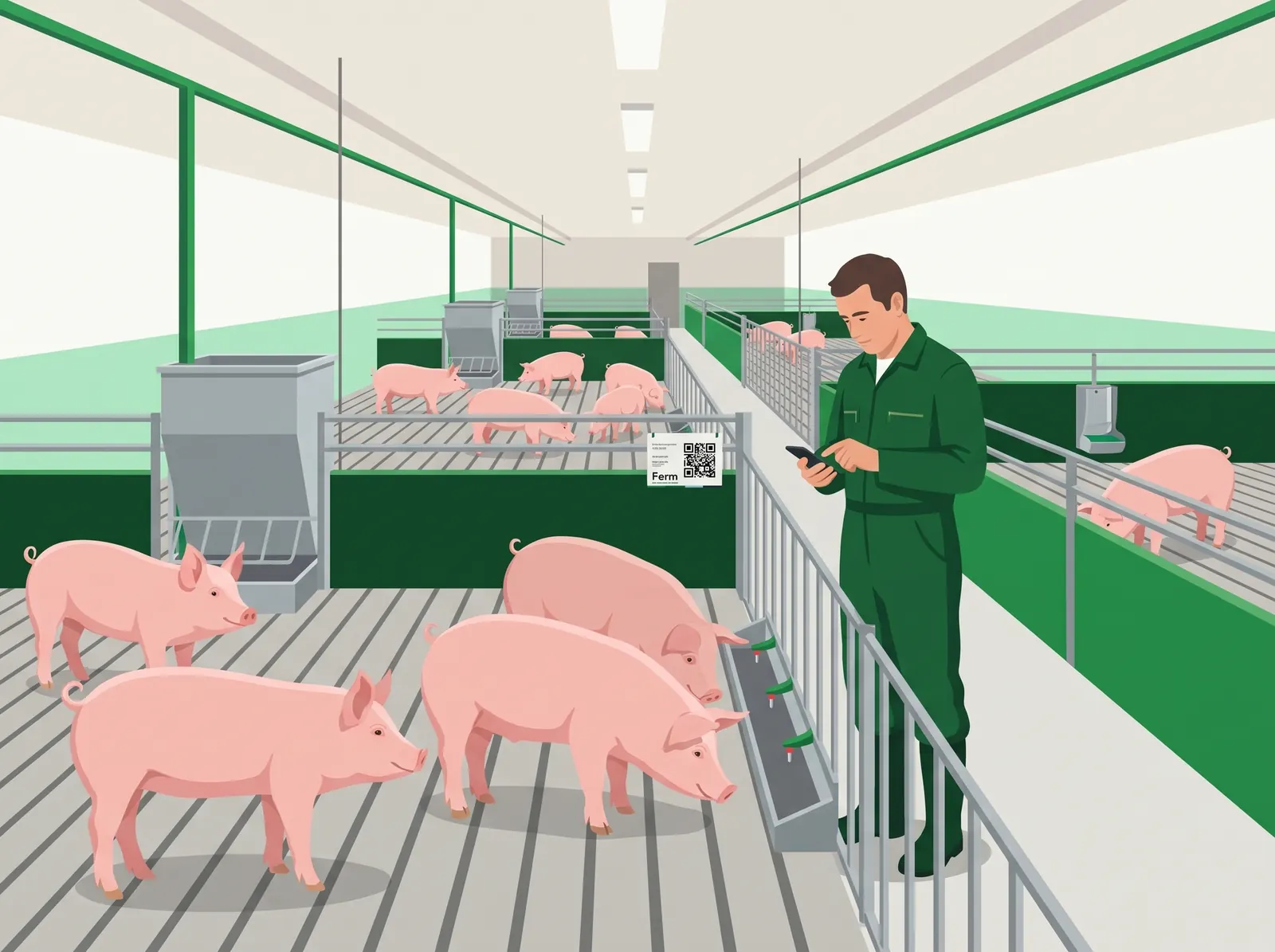
The Pietrain is bred mainly to pass a meaty carcass on to its offspring. In commercial herds it is used mostly as a sire breed: a Pietrain boar serves maternal sows or crossbred sows, and the litter grows into finishing pigs with a high share of lean meat in the carcass. As a pure breed it falls behind the maternal breeds in prolificacy, so it rarely sits at the start of the piglet production chain.
Who the breed suits
The Pietrain suits a farm that sells finishing pigs to a plant paying for lean meat content, and a keeper ready to make sure animals are handled calmly. A farm without steady care for its boars and a prepared loading area is better off with a calmer breed, for example the Duroc. For an overview of all the breeds used in Poland, see Pig breeds in Poland.
The Pietrain in Polish breeding
The Bavarian herd and line 990
According to the Institute of Animal Science (IZ PIB) monograph on 70 years of breeding, work began in 1990 on a new line with outstanding meat traits. Researchers used sows of line 990 and Pietrain boars. The Pietrain herd was bought in Bavaria and set up as a breeding center. Material from this herd was used for reproduction and to create new herds across the country, and the center farm also tried to build a new male line with outstanding lean meat content.
Pietrain in performance recording
The Pietrain appears in the yearly breeding performance results for pigs alongside WBP, PBZ, Duroc and Hampshire. In the 2025 summary, 295 Pietrain litters were assessed, 59 of them from first-litter sows. That is far fewer than for the WBP (1742 litters) or the PBZ (3129 litters), which shows the breed's share in Polish breeding: the Pietrain is a niche breed used for one specific purpose.
Lean meat content and growth rate
Why the Pietrain carcass is lean
The Pietrain stands out for a very high share of meat in the carcass. A presentation by IZ PIB and KPODR (the Kujawsko-Pomorski agricultural advisory center) on native breeds compares the percentage of meat in the carcass of Złotnicka, Puławska, PBZ, WBP and Pietrain pigs, and the Pietrain is the benchmark for modern leanness. Native breeds have fattier carcasses, but meat with a different structure and marbling, which we describe in the article on the Złotnicka pig.
What this means in finishing
High lean meat content gives a higher carcass grade at slaughter and a better price at plants that pay by lean meat content. Rates change every week, so check current terms directly with your plant. Remember that the lean meat content of finishers also depends on the dam line, feeding and slaughter weight, not only on the Pietrain boar.
Stress sensitivity of the Pietrain
Where the problem comes from
The Pietrain is especially sensitive to stress. Animals react sharply to driving, mixing groups, heat, noisy handling and transport. In practice this can lead to poorer meat quality after slaughter: pale, watery meat with weak water-holding capacity. Farmers and plants know this as PSE meat. When you buy boars, ask the supplier about the animal's genetic status for stress sensitivity.
How to reduce stress in the herd
The rules are simple. Drive animals calmly and in small groups, do not mix unfamiliar animals just before loading, and avoid rushing on the ramp. Provide shade and ventilation in hot weather. The EFSA opinion on pig welfare during transport (EFSA Journal 20(9):7445) describes the risk factors during transport, and it is worth knowing them before you book a haulier. Choose a haulier so that loading and travel times are as short as possible.
Commercial crossing with the Pietrain
The Pietrain as sire of the crossbred
The typical scheme is a maternal sow (WBP, PBZ or their crossbred) served by a Pietrain boar or a crossbred boar with Pietrain blood. These sows give large litters and good milk, and the boar adds carcass leanness. The 2025 results show that Pietrain and Duroc boars are used in both directions: the crossbred summary includes Duroc × Pietrain and Pietrain × Duroc combinations. What exactly to choose depends on your goal: lean meat, or meat quality and intramuscular fat.
Pietrain compared with Duroc and Hampshire
The Duroc gives meat with better intramuscular fat and is calmer, so it is often combined with the Pietrain in one sire line. The Hampshire is bred on a small scale in Poland: only 18 litters were recorded in the 2025 assessment. Choose your boar according to how your plant grades carcasses, not according to breed fashion.
Breeding performance: 2025 figures
Pietrain compared with other breeds
According to the IZ PIB summary for 2025, Pietrain litters averaged 11.93 piglets born in total and 11.13 piglets at day 21. Piglet losses to day 21 were 6.37%. Sows had 14.12 teats, were 391 days old at first farrowing, and the interval between litters was 183 days. For comparison, the WBP had 13.06 piglets in total and 7.48% losses, and the Duroc 12.08 piglets in total and 8.99% losses. So the Pietrain has smaller litters than the WBP, but lower losses than the Duroc.
Crossbred litters
The breeding assessment also covers crossbred litters. Pietrain sows served by a Duroc boar averaged 11.84 piglets born in total, 11.13 remained at day 21, and losses were 5.73%. The reverse combination, Duroc sows served by a Pietrain boar, gave 11.97 piglets in total, 10.80 at day 21 and 9.35% losses. The takeaway: prolificacy and survival depend mainly on the dam, not on the breed of the boar. The data cover small samples, so treat them as a rough guide.
Pietrain on the farm: what to check
Buying a boar and paperwork
When you buy a boar, ask for the breeder's documents, the results of live performance testing and information on the health status of the herd. Bring the animal in under your biosecurity plan, with quarantine and a separate pen. The biosecurity plan generator can help. If you plan small-scale production, also check the legal situation described in the article Can you keep pigs for your own use.
Treatment and records
A Pietrain herd needs closer observation, because the animals react faster to poor conditions. A vet decides on any treatment, choosing the medicine and dose, and you keep to the withdrawal period before slaughter. Record treatments as they happen, for example in the treatment and withdrawal period module, so you never send a finisher to the abattoir before the withdrawal period ends.
Frequently asked questions
What is the Pietrain pig used for?add
The Pietrain is used mainly as a sire breed in commercial crossing. Its job is to pass high carcass leanness on to the offspring. It is rarely used as a maternal line, because its litters are smaller than those of the WBP.
Are Pietrain pigs stress-sensitive?add
Yes, the Pietrain is sensitive to stress: transport, heat, mixing groups and rough handling. The result can be poorer meat quality after slaughter. Calm loading, a short journey and good ventilation in the pens help.
How many piglets does a Pietrain sow have?add
According to the IZ PIB breeding performance assessment for 2025, Pietrain litters averaged 11.93 piglets born in total. Losses to day 21 were 6.37%. The result in your herd depends on the line, feeding and conditions.
What breed should you cross the Pietrain with?add
Most often a Pietrain boar is paired with WBP or PBZ maternal sows or with crossbreds. The breeding assessment summaries also show Duroc × Pietrain and Pietrain × Duroc combinations. The choice depends on what the meat plant expects.
Is the Pietrain suitable for a small farm?add
Only if you can provide calm handling, a separate pen for the boar and good transport. For keeping pigs for your own use, a calmer breed often works better. Check the rules in the article on keeping pigs for your own use.
How should you transport Pietrain pigs?add
Shorten loading and travel time, do not mix unfamiliar groups just before departure and avoid rushing on the ramp. The EFSA opinion on pig welfare during transport describes the risk factors during transport. The final legal requirements are set by the Veterinary Inspection (Inspekcja Weterynaryjna).
Sources & resources
- linkIZ PIB (National Animal Breeding Center / trzoda.izoo.krakow.pl) — State of breeding and pig assessment results in 2025
- linkIZ PIB — Farming and breeding of livestock over 70 years. Pig Breeding Department, Horse Breeding Department
- linkKPODR / IZ PIB — Advantages of breeding native pig breeds and the RASY RODZIME mark (presentation, M. Szyndler-Nędza, P. Radomski)
- linkEFSA AHAW Panel — Welfare of pigs during transport (EFSA Journal 20(9):7445)
Prepared by: DlaFerm Team based on data from the sources listed · Publisher: INSTA-TECH sp. z o.o.
Run your pig herd in the farmer app
The DlaFerm app for pig farmers helps you record litters, treatments and finisher sales in one place. Create a free farm account or get in touch with us.
Phone
+48 796 258 151