How long do pigs live: market hogs, sows and pet pigs
A market hog usually lives a few months on the farm. A sow stays in the herd only a short time because of high culling. A pet pig can live many years. Teagasc data for 2022 show that culling and mortality decide how long farm pigs live. We explain where these figures come from and how to track them in your own herd.
verifiedFrom the team that has organised work on poultry farms for years.
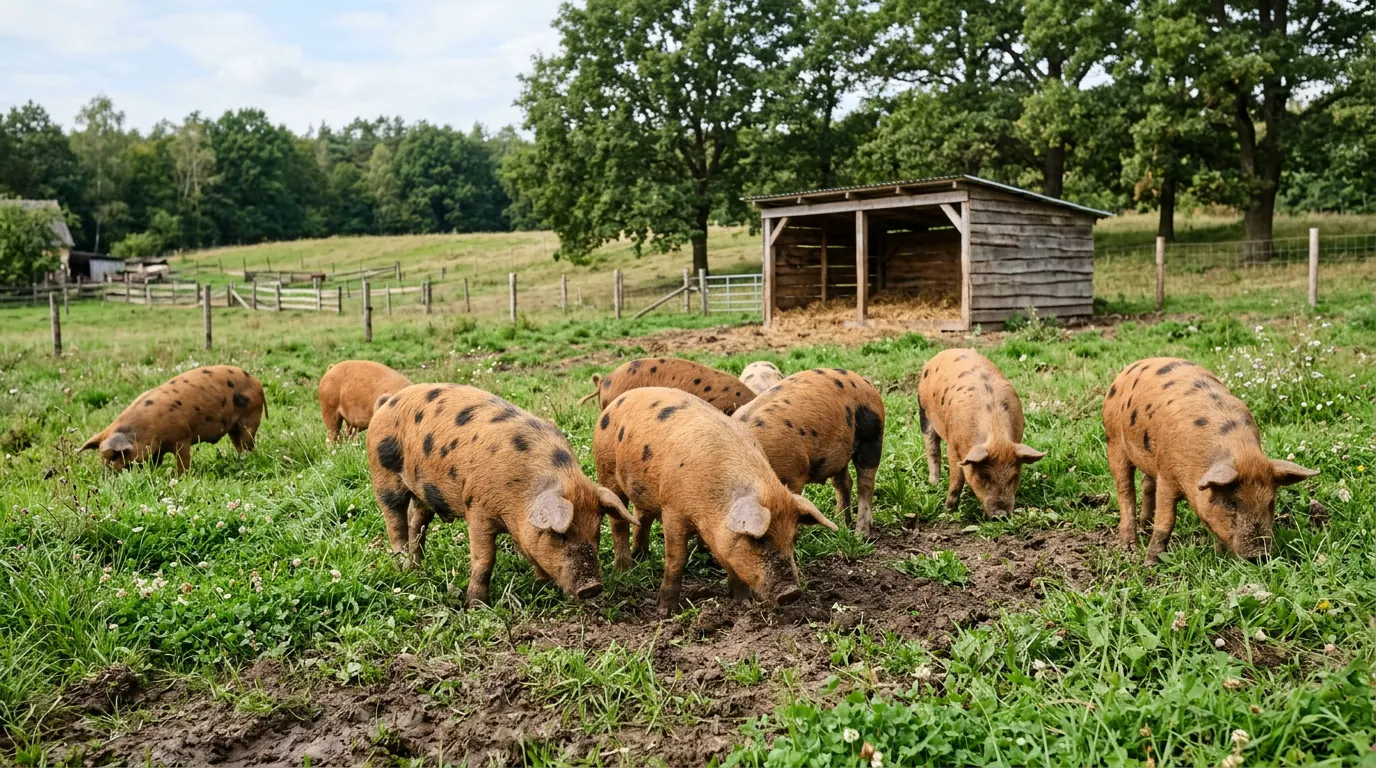
A market hog usually lives a few months on the farm, because it goes to slaughter once it reaches slaughter weight. A sow stays in the breeding herd longer, but her time is limited by culling and mortality. A pet pig can live many years, much longer than a production pig. Below we separate these three cases and show what decides lifespan in practice. Compare the figures here with your own data in the app for pig farmers.
Why this question has three different answers
A pig's lifespan depends on why you keep it. In production, what counts is how many days a pig spends in the pen before slaughter and how many litters a sow gives before she is culled. For a farmer, the culling and mortality rate in each group matters more than age. These figures show how many animals you must bring in to keep the herd size and how many drop out along the way.
How long a market hog lives on the farm
From piglet to slaughter
After weaning, a piglet goes to the nursery, then to finishing, and finally to slaughter. A farm does not keep a market hog to the end of its natural life, because finishing pays only when the animal reaches slaughter weight in the shortest possible time. Genetics, feeding and pen conditions affect the time on the farm. The exact age at slaughter follows the farm's plan and growth rate, not one universal number.
Mortality in finishing
According to Teagasc data from the National Pig Herd Performance Report 2022, finishing pig mortality was 3% in the average herd and 2.27% in the top 10% of herds. Piglet mortality during suckling was 11.1% in the average herd, and in the nursery 3.33%. These figures come from Ireland, not Poland, but they show at which stage most animals are lost. You limit losses with a good start for piglets, disease control and quick reaction to signs of illness. Record every death in the treatment and withdrawal period module, because only then can you find the cause.
How long a sow stays in the herd
Culling instead of old age
A sow in a breeding herd usually does not reach old age. She is removed earlier because of poor fertility, leg problems, udder disease or falling litter size. Teagasc gives a sow culling rate of 52.2% for the average herd in 2022 and 51.5% for the top 10% of herds. This means almost half of the herd is replaced within a year. High culling forces you to keep bringing in young gilts, and that costs money.
Sow mortality and output
In the same Teagasc report, sow deaths in 2022 were 7.5% in the average herd and 6.5% in the best group. Piglets weaned per sow per year were 27.4 in the average herd and 31.4 in the top herds. These figures describe output, not age, but they explain why sows do not stay in the herd for years. A steady replacement rate makes planning of intakes and the production cycle easier.
The domestic pig as a companion animal
Why a pet pig lives longer
A pig kept as a companion animal does not go to slaughter and has no production cycle imposed on it, so its life can last many years. The exact length depends on breed, size, genetics, veterinary care and whether the animal gets exercise and feed of the right composition. We do not give a single number, because reliable data from Polish household keepers is missing. For health problems, see a vet.
Owner's duties
A pet pig needs similar health protection to a farm pig: vaccination and worming agreed with your vet, and protection from contact with wild animals. The rules for controlling ASF (African swine fever), including those on moving pigs, are set by the regulation of Poland's Ministry of Agriculture and Rural Development (MRiRW) of 12.03.2026 on measures to control African swine fever (Dz.U. 2026 poz. 344, Poland's Journal of Laws), legal status as of 22.11.2026. Check the current text in ISAP, Poland's online legal acts database (Internetowy System Aktów Prawnych).
What affects a farm pig's lifespan
Housing conditions
Literature cited in a monograph by IZ PIB (Poland's National Research Institute of Animal Production) on pig welfare describes how ammonia in the air affects growth and health of young pigs. Poor ventilation, damp bedding and overcrowded pens weaken immunity and raise the risk of respiratory disease. So checking pens, bedding and ventilation helps prevent deaths and is not just a formal requirement.
Feeding and indicators
Diet affects growth, immunity and the condition of sows. The PIC Nutrition and Feeding Guidelines point out that vitamins in feed are often added at levels above the NRC 2012 requirement estimates, so set amounts with a feeding adviser. Teagasc reports that in 2022 the best 10% of herds used 2.25 kg of feed per kilogram of gain, and the average was 2.45. Current FCR and EPEF indicators help you spot deviations before herd health drops.
How to keep death records
Reporting a death
Record a pig's death on the farm in your documentation and report it as the veterinary rules require. Your vet and the county veterinary officer (powiatowy lekarz weterynarii) set the exact procedure and deadlines. If you suspect an infectious disease, especially ASF, do not move animals and do not collect dead pigs without instructions from the authority. Limit access by outsiders according to your biosecurity plan, which you can prepare in the biosecurity plan generator.
Records that show the cause
Without records you do not know whether market hogs from one batch are dying or sows after a particular cycle. Keep a death register with the date, the animal category and the cause suspected by the vet. Register data let you calculate your own mortality rate and compare it with reports such as Teagasc. Differences between groups show faster on a chart than in a notebook.
Frequently asked questions
How long do market hogs live?add
A market hog stays on the farm from weaning to slaughter, usually a few months. The exact time depends on growth rate, feeding and the farm's plan. According to Teagasc data for 2022, finishing pig mortality in the average herd was 3%, so most animals reach slaughter.
How long do sows live?add
A sow in a breeding herd usually does not reach old age. The sow culling rate in Teagasc data from 2022 was 52.2%, so almost half of the herd is replaced within a year. What counts is time in the herd, not the animal's age.
How long do pet pigs live?add
A pig kept as a companion animal can live many years, longer than a production pig. There is no single figure, because it depends on breed, care and health. For health problems, contact a vet.
Why are sows culled so early?add
The most common reasons are poor fertility, leg problems, udder disease and falling litter size. High culling means constantly buying young gilts. Analyzing your indicators helps you tell whether the problem is health or management.
Do I have to report a pig's death?add
Record a pig's death in your documentation and report it as the veterinary rules require. Your vet and the county veterinary officer set the procedure and deadlines. Check the current ASF rules in ISAP, Poland's online legal acts database.
How can I reduce mortality in finishing?add
Start with a good start for piglets, control of ventilation and bedding, and quick reaction to signs of illness. Agree prevention with your vet. Keep a death register, because without data it is hard to judge which actions work.
Sources & resources
- linkTeagasc (Ireland) — National Pig Herd Performance Report 2022
- linkIZ PIB — Pig welfare in a sustainable animal production system (eds. A. Rekiel, G. Żak)
- linkEFSA AHAW Panel — Welfare of pigs on farm (EFSA Journal 20(8):7421)
- linkPIC — PIC Nutrition and Feeding Guidelines (metric)
- linkMRiRW / Dziennik Ustaw — Regulation of the Minister of Agriculture of 12.03.2026 on measures to control African swine fever (Dz.U. 2026 poz. 344)
- linkISAP — Internetowy System Aktów Prawnych (Poland's online legal acts database)
Prepared by: DlaFerm Team based on data from the sources listed · Publisher: INSTA-TECH sp. z o.o.
Do you keep pigs and run a herd of sows?
The DlaFerm.pl app for pig farmers collects deaths, culling and intakes in one place. Create a free farm account and see how your herd's indicators look.
Phone
+48 796 258 151