Livestock insurance: pigs, cattle and poultry
Livestock insurance covers part of the losses in your herd, but the scope and the payout depend on the exact policy. We explain what to check in the general terms, how pigs, cattle and poultry differ, and which documents speed up a claim.
verifiedFrom the team that has organised work on poultry farms for years.
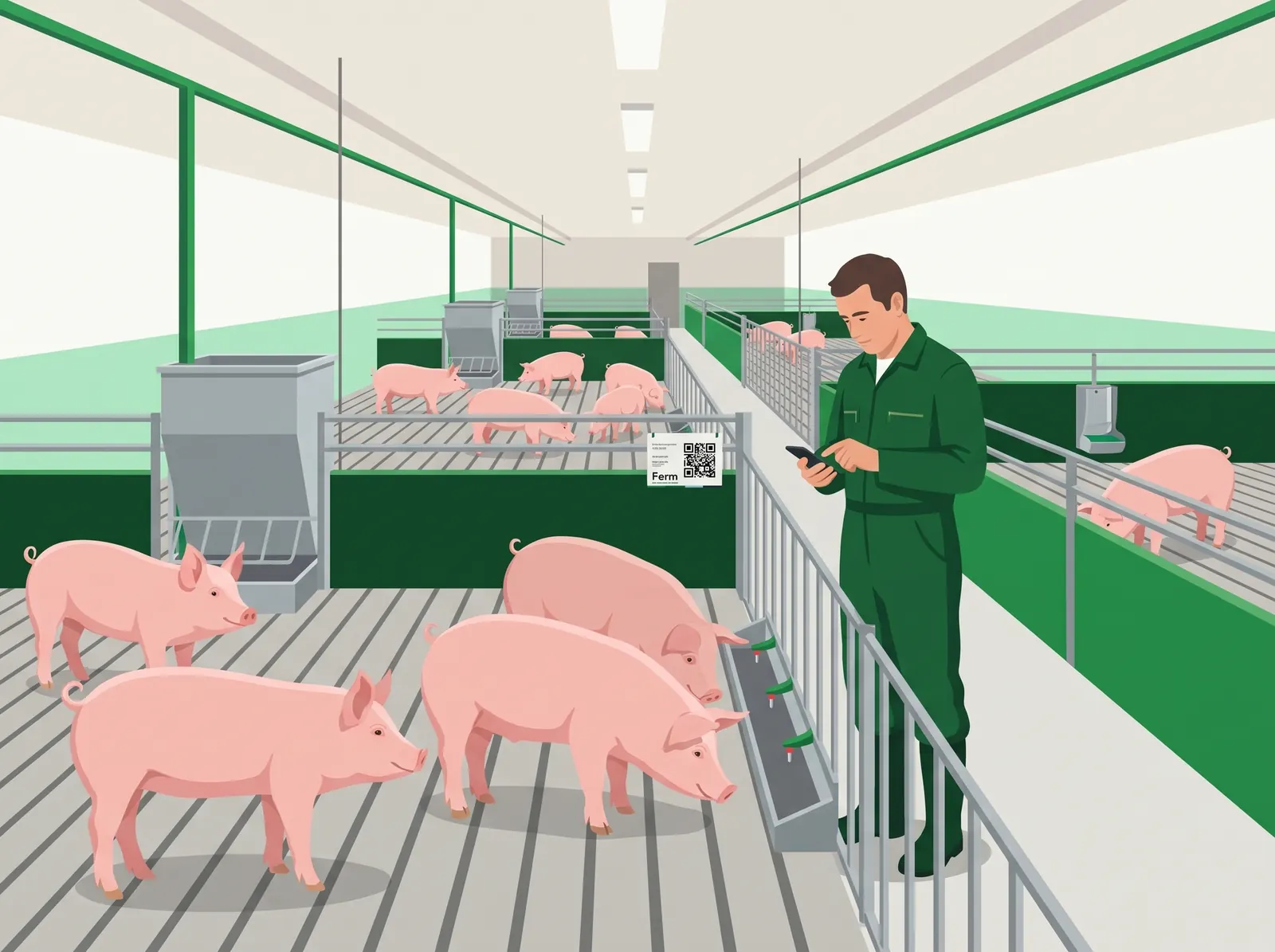
Livestock insurance is a contract in which the insurer takes over part of the financial risk of losses in your herd, and you pay a premium. Whether a policy refunds a dead finisher, sow or cow depends on the wording of the general terms and conditions (OWU in Polish), not on the product name. So before you sign, read the list of covered risks, the exclusions and the claims procedure.
Who it is for and what to look at
A pig farmer who runs a finishing unit or a full cycle from piglet to finisher faces different risks than a farm with a few cows. Before you compare offers, write down how many animals you keep and in which age groups. Then it is easier to see whether the policy covers the whole herd or only selected groups.
What to check in the general terms
Covered risks
Check which causes of loss are covered: death, emergency slaughter for health reasons, theft, random events. Some policies cover only selected events. Note this for every product you compare, and do not assume that "animal insurance" covers everything. Infectious diseases are where the wording is often most detailed. Ask the insurer in writing whether losses from infectious diseases are excluded, and on what grounds.
Animal value and payout
Find out what the payout is based on: market value, the sum insured written into the contract, or another formula. The difference can be large, because prices of live pigs and piglets change every week. You can check prices in current market reports and at local buyers, and the contract should say how the value is set on the day of the loss. If the terms include a deductible, meaning a share of the loss you pay yourself, count it in when you compare premiums.
Claims procedure
Most insurers require you to report a loss within a set time and with set documents. These usually include a certificate from a veterinarian, treatment records, the animal's identification data and photos. The terms give the deadlines and the document list, so copy them into your own calendar before you sign. A late report can be grounds for refusal even when the loss was covered.
Pigs, cattle and poultry: differences in cover
Pigs
In a pig herd, most attention goes to the risk of disease and deaths during rearing and finishing. It matters whether the policy covers piglets, weaners and finishers separately, and how many animals fall into one group. For sows and gilts, ask about cover during pregnancy and nursing. Keep herd and treatment records up to date, because you will need them for any claim. See also how the app for pig farmers helps you collect this data in one place.
Beef cattle
In cattle, the risks concern cows, calves and fattening animals. A single animal is often worth more than a finishing pig, so the policy depends on each animal's identification data matching its registration documents. Also check whether the insurance covers the whole herd or only chosen animals. This affects the premium and the paperwork you need to file a claim.
Poultry
The rules for poultry differ from those for large animals, so we describe them separately. If you also have poultry houses, see our guide to insuring a poultry farm against disease. Compare offers for different species separately, because one contract does not always suit all of them.
Biosecurity and welfare lower the risk of losses
Contact with wild boar and other farms' pigs
Guidelines from Poland's Chief Veterinary Inspectorate (Główny Inspektorat Weterynarii, GIW), passed on by the District Veterinary Inspectorate in Wągrowiec (PIW Wągrowiec), require farms that keep pigs to prevent any direct or indirect contact between your pigs and pigs from other farms, and wild boar, whether live, shot or found dead. Among other things, this means you must not borrow equipment used to handle pigs. At the entrance to a building you have to change footwear and work clothes, and wash and disinfect your hands and footwear. Write your ready plan step by step in the biosecurity plan generator.
Welfare and losses
According to KPODR Minikowo (a regional agricultural advisory center), since 1 January 2013 gilts and pregnant sows should be kept in groups from the 4th week after mating to the 1st week before farrowing. Pigs are herd animals, so piglets, weaners and finishers should be kept in groups or at least have visual contact with other pigs. A welfare check does not replace a policy, but written standards and inspection results show how you manage risk. Confirm the requirements for your herd with your veterinarian and in the current regulations.
Records that speed up the payout
Treatment and withdrawal period records
When you report a loss, the insurer usually wants to see what treatment was used, when, and on whose order. Keep a register of medicines given, procedures and withdrawal periods, with the animal or group number. A veterinarian always chooses the medicine and dose, and in your records you note what was prescribed and carried out. We describe the rules on withdrawal periods in treatment records and drug withdrawal periods.
Visitor log and dead animals
A log of people and vehicles entering and leaving shows who had access to the herd in a given period, which can matter when you explain the cause of deaths. Dead animals must go to rendering in line with the rules, and we describe how to organize collection in disposal of dead animals. You can keep entry control in the QR visitor log.
African swine fever (ASF) rules
The rules on fighting African swine fever can affect the procedures after deaths and suspected disease. The legal state as of 22.11.2026 includes the regulation of the Ministry of Agriculture and Rural Development (MRiRW) of 12.03.2026 on measures to fight African swine fever (Dz.U. 2026 poz. 344, Poland's Journal of Laws). Before you talk to your insurer, check the current text in ISAP (Poland's online database of legal acts) and ask your veterinarian which steps are required in your case.
How to choose a policy step by step
Step 1. Count the animals in each group
Write down the number of animals in each group: sows and gilts, piglets, weaners and finishers for pigs; cows, calves and fattening animals for cattle. Write poultry down separately. This data is the basis for the quote and the premium. Without it the offers are not comparable, because each insurer may make different assumptions about risk.
Step 2. Ask for the terms and exclusions in writing
Before you sign, ask for the full terms and the list of exclusions. Ask in particular about infectious diseases, random events, how value is set, and which documents are required. Answers saved in an email will help if a dispute over a payout arises.
Step 3. Agree how herd changes are handled
A herd changes: litters are born, you sell finishers, you buy in animals. Find out whether the policy allows changes in numbers during the insurance period and how to report them. If you keep herd records up to date, it is easier to give the insurer the numbers for a specific day.
Frequently asked questions
Is livestock insurance mandatory?add
Before you buy, check whether the duty to insure comes from a loan agreement or from the terms of a program you use. If you are unsure, ask Poland's ARiMR (Agency for Restructuring and Modernisation of Agriculture) or an agricultural adviser before you sign.
Does a policy cover a pig that dies of an infectious disease?add
It depends on the terms of the specific policy. Many offers exclude infectious diseases or require extra conditions to be met. Ask the insurer in writing how it treats African swine fever and other infectious diseases.
What documents do I need to file a livestock insurance claim?add
You usually need a veterinarian's certificate, treatment records, the animal's identification data and photos. The terms set the reporting deadline and the full list. The better your herd records, the faster the loss is settled.
How much does pig insurance cost?add
The premium depends on the species, the number of animals, the chosen risks, the insured value and the deductible. We do not give amounts because offers change. The best approach is to ask several insurers for a quote based on the same data.
Does insurance cover losses at farrowing?add
It depends on the policy. If losses at farrowing or loss of a litter are covered by the terms, check when the cover starts and ends and what evidence you need. Discuss sow housing conditions with your veterinarian.
How is poultry insurance different from pig insurance?add
Each species has different risks, different ways of setting value and often separate terms. Compare offers for each species separately before you decide on a contract.
Sources & resources
- linkPIW Wągrowiec (GIW guidelines): Guidelines on the practical implementation of biosecurity requirements on farms keeping pigs (Annex II to Regulation 2021/605)
- linkKPODR Minikowo: Pig behavior and welfare (P. Dorszewski et al.)
- linkMRiRW / Journal of Laws: Regulation of the Minister of Agriculture of 12.03.2026 on measures to fight African swine fever (Dz.U. 2026 poz. 344)
- linkChief Veterinary Inspectorate (GIW): gov.pl/web/wetgiw
- linkARiMR: gov.pl/web/arimr
Prepared by: DlaFerm Team based on data from the sources listed · Publisher: INSTA-TECH sp. z o.o.
Do you keep pigs and want your data at hand when a loss happens?
The app for pig farmers in DlaFerm.pl keeps herd and treatment records in one place. Create a free farm account and see how it works in practice.
Phone
+48 796 258 151