Poultry types: layers, meat birds, dual-purpose and ornamental
A bird's production type tells you what it was bred for: eggs, meat, both, or looks. The type decides body weight, growth rate, laying performance and feeding. We describe the four types and show how to choose the right one.
verifiedFrom the team that has organised work on poultry farms for years.
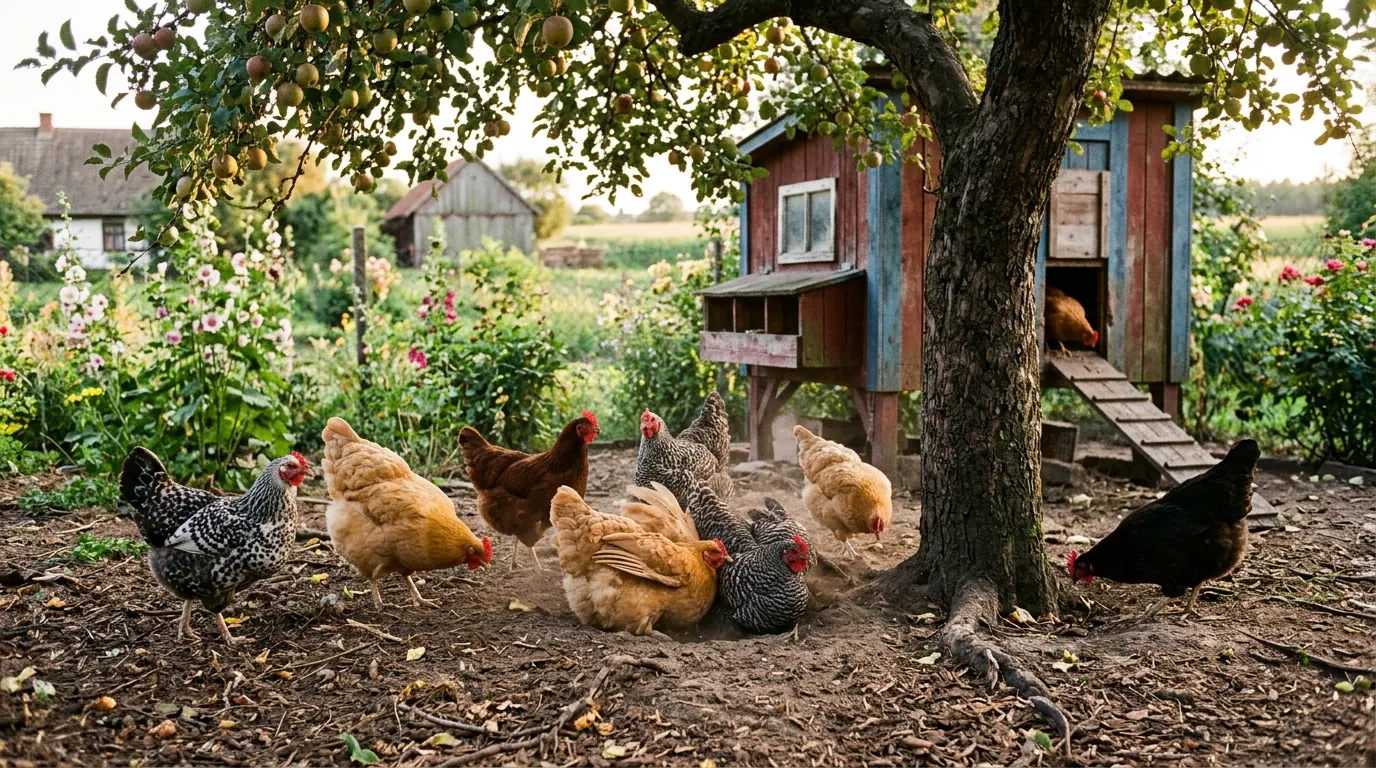
Poultry production types are four lines of breeding: layers (eggs), meat birds (broilers, raised for slaughter), dual-purpose birds (eggs and meat in one bird) and ornamental birds. Each line came from a different breeding goal, so the birds differ in build, appetite and growth rate. A layer is judged by the number of eggs, a meat bird by weight gain and weight at slaughter.
Choosing a type is the first decision when you start a flock, and a wrong choice costs money: a meat bird will not make a good layer, and a layer will not give profitable meat. Below we describe each type, its strengths and needs, and proven example breeds from our catalog.
Layer type: hens bred for eggs
What a layer hen looks like
Layers have a light, slim body and store little fat. They put feed energy into eggs, not body weight. They start laying earlier than other types and reach peak lay a few weeks after the first egg. We cover the timing in when hens start laying eggs. The downside is low meat value: the carcass is small and the meat is stringy.
Hybrids and laying breeds
Commercial and backyard flocks are mostly hybrids, meaning birds from crossed breeding lines. Examples are Rosa hens and Dominant hens. Among pure breeds, Italian hens (włoszki) and Pavlovo hens (pawłowskie) are known for high laying rates. If you want eggs in unusual colors, see the breeds that lay green and blue eggs.
Feeding needs
A layer needs feed matched to her laying phase, with enough calcium for the shell. We describe the rules in our article on feeding laying hens. For parent stock, the Ross handbook stresses that egg production, egg weight and body weight are checked daily, and the feed allowance is reviewed when they drift from target.
Meat type: birds raised for slaughter
Broilers and meat breeds
A broiler is a meat chicken bred for fast growth. The Ross handbook treats broiler growing as one stage in the whole meat chain: from parent stock through the hatchery and farm to the processing plant. Among utility breeds, the meat type is represented by the birds in our overview of meat chicken breeds.
What decides the result
According to the Ross Broiler Performance Objectives 2022, the stated targets can be reached with good management, environment and the recommended feed. Local conditions can lower them: access to feed ingredients, heat, or the economics of the production system. So record your own results from every cycle and compare them with the targets, instead of assuming the breeder's table will hold in your house.
Body weight control
Fast growth also brings a risk of leg and heart problems. That is why meat-type parent stock is feed-restricted, as described in our article on restricted feeding of poultry. The ration is set by body weight, muscling score and laying rate.
Dual-purpose type: eggs and meat
Who this type suits
Dual-purpose hens are heavier than layers and lighter than broilers. They lay fewer eggs than commercial layers, but the young cockerels and spent hens can be used for meat. It suits farms that want their own eggs and the occasional bird for the table, without buying new chicks every year.
Example breeds
This type includes New Hampshire, among others. Many heritage breeds also combine both traits, though laying rate and weight gain differ between lines. You can read about them in our article on poultry keeping: ornamental and heritage breeds.
The cost of the compromise
A dual-purpose bird grows more slowly than a broiler, so fattening takes longer and uses more feed per kilogram of gain. Laying is lower than in hybrids. Before you choose this type, work out how many eggs and how much meat you really need.
Ornamental type: birds kept for looks
What sets ornamental breeds apart
Ornamental birds are kept for plumage, shape, song or the rarity of the breed. They are often miniature forms such as Sebright bantams (sebrytki) or Liliputki hens. For a general overview, see our article on popular ornamental chicken breeds.
Ornamental and useful at once
The line is sometimes blurred. The Dworka duck is ornamental but also useful, and greylag geese (gęgawy) are a native breed with production value. Looks can also be a plus in laying breeds, as in our article on black hens.
Costs
The price of ornamental birds depends on the rarity of the breed, pedigree and age. The range is covered in our article on the most expensive ornamental chickens. Get the actual price from the breeder or the breed club.
How to choose a type for your farm
Start with your goal
Write down how many eggs per week and how much meat per year you want. For family eggs, a few hens are enough. To sell eggs, take laying hybrids. For meat to sell, choose broilers, and remember the short cycle and the need for precise feeding.
Count feed and space
Meat birds eat more; layers eat for longer. Check that you have room for a coop, a run and feed storage. Do not mix birds of very different sizes in one pen, because the weaker ones lose out at the feeder.
Keep records from day one
Whatever the type, record losses, feed use, laying rate or weight gain. In DlaFerm you do this in the poultry house records, and you can compare production results in the FCR and EPEF indicators.
Frequently asked questions
What are the types of poultry?add
There are layer, meat, dual-purpose and ornamental types. Each was bred for a different goal, so the birds differ in body weight, growth rate and laying rate.
What is the difference between laying hens and meat chickens?add
Laying hens are light and start laying early. Meat chickens are heavier, grow faster and carry more muscle, but lay poorly.
Is a dual-purpose hen a good choice for a small farm?add
Yes, if you want eggs and the occasional bird for meat. Laying is lower than in hybrids and growth is slower than in broilers, so it is a compromise.
Which type do ornamental chickens belong to?add
Ornamental chickens are kept for looks and character, not for production. Some breeds combine looks with usefulness, but most have a modest laying rate and body weight.
Can every farm reach the breeder's performance figures?add
Not always. In its broiler performance objectives, Ross notes that the targets are reachable with good management and the recommended feed, and that local conditions can lower the result. Compare your own records from successive cycles.
Sources & resources
- linkRoss Broiler Management Handbook 2025
- linkRoss 308 / 308 FF Broiler Performance Objectives 2022
- linkRoss Parent Stock Management Handbook 2023 (Interactive)
- linkNational Research Institute of Animal Production (Instytut Zootechniki PIB), izoo.krakow.pl
Prepared by: DlaFerm Team based on data from the sources listed · Publisher: INSTA-TECH sp. z o.o.
Keep your flock records in DlaFerm
The poultry house records module collects data on your flock, feed and losses in one place, whatever production type your birds are. Create a free farm account or get in touch.
Phone
+48 796 258 151