New Hampshire chicken: breed, egg laying and use
The New Hampshire is a dual-purpose breed developed in the United States. It lays brown-shelled eggs and gives meat, though it grows more slowly than meat birds. We explain what to expect from its laying and meat performance, and how to keep it on a small farm.
verifiedFrom the team that has organised work on poultry farms for years.
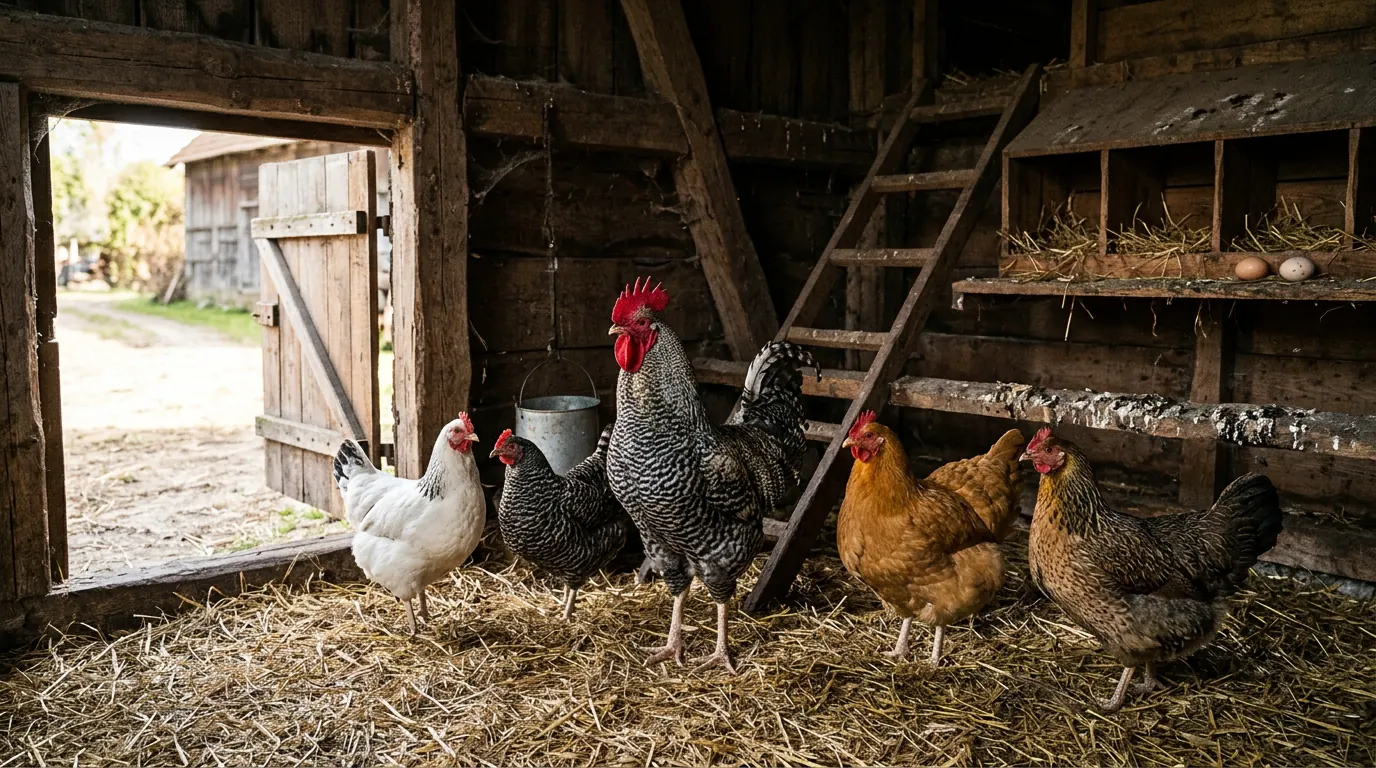
The New Hampshire is a dual-purpose breed, meaning you can keep it for both eggs and meat. The birds lay brown-shelled eggs, and the hens reach a body weight suitable for the table, though they grow much more slowly than broilers. The breed suits small and medium farms where self-sufficiency and steady production matter more than the top result from a single bird. For a comparison with a typical laying hen, see our description of the Leghorn.
Who this breed is for
Keepers choose the New Hampshire when they want one breed for eggs and meat that handles free range better than high-output birds. It also suits people who want to breed their own birds, because chicks from your own flock usually keep the parents' traits. When you buy, ask the breeder about the line's origin and its laying results from previous years, because lines can differ a lot.
Where the New Hampshire breed comes from
Breed history
The breed was developed in the United States in the first half of the 20th century and takes its name from the state of New Hampshire. Breeders selected red-feathered birds from utility breeds, aiming for faster feathering and good laying. In practice, modern lines can differ from one another, so check which breeder a bird comes from before you buy.
Plumage and build
New Hampshire hens usually have rusty-red plumage. Roosters are darker, with black on the tail. The build is compact and broad, with strong legs and a well-developed breast. Looks matter if you show birds, but on a working farm health and growth rate matter more. We describe breeds of a similar type in our overview of laying hen breeds.
Egg laying and egg quality
Eggs and their color
New Hampshire hens lay brown-shelled eggs. Egg size and weight depend on the line, the age of the hen and the feed, so there is no single value to give as a standard for the whole breed. Your own records are the best source of data: write down the number of eggs per day and per week, and after a few months you will see how laying really runs in your flock.
How laying develops
Laying is usually highest in the first year, then results fall. In utility breeds the decline is often gentler than in high-output layers, but you still need to plan flock replacement. Compare the rate of decline with the breeder's data and with your own flock's results over the following cycles. We cover feeding of laying hens in our article on layer feeding standards.
Meat from the New Hampshire chicken
Growth rate
New Hampshire hens and roosters grow more slowly than modern broilers. The longer rearing time means more feed per kilogram of live weight, but the birds usually have better resistance to disease and need less specialized feeding. Your choice of breed depends on whether your goal is meat from your own production or the economic return on the feed.
Carcass yield
Carcass yield is the ratio of meat weight to live weight. It depends on the age and sex of the bird and on the slaughter method. In dual-purpose breeds it is usually lower than in broilers, which you need to include in your calculation. Measure the difference on your own birds, because figures from the literature refer to other lines and housing conditions. Before slaughter, remember the veterinary rules on marketing poultry.
Housing in the coop and on the range
Coop and range
New Hampshire birds like to range and roam willingly, which helps their condition. The coop should be dry and well ventilated, with perches and nests sized to the bird. Set the stocking density according to the poultry standards and write it in your coop records. If in doubt, talk to a vet or an advisor in your county.
Biosecurity
Free-range birds come into contact with wild birds and animals, so biosecurity rules matter here as much as for a closed flock. Separate clothing, disinfection at the entrance and limiting access for outsiders are the basics. You can prepare a ready plan in the biosecurity plan generator, and you will find general rules on the website of the Chief Veterinary Inspectorate (Główny Inspektorat Weterynarii).
Treatment and withdrawal period
Any treatment of birds should be ordered by a vet, who chooses the medicine and dose. The withdrawal period rule means that after a medicine is given, you may not sell eggs or meat for the time stated in the medicine's documentation. Record every dose, its date and the end of the withdrawal period, because you must be able to document it in an inspection.
How to manage a New Hampshire flock in the system
What to record
The key data are the number of birds in the group, daily egg production, losses, feed use and any veterinary treatments. For a dual-purpose breed, add the slaughter date and carcass weight, because only then will you see the meat result. Records in one place let you compare successive batches and spot a drop in laying earlier than you would from memory.
Tools in DlaFerm.pl
The coop records module in DlaFerm.pl keeps bird groups and laying records separately for each batch. For flock health, the treatment and withdrawal period records track the dates when sales must stop. You can compare your flock's results with other breeds, for example the Messa hybrid, which makes it easier to choose birds for the next cycle.
New Hampshire next to other breeds
Dual-purpose breed vs. layer hen
Hybrid layers give more eggs in a shorter time, but their offspring are usually not suitable for further breeding. The New Hampshire gives fewer eggs, but lets you keep the line and use the birds for meat once laying ends. When choosing, compare feed cost, your record results and whether you want to breed your own birds.
Karmazyn and other breeds
Some keepers cross the New Hampshire with other utility breeds to get birds of a particular type. When you mix breeds, record the origin of each group, because without it you can hardly judge results. You can read about other breeds in our description of the Karmazyn, also a utility breed.
Frequently asked questions
Is the New Hampshire a good laying hen?add
Yes, it is a utility breed that gives eggs, though fewer than hybrid layers. The result depends on the line, the age of the bird and feeding. The surest way to judge it is to keep laying records in your own flock.
What kind of eggs does a New Hampshire hen lay?add
The breed lays brown-shelled eggs. Egg weight and size depend on the line and the age of the hen, so there is no single value for the whole breed. Record data from your own coop.
Is the New Hampshire good for meat?add
Yes, a dual-purpose breed gives meat, but it grows more slowly than broilers and has a lower carcass yield. Before you decide, compare feed cost and rearing time with your own data.
Can you keep New Hampshire chickens with other breeds?add
Yes, as long as the birds are similar in size and temperament. Watch the pecking order in the flock and provide enough feeders and drinkers. Record the groups in your coop records.
What about treating birds and withdrawal periods?add
A vet orders the treatment and chooses the medicine and dose. After every dose a withdrawal period applies, during which you may not sell eggs or meat. Write down the dates, because you need them in an inspection.
Sources & resources
- linkChief Veterinary Inspectorate (Główny Inspektorat Weterynarii) — gov.pl/web/wetgiw
- linkNational Research Institute of Animal Production (Instytut Zootechniki PIB) — izoo.krakow.pl
- linkMinistry of Agriculture and Rural Development (Ministerstwo Rolnictwa i Rozwoju Wsi) — gov.pl/web/rolnictwo
- linkInternet System of Legal Acts (Internetowy System Aktów Prawnych) — isap.sejm.gov.pl
Prepared by: DlaFerm Team based on data from the sources listed · Publisher: INSTA-TECH sp. z o.o.
Do you keep several chicken breeds in one flock?
The <a href="/program-do-ewidencji-kurnika">coop records</a> module in DlaFerm.pl records bird groups, laying and losses separately for each breed. Create a free farm account and try it on your own data.
Phone
+48 796 258 151