Leghorn Chicken: Egg Laying and Care
The Leghorn is a light, white laying breed with high egg output, kept mainly for eggs. Results depend on the breeding line, feeding matched to body weight and laying rate, and conditions in the coop. Below we show what to watch for.
verifiedFrom the team that has organised work on poultry farms for years.
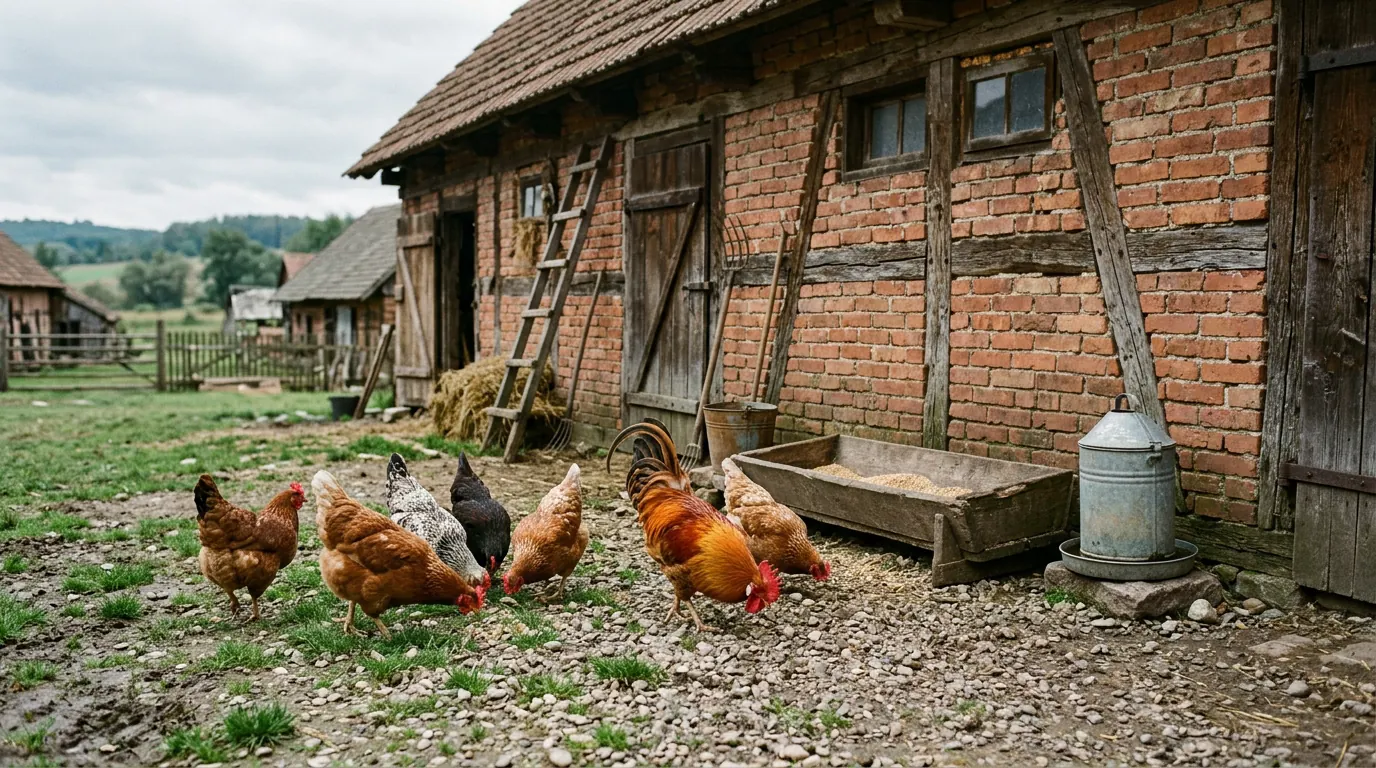
The Leghorn is a light, white laying breed, bred for egg production rather than meat. In practice it lays more than dual-purpose breeds, and the birds are small and eat less feed per head. If you keep hens for eggs, the Leghorn is the breed most often chosen in commercial production, but it needs good feeding and steady monitoring of results. We describe the differences between breeds in our overview of laying hen breeds.
Where the high laying rate comes from
Leghorns were bred by selecting for the number of eggs, not body weight. The birds are light and start laying early. So it is not only the breed that counts in the coop, but also the quality of the chick and how you manage the flock through the following months of lay. A hen that does not get the right feed, or that handles stress poorly, quickly loses her laying pace.
How many eggs to expect from a Leghorn
Egg numbers depend on the line
Laying output is usually given as the number of eggs in a laying year. It depends on the breeding line, the age of the flock, conditions in the coop and feeding. We do not give a specific number here, because it differs between lines. You will find data for a given line in the breeding documentation from your chick supplier. Compare your flock's results with what the line states, not with a general belief about the breed.
How to calculate performance
To judge a flock, use the daily laying percentage: the number of eggs laid divided by the number of birds in the flock. Record it every day and compare it with the line's curve. When the result drops faster than usual, look for the cause in feed, water, stress or disease. You can work it out quickly with a laying rate calculator.
Feeding Leghorn hens during lay
A ration matched to weight and laying rate
According to Aviagen (Ross 308 Parent Stock Nutrition Specifications 2021), the feed allocation is set from the birds' body weight and an assessment of condition and laying rate. When the energy density of the feed changes, you need to adjust the ration proportionally. That document covers parent stock of meat breeds, so treat it as a general principle, not a norm for the Leghorn. We describe the details in our article on feeding laying hens.
Checking feed intake
When many birds eat from one feeder, part of the flock may get too little. Watch whether feed disappears from the feeders in a reasonable time, especially before the period of higher laying. If feed is left over, check the number of feeder spaces and how the birds are spread out before you increase portions. Differences in weight between birds are a signal to adjust management, not to change the feed composition without advice.
Keeping Leghorns in the coop
Stocking density and space
The Leghorn is active, and too high a stocking density raises stress and the number of eggs laid outside the nests. Floor area requirements per bird come from animal welfare rules. Before you place a flock, check the current text in ISAP (Poland's Internet System of Legal Acts) and work out the stocking density for your specific coop, instead of judging it by eye.
Ventilation and temperature
We do not give temperature values here, because they depend on the age of the flock and the ventilation system. The general rule: avoid drafts and sudden drops in temperature, and in hot weather give constant access to fresh water. Record coop conditions in your coop records, so that after a few weeks you can see the link between weather and drops in laying.
Drop in egg laying: what to check first
First steps
When laying drops, start with simple things: water, feed, light, stress and parasites. Only then look for disease causes. We describe the most common causes in the article on lethargic hens and their causes. A sudden drop in laying together with deaths, apathy or changes in droppings is a signal to contact a vet immediately.
Treatment and withdrawal periods
Treatment needs a diagnosis, and the vet chooses the medicine and dose. Your job is to keep to the withdrawal periods before eggs go on sale. Record every treatment and the date the withdrawal period ends in the treatment and withdrawal module, so you do not mix up dates across later batches of eggs.
Legal requirements for keeping laying hens
Where to check current rules
Requirements for laying flocks come from animal welfare and veterinary rules. We describe the legal state as of 22.11.2026, but rules change, so before any decision check the current text in ISAP and the notices of the Chief Veterinary Inspectorate (Główny Inspektorat Weterynarii). You will find the full list of requirements in our guide to legal standards for keeping laying hens.
Flock documentation
Keep flock records so that data on bird numbers, placements and treatment is always at hand during an inspection. Rules on registration and payments are available from ARiMR (Poland's Agency for Restructuring and Modernisation of Agriculture) and from the Ministry of Agriculture and Rural Development. If you are unsure about a specific requirement, ask the district veterinarian (powiatowy lekarz weterynarii).
How to monitor Leghorn flock results
Indicators in one place
Compare daily laying, feed use per kilogram of eggs and week-to-week drops. The longer you record this data, the easier it is to see whether a change comes from the feed, the weather or the flock. You can follow production indicators in the FCR and EPEF online module.
Egg prices
Egg prices depend on grade, demand, season and sales method, so we give no amounts. Check prices with your buyers and in local ads. When you plan profitability, work out the feed cost per egg, because it most often decides the result.
Frequently asked questions
How many eggs does a Leghorn lay per year?add
The number depends on the breeding line, the age of the flock and conditions in the coop. There is no single value for all birds of this breed. You will find data for a given line in your chick supplier's documentation.
Are Leghorns good for meat?add
The Leghorn is a laying breed. The birds are light and carry little meat, so for meat production you choose dual-purpose breeds or broilers. Leghorns kept for eggs are usually not meant for slaughter.
How often should I check egg production in the flock?add
It is worth recording laying every day, because drops show up fastest in data from a few days. Compare the result with the line's curve and note changes in feed, weather and treatments. The same rule applies to every laying breed.
Do Leghorn hens need different feeding from other layers?add
The principle is the same: match the ration to body weight and laying results. Set the exact norm with a nutrition adviser or by the breeder's recommendations for the line. Change the feed composition gradually.
When should I call a vet?add
Call right away when laying drops suddenly and the flock has deaths, apathy, changes in droppings or loss of appetite. Do not start treatment without a diagnosis. The vet always chooses the medicine and dose.
Sources & resources
- linkRoss 308 Parent Stock Nutrition Specifications 2021
- linkChief Veterinary Inspectorate (Główny Inspektorat Weterynarii): gov.pl/web/wetgiw
- linkNational Research Institute of Animal Production (Instytut Zootechniki PIB): izoo.krakow.pl
- linkInternet System of Legal Acts (ISAP): isap.sejm.gov.pl
Prepared by: DlaFerm Team based on data from the sources listed · Publisher: INSTA-TECH sp. z o.o.
Do you keep a laying flock?
The DlaFerm coop records module helps you log egg production, stocking density and coop conditions in one place. Create a free farm account and see how it works with your own flock.
Phone
+48 796 258 151