Messa hen: a laying hybrid
The Messa hen is a laying hybrid, a bird from crossed lines and not a pure breed. Its flock results are described in the breeder's production guide, so start there and then compare it with your own records. Below we show what to measure, how to feed and when to react to a drop in laying.
verifiedFrom the team that has organised work on poultry farms for years.
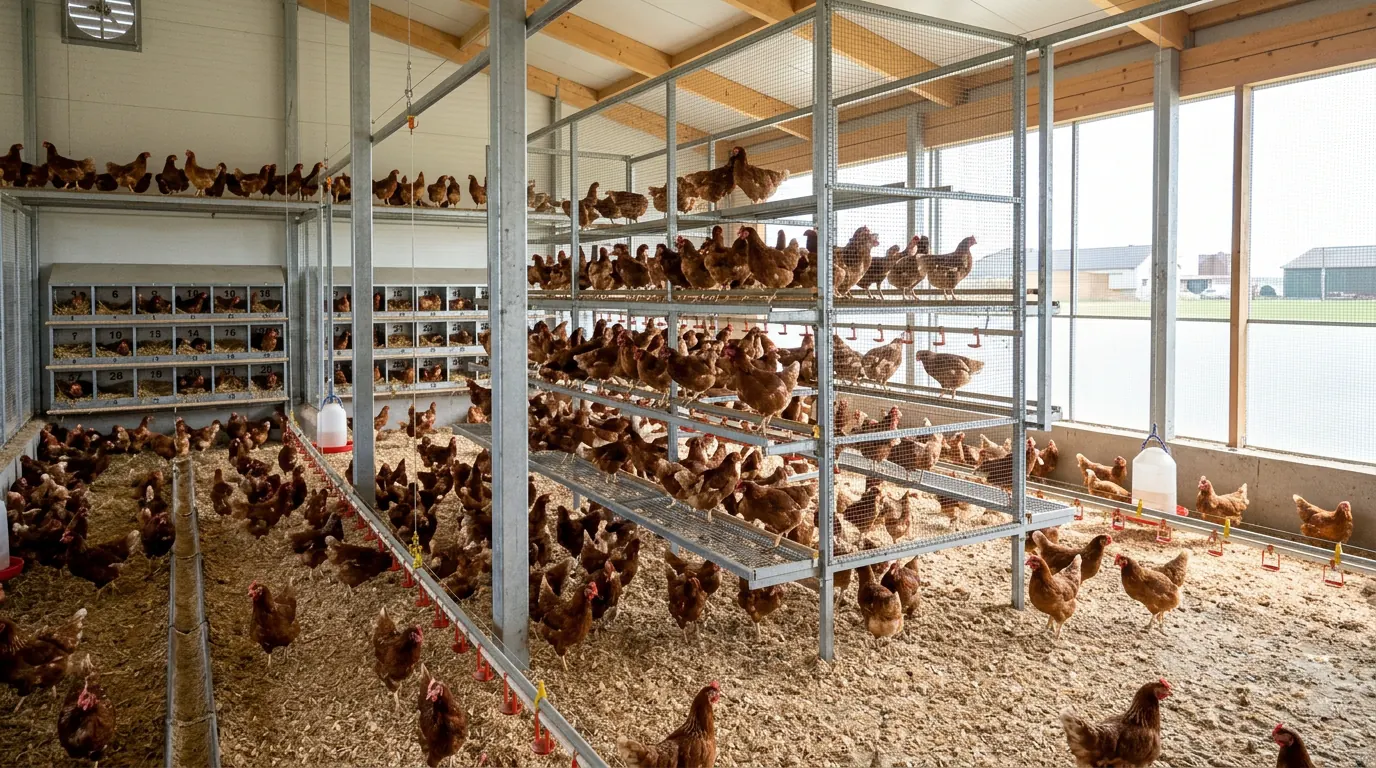
The Messa hen is a laying hybrid, a bird produced by crossing selected lines, not a pure breed. Its value in the flock (laying rate, egg weight and feed use) is described in the production guide from the breeder of that hybrid. So the first step is to get that documentation and compare it with the results in your own house. Laying hybrids are bred for a high, even laying rate, not for looks like ornamental breeds.
Hybrid versus your own hatch
Do not treat the offspring of a hybrid as another generation of the same line. Birds hatched from eggs of your own flock usually do not keep their parents' traits, so laying rate and egg weight may differ from the guide. Restock with birds from a hatchery that gives their origin and health documents. Keep new birds apart before moving them into the house. Write down the rules for entry and handling, because this makes inspections easier and helps you pass duties on to staff.
Laying rate and egg weight: what to check
Parameters to measure every day
According to the Ross Parent Stock Management Handbook 2023, key flock parameters (daily egg production, increase in lay and egg weight) should be recorded every day. The same handbook says body weight and egg data help set the feed allocation. It covers parent stock, but the habit of measuring results day by day carries over to a laying flock. Record the laying rate as a percentage of the birds housed, not only as an egg count, so you can compare days with different bird numbers.
Start of lay and egg weight
The same handbook links the result from the start of lay to the peak with egg size at the start, egg quality and the level of the peak. Birds must keep gaining weight in this period, because they grow and lay at the same time. If body weight is off the plan, check the feed and its amount first, before you decide the problem is genetic. Compare weekly results, not single days, because a one-off drop is often chance.
Feed for a laying hybrid
Ration depends on weight and laying rate
The Ross 308 Parent Stock nutrition specifications from 2021 are based on an energy level of 2800 kcal/kg and advise adjusting nutrient values in proportion when the feed energy is different. Feed allocation is set by body weight, bird condition scoring and laying rate. These documents cover parent stock, so do not copy their values into your own mix. Ask the feed producer or an adviser about the composition, and compare your feeding plan with the rules in feeding laying hens.
When laying differs from the plan
According to the Ross Parent Stock Management Handbook 2023, an unplanned change in daily production or egg weight calls for a review of the feed allocation. Before you decide, check the feed energy and the house temperature, because both affect how much feed a bird eats. Make changes gradually and note them in your log. Choose laying-support additives with an adviser, not from advertising alone. For details on additives see feed for laying hens to boost laying.
A drop in laying: first steps
Typical causes
A drop in laying can have many causes: feeding, temperature, stress after moving, the lighting program in the house, parasites and disease. Before you look for one culprit, write down since when the drop has lasted, how many birds are listless and whether the feed or water changed. Show apathy and loss of appetite to a vet. Do not pick drugs yourself, because the vet assesses the state of the flock.
Treatment and withdrawal period
The vet who knows your flock and the test result chooses the medicine and dose. Record every treatment with the date, product name and withdrawal period. Eggs from the withdrawal period must not be sold until it has passed, so mark them in the house and in your records. Guidance on products of animal origin is published by Poland's Chief Veterinary Inspectorate (Główny Inspektorat Weterynarii). Keep treatment records in the Treatment and withdrawal module.
Laying flock records
What to note every day
Record the number of eggs laid, deaths, culls, feed use and notes on the weather and work in the house. Add egg weight if you weigh it. The shorter the path from record to decision, the sooner you spot a deviation. Keep records in one place, for example in the house records module, so the data does not sit in several notebooks.
Comparing with the hybrid's standard
Compare the weekly result with the hybrid's guide, not with your neighbor's result, because bird age and line differ. A laying calculator helps you compare plan and reality for your flock. Record deviations above your chosen threshold with the date and any cause you found. This makes it easier to judge whether the problem lies in feeding, health or house conditions. Find the tool here: laying calculator.
Messa and other laying hybrids
How to compare hybrids
When choosing, compare the same parameters: age at start of lay, laying rate in successive weeks, egg weight, feed use and housing requirements. For context see the description of Rosa hybrids. Data from different sources was collected under different conditions, so always ask how the result was obtained. If the producer does not state the trial conditions, treat the numbers with caution.
Biosecurity when bringing in birds
Keep new birds apart for an observation period and only then join them to the flock. Write down the rules for entering the house and for visitors' clothing and equipment. You can build a ready template in the biosecurity plan generator. Agree the length of observation with your vet, because it depends on where the birds come from and on the animal disease situation in the region.
Frequently asked questions
How many eggs does a Messa hen lay?add
It depends on the line, the age at start of lay and housing conditions. You will find the producer's figures in the hybrid's production guide, and you can work out your own result from flock records within a few weeks. Do not compare it with other people's data without knowing the trial conditions.
Is the Messa hen a breed?add
No, it is a hybrid, a bird produced by crossing lines. Its traits are predictable in the first generation, so buy new birds from a proven source and do not hatch eggs from your own flock.
Can you hatch eggs from a Messa hen?add
You can, but the offspring usually will not keep the hybrid's traits, so laying rate and egg weight may differ from the guide. When planning your flock, it is better to buy new birds from a hatchery that gives their origin and health documents.
What affects the laying rate of a hybrid most?add
Most often it is feeding matched to body weight, temperature and light in the house, a calm flock and health. Record changes in each of these areas, because they help you find the cause. If a drop lasts, talk to your vet.
Where can I check the rules for keeping poultry in Poland?add
Legal acts are published by Poland's Internet System of Legal Acts (ISAP), and guidance on inspections and animal health by the Chief Veterinary Inspectorate. Rely on the legal state as of 22.11.2026 and check that it has not changed on the day you decide. If in doubt, ask the district vet. See also poultry keeper's rules and documents.
Sources & resources
- linkRoss Parent Stock Management Handbook 2023 (Interactive)
- linkRoss 308 Parent Stock Nutrition Specifications 2021
- linkChief Veterinary Inspectorate (Główny Inspektorat Weterynarii): gov.pl/web/wetgiw
- linkNational Research Institute of Animal Production (Instytut Zootechniki PIB): izoo.krakow.pl
- linkInternet System of Legal Acts (ISAP): isap.sejm.gov.pl
Prepared by: DlaFerm Team based on data from the sources listed · Publisher: INSTA-TECH sp. z o.o.
Do you keep a laying flock?
The DlaFerm.pl farm management software brings laying rate, feed use and treatment together in one place. Create a free farm account and enter your flock data today.
Phone
+48 796 258 151