Karmazyn chicken breed
You keep Karmazyn chickens much like other hens, but you need to watch the breed standard and the birds' origin. We explain how to recognize a pure breed, how to set up the coop and run, what to put in the feed and how to protect the flock from disease. We also cover the records you need to track laying and treatment.
verifiedFrom the team that has organised work on poultry farms for years.
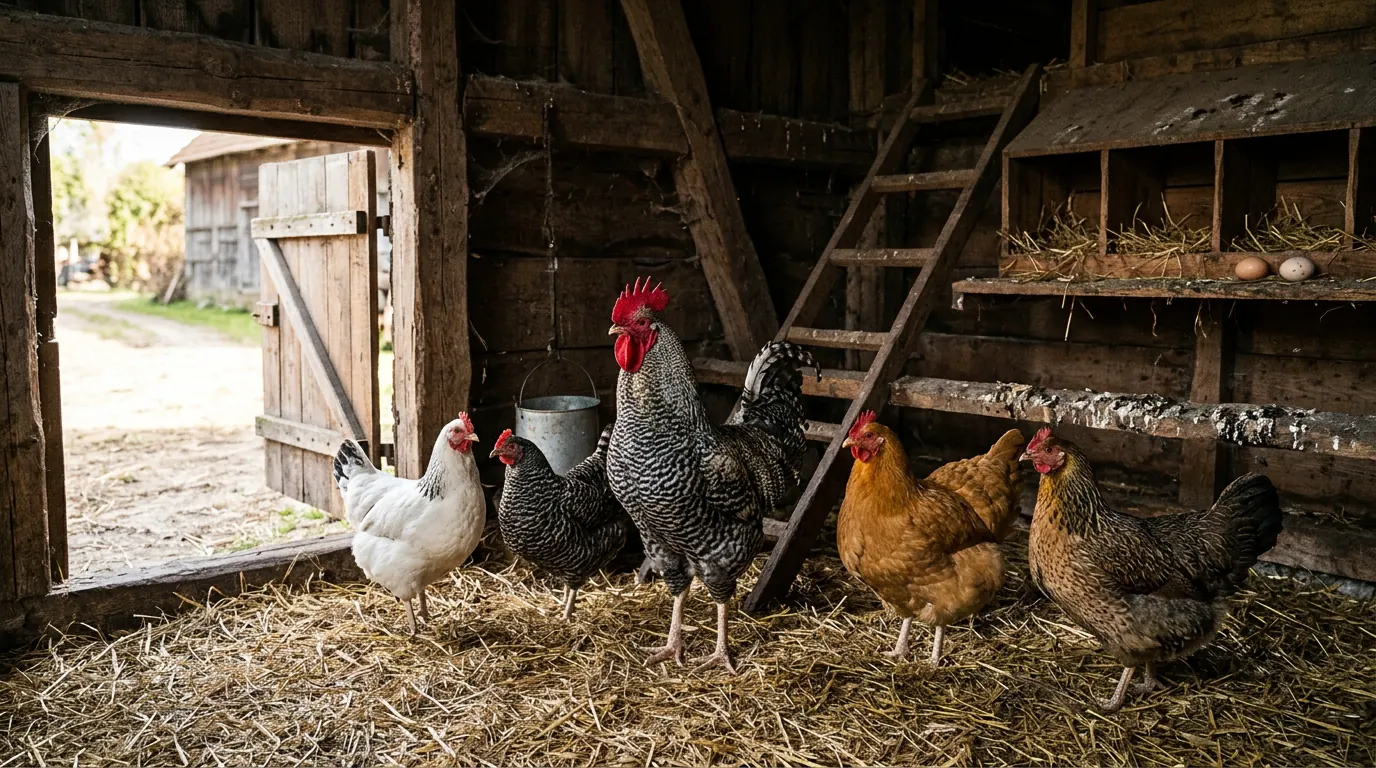
Karmazyn is a chicken breed that you keep much like other hens: it needs a dry coop, a run, balanced feed and regular health checks. The differences come from why you keep the birds and from the breed standard, which you should check at the source. Before you buy the first birds, name your goal: egg laying, ornamental birds in the yard or conservation breeding. The goal decides the size of the coop, how you select birds and how much you record. Below we describe what Karmazyn hens need day to day and where keepers most often go wrong.
Why keep Karmazyn chickens
With a laying flock you count eggs and feed use every week. In conservation breeding you document pedigree and bloodline, and with ornamental birds you watch looks and health. We give no specific laying figures for Karmazyn hens without a source, because we do not have them in the materials available to us. Ask the breed club or a breeder who has kept records over several seasons. When you compare birds, keep conditions the same: the same coop, the same feed and the same age.
How to recognize a Karmazyn
The breed standard
The breed standard describes body shape, plumage color, the shape of the comb and tail, and body proportions. Before you buy, compare the birds with the standard published by the breed club and with photos of adult birds. Chicks are hard to judge with confidence, because many traits develop only with age. Judge shape and color on adult birds, at a seller who shows you the flock moving about. Ask about the birds' origin and their parents. A breeder who keeps records will answer easily, and no answer is a warning sign.
Breed purity
Crossbreeds often look much like pure breeds, so judging from a photo can mislead you. When you breed on, write down which birds the chicks come from, because without that you cannot rebuild the line. If you want to compare Karmazyn with other production groups, see our overview of laying hen breeds. Performance can differ so much that mixing groups in one record quickly leads to errors in your data.
Coop and run for Karmazyn chickens
The coop
Karmazyn hens need a dry, airy coop with no drafts in winter and no stuffiness in summer heat. Set perches at a height the birds can reach safely, and put nest boxes in a darker spot away from drafts. Keep litter dry and change it regularly, because damp encourages respiratory disease and parasites. Before winter, check that windows and doors are tight and that ventilation works. We describe detailed coop requirements in our guide to coop requirements for laying hens, which also helps with Karmazyn.
The run
A run gives birds exercise and fresh air, but it needs a plan. The fence must stop predators, and the ground should be drained and rotated so parasites do not build up. Put the feeder and drinker in a dry, roofed spot, because wet feed spoils fast. Protect the run from predators even for short outings, as that is when birds are most exposed. After each outing, check that every bird has come back in for the night.
Feeding Karmazyn chickens
Feed
The diet should match the bird's stage of life: one for chicks, another for hens in lay. Complete ready-made feed keeps things simple, because you do not have to balance the ingredients yourself. Add extras such as grain or vegetables gradually and in limited amounts so you do not upset the diet. We describe feeding standards for laying hens in a separate guide, feeding laying hens. Write the feeding plan into your records, because you will notice a drop in feed intake before a drop in laying.
Water
Water must always be available and clean. Check drinkers daily, because dirty water quickly lowers flock condition and raises the risk of digestive disease. With automatic drinkers, check for leaks, blockages and a height that suits the birds. If the flock drinks less than usual, that is the first sign of a problem, and it shows up before any outward symptoms. A change in temperature or feed also affects water intake, so note such changes in your records.
Health and prevention
Common problems
Chicken flocks most often have trouble with eyes, parasites and gut infections. Watch for symptoms every day: apathy, changes in the eyes, a drop in laying and changes in droppings. Birds with conjunctivitis often squint and have watery eyes, which calls for a vet, not home remedies. You can read about this disease in our guide to conjunctivitis in chickens. Separate sick birds from the rest of the flock if your vet advises it.
Treatment and withdrawal period
The vet always chooses the medicine and the dose, not the keeper going by a forum post. The withdrawal period matters: after a drug is given, you may not sell eggs or meat for a set time. The length comes from the regulations and the product leaflet, so always check it. Record every treatment, the date the withdrawal period ends and the batch number of the product. You keep treatment and withdrawal records in the treatment and withdrawal period module, so you will not miss the date before a sale.
Rules, registration and records
Flock registration
We describe the legal position as of 22.11.2026. Before you bring birds in, find out which notification duties apply to poultry in your county. Ask the county veterinarian (powiatowy lekarz weterynarii), who can best tell you what applies in your case. You can find current legislation in the Internetowy System Aktów Prawnych (Poland's online legal acts database) and notices from the Główny Inspektorat Weterynarii (Chief Veterinary Inspectorate). Do not assume that rules for a breeding flock and for a small yard flock are the same. In practice the inspectorates may also expect sales documents, and it is worth agreeing their scope in advance.
Records
With several groups of birds it is easy to mix up records. Keep records separately for each group: placement date, number of birds, origin, health and laying. Coop records keep this data in one place, and the poultry farm management software links it with costs and feed. For Karmazyn with pedigree papers, also record the ancestors' data, because it is the basis for planning later generations. Write records as you go, not from memory at the end of the month.
Frequently asked questions
Is the Karmazyn a laying breed?add
It depends on the line and the breeding goal. We give no specific laying figures for Karmazyn without a source, because we do not have them in our materials. Check the data with the breed club or a breeder who has kept records over several seasons.
How can I tell a pure Karmazyn from a crossbreed?add
Compare the birds with the breed standard, looking at the shape and color of adult roosters and hens. Ask about pedigree and the flock's origin. Judging from a photo is unreliable.
Can Karmazyn chickens be kept with other hens?add
Yes, but introduce them to an existing flock carefully and watch how the roosters behave. Where size and temperament differ a lot, provide a separate pen so weaker birds can reach the feeder and drinker.
What matters most when keeping Karmazyn chickens?add
Dry litter, an airy coop without drafts and constant access to clean water. Add daily observation: apathy, changes in the eyes and a drop in feed intake are signs that call for action.
Can I sell eggs from Karmazyn hens after treatment?add
No, not until the withdrawal period of the drug given has passed. Its length comes from the regulations and the product leaflet, and the vet chooses the drug and dose. Record the date of treatment and the date the withdrawal period ends.
Where can I check current poultry regulations?add
You can find regulations in the Internetowy System Aktów Prawnych and notices from the Główny Inspektorat Weterynarii. We describe the legal position as of 22.11.2026. For flock registration, ask the county veterinarian.
Sources & resources
- linkChief Veterinary Inspectorate (Główny Inspektorat Weterynarii) — gov.pl/web/wetgiw
- linkNational Research Institute of Animal Production (Instytut Zootechniki PIB) — izoo.krakow.pl
- linkInternet System of Legal Acts (Internetowy System Aktów Prawnych) — isap.sejm.gov.pl
Prepared by: DlaFerm Team based on data from the sources listed · Publisher: INSTA-TECH sp. z o.o.
Do you keep several groups of birds at once?
The coop records module helps you keep each group's data apart in one place. Create a free farm account and enter your first flock, or get in touch and we will show you how it works in practice.
Phone
+48 796 258 151