Pavlovskaya chickens (kury pawłowskie): breed, laying and looks
Pavlovskaya chickens (kury pawłowskie in Polish) are a breed worth knowing about before you buy your first birds. Hard numbers for this breed are scarce, so we rely on sound breeding rules and on the records you keep yourself. Here is what to check with the breeder and how to record results.
verifiedFrom the team that has organised work on poultry farms for years.
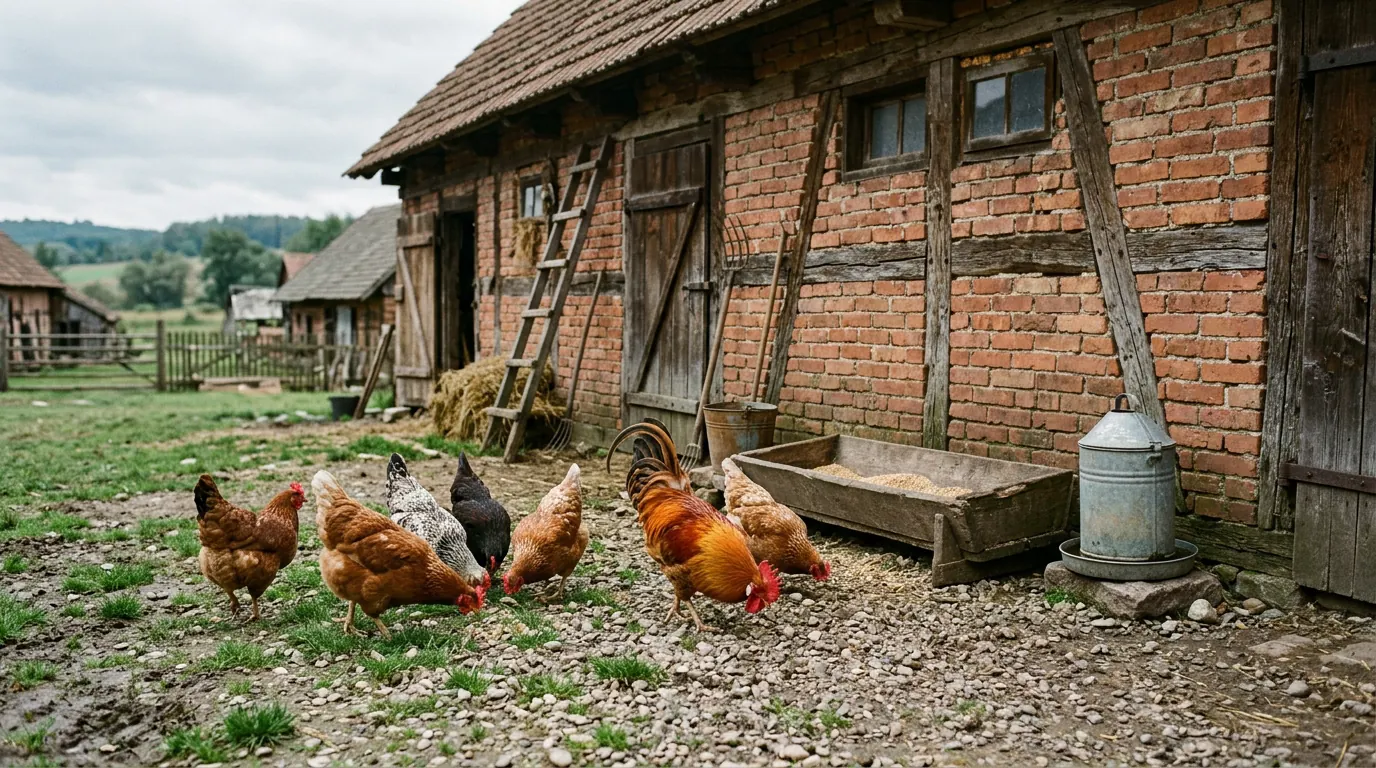
For Pavlovskaya chickens, you need to confirm laying rate, body weight and looks with a specific breeder or in the breed standard. There are no verified figures for this breed, so we do not quote a rough number of eggs per year. Instead we show how to check the birds and how to keep records, so after a year you have data to judge the result. We cover laying breeds separately in our guide to laying hen breeds.
Where to start when choosing
First decide your goal: eggs for your own use, showing, or free-range birds. Each goal needs different birds and different records. Ask the breeder for data from several seasons, not one, and ask whether the birds come from a single line. At purchase, there is a big difference between a breeder who keeps a flock book and one who only knows the price. If you want to compare the breed with hybrids, set your own laying records against data from a separate production, for example Rosa hybrids, instead of relying on forum opinions.
Looks and breed traits
What to check in a bird's looks
When buying, judge the bird against the breed standard: body build, feather color, comb shape, and skin and leg color. Ask the breeder to show you the parents or photos of the whole family line, not just one bird. Color differences matter for showing, but in a working flock health and evenness matter more. Birds from the same hatchery should look alike. Big differences in build often mean mixed lines. Record the hatch date and origin of each bird straight away, because it is hard to reconstruct later.
Varieties and color
If the breed comes in several color varieties, ask the breeder whether the varieties are kept in separate lines. Mixing varieties without a plan blurs breed traits over the generations. When breeding for eggs, do not pick birds by color alone. Laying performance and health should count for more. Record which line each hen comes from, so that after a few years you know which birds gave the best results.
Laying rate and egg quality
How to measure laying
Count eggs every day instead of going by feel. The Ross Parent Stock Management Handbook 2023 lists records of eggs laid per day, per week and cumulatively per bird, as well as hatching eggs and floor eggs. You can keep the same set of records in any house, even for a breed outside the Ross lines. That lets you compare results with the previous year. The handbook's figures apply to other lines and do not carry over to Pavlovskaya chickens.
Egg weight and floor eggs
The Ross handbook also lists average egg weight and total egg mass, counted daily and weekly. Note them separately, because a change in egg weight often shows up before a drop in egg numbers. Record eggs laid outside the nests as a separate item. They usually point to too few nests, nests that are too small, or birds that have no quiet place to lay.
Feeding Pavlovskaya chickens
The ration depends on weight and laying
The Ross 308 Parent Stock Nutrition Specifications 2021 give nutrient levels for a common energy level of 2800 kcal/kg. When feed energy is different, the levels must be recalculated proportionally. The feed allocation is set from body weight, an assessment of fat cover and egg production. If you change the feed composition, recalculate the ration by the same rule. These norms are for parent stock lines, so treat them as a starting point. Agree the actual feeding program with a nutrition adviser, in line with the feeding rules for laying hens.
Checking feed clean-up time
The time birds take to eat their feed shows whether every hen gets her share. The Ross handbook recommends close monitoring of clean-up time during rearing so you do not lose weight uniformity. Note it at every weighing. When a few hens fall behind, split the groups or add feeder space. An even flock gives more predictable laying.
Keeping birds and flock records
What to record from day one
Among parent flock records, the Ross handbook lists placement date, number of birds in the house, floor area and stocking density, feeder and drinker space per bird, and temperature and humidity. Record the same fields for Pavlovskaya chickens. You can keep the house data in the poultry house records module and compare flock results with earlier cycles in the farm management software.
Temperature in the first weeks
The temperature table in the Ross Broiler Management Handbook 2025 is for broiler chicks, so do not apply it directly to Pavlovskaya chickens. The rule is general, though: young birds need heat at the start, and you lower the temperature as they grow older and heavier. Agree with the breeder or a vet how to do this for the breed. Record minimum and maximum temperatures every day.
Health, treatment and withdrawal periods
Withdrawal periods and treatment records
For every treatment, record the date, the product name and the date the withdrawal period ends. A vet and the product label set the withdrawal rules, not the keeper. Blank fields are the most common problem at inspection, because it is hard to prove when a bird was treated. Keep these records in the treatment and withdrawal module, so every egg and every bird has a clear history.
Biosecurity when you buy
Keep new birds apart before you join them to the flock, and record the date they arrive. Note entries to the poultry house in a visitor log. Check the rules on moving and registering poultry in Poland's Internetowy System Aktów Prawnych (online legal database) or with the county vet (powiatowy lekarz weterynarii), because the rules change.
Frequently asked questions
How many eggs does a Pavlovskaya hen lay?add
There are no verified laying data for this breed, so we give no number. Ask the breeder for laying records from several seasons and check that they cover the specific line. Measure laying yourself every day, for the group or for single birds.
Are Pavlovskaya chickens good at brooding?add
Broodiness depends on the line and the individual bird, so do not assume it. Ask the breeder about natural hatching and incubation. If you plan to hatch, record fertility and hatch rate for every batch of eggs.
How much does a Pavlovskaya chicken cost?add
The price depends on the line, the bird's age and whether you buy chicks, young hens or breeding birds. Prices change over time, so we give no figure. Check current offers from breeders and poultry breeders' clubs.
How do you feed Pavlovskaya chickens?add
Set the ration by body weight, fat cover and laying, not by a fixed amount of feed. When feed energy changes, recalculate the ration proportionally. Agree the actual feeding program with a nutrition adviser or a vet.
Do Pavlovskaya chickens need a special coop?add
We have no verified requirement for this breed. In general they need dry litter, access to nests, protection from predators and steady temperature control. Record conditions in the house so after the season you can see what affected the result.
How do you compare Pavlovskaya chickens with other breeds?add
Compare them on your own records of laying, egg weight and feed use, kept in the same conditions. Opinions without data from a real house are not reliable. Compare other breeds using the same records.
Do you have to register a flock of chickens in Poland?add
Registration and notification duties depend on flock size and on the rules, which you should check in the legal acts or with the county vet. We give no specific deadlines here, because they may change.
Sources & resources
- linkRoss Parent Stock Management Handbook 2023 (Interactive)
- linkRoss 308 Parent Stock Nutrition Specifications 2021
- linkRoss Broiler Management Handbook 2025
- linkChief Veterinary Inspectorate (Główny Inspektorat Weterynarii): gov.pl/web/wetgiw
- linkInternetowy System Aktów Prawnych (Poland's online legal database): isap.sejm.gov.pl
Prepared by: DlaFerm Team based on data from the sources listed · Publisher: INSTA-TECH sp. z o.o.
Want to keep your flock's laying and health records in one place?
The poultry house records module in DlaFerm.pl lets you record stocking, egg production and house conditions in one place. Create a free farm account or get in touch, and we will show you how to set it up for your flock.
Phone
+48 796 258 151