Dominant Chickens: Laying Rate, Colors and Price
Dominant chickens are a laying hybrid bred for egg production. Laying rate, feather and shell color, and price depend on the genetic line, the bird's age, feeding and flock health. We explain what to look for in the breeder's data and how to keep your own records.
verifiedFrom the team that has organised work on poultry farms for years.
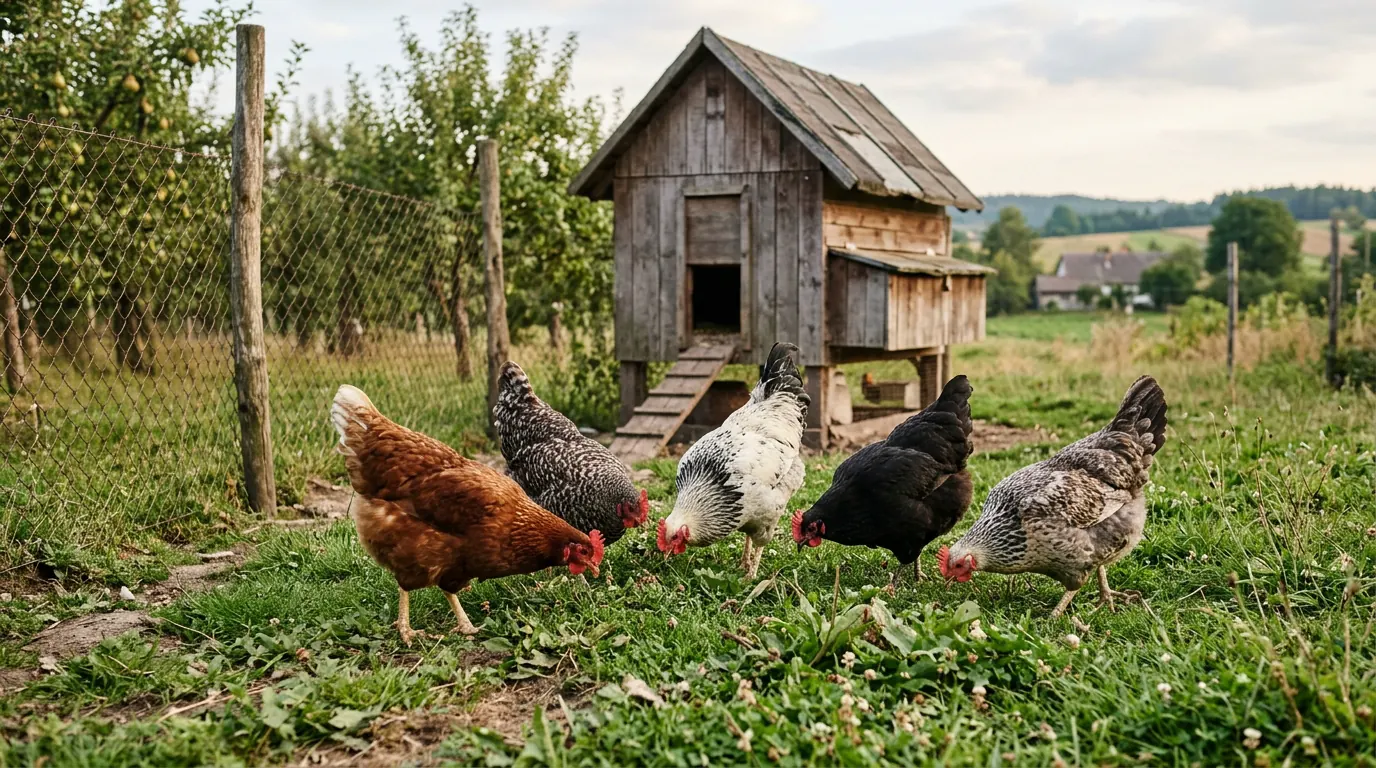
Dominant chickens are a laying hybrid: a bird bred from selected lines to give plenty of eggs for a reasonable amount of feed. How many eggs a hen lays depends on several things at once: the hybrid line, her age when placed in the house, her diet, lighting and flock health. For that reason we give no figures of our own for this hybrid. We explain where to find them, how to read them and what drives the price.
What a laying hybrid means in practice
A hybrid combines traits from two or more parent lines, and you normally keep birds from purchased batches. Chicks hatched from your own flock usually do not repeat their parents' results, so each new batch means buying new chicks. When choosing a supplier, compare the paperwork: the laying performance table, egg weight, feed use and the recommended feeding program. General breed descriptions on our site help for comparison too, for example laying hen breeds or the page on Rosa hens, a laying hybrid.
Dominant laying rate: what to look for in the data
Where laying data comes from
The line's breeder publishes laying data in management handbooks and performance sheets. The Ross Parent Stock Management Handbook 2023 advises watching egg production and egg weight daily, and checking hen body weight at set intervals, because this is the basis for adjusting feed portions. The handbook covers parent stock, so we take the recording principle from it, not specific values. When you buy a batch, ask for the full performance sheet and check the conditions it was measured in. Compare your own records against it in the flock laying rate calculator.
Start of lay and bird development
According to the Ross Parent Stock Management Handbook 2023, hens must keep gaining weight in early lay to sustain high egg production and hatchability. So at the first eggs, do not restrict feed in a way that stops the bird's growth. Weigh a sample of hens every week and record it next to the egg count. If growth stalls and laying does not rise, check the diet and conditions in the house.
Feather and shell color
Plumage and eggshell
Feather color and shell color depend on the hybrid's genetic line. Feeding and housing cannot change them, so ask your supplier for the official color description when you buy. Shell color alone says nothing about egg quality or hen performance. Judge quality by egg weight, shell thickness and the condition of eggs at collection.
Using color in the flock
Feather color helps you recognize a batch and makes it easier to check the flock on range or in the house. Label records by age and batch, especially when two batches share one building. Write down the placement date and the batch number so you can later link results to the birds' origin.
What decides the price of a Dominant hen
The stage at which you buy
Price depends mainly on what you buy. A chick is the cheapest but needs rearing and close monitoring. A young hen before her first egg costs more because rearing costs are already included. Check whether the price covers vaccinations, transport and a health guarantee. Compare offers in the same unit and with the same specification.
Where to check current prices
Hatcheries, distributors and breeders publish prices, and the level shifts with season, order size and region. Ask about delivery date and minimum batch size, as these often affect the unit price. Before buying, also check whether the supplier can show health documents for the batch. Agree prices directly with the supplier, not from other people's ads.
Feeding and prevention in a laying flock
Feed energy and portion matching
The Ross 308 Parent Stock Nutrition Specifications 2021 base their recommendations on an energy level of 2800 kcal/kg. If your feed has a different energy density, nutrient values must be recalculated proportionally, and the portion matched to body weight and laying rate. The same document notes that digestible lysine needs special attention when energy changes. Go over the details for your own mix with a feed adviser, and find the general rules in our guide to feeding laying hens.
Vaccination and withdrawal period
A vet chooses the vaccination program and medicines based on the flock's condition. We give no doses or product names here. What matters is recording every treatment with its date, and remembering the withdrawal period for medicines, because eggs from birds within the withdrawal period cannot be sold. We describe vaccine types and costs in the guide to poultry vaccines, and you keep the records in treatment and withdrawal records.
How to keep laying records on the farm
What to record every day
Each day record the number of eggs laid, their weight in a sample, feed use and losses. A daily record lets you spot a drop in laying within one day, before it becomes a problem for the whole flock. Data from several weeks shows a trend you cannot see in a single entry. The easiest place to keep it is the poultry house records, where every batch is kept separate.
When laying drops
A drop in laying has many causes: feeding, light, stress, disease, or a house that is too hot or too cold. First check the records from the last few days and any changes in feed or handling. If the drop is sudden or the birds' behavior changes, tell your vet. We cover the causes in more detail in why hens don't lay eggs.
Frequently asked questions
How many eggs does a Dominant hen lay?add
We give no figure of our own, because the result depends on the line, age, feeding and conditions in the house. You will find exact data in the breeder's performance sheet, which is worth comparing with your own records. The best measure is your own flock, so record laying every day.
What color is a Dominant chicken?add
Feather and eggshell color depend on the hybrid's line and do not change with the way you keep the birds. The supplier gives the color description in the batch documents. When buying, ask for confirmation of the color for the specific batch.
How much does a Dominant hen cost?add
The price depends on the stage at which you buy: chick, young hen or bird in production. Region, season, order size and the supplier's services also affect it. Agree current prices directly with a hatchery or distributor.
Can you breed Dominant hens from your own chicks?add
A laying hybrid usually does not pass its results on to chicks from your own flock. So after each batch you need to buy new chicks from a supplier. Record the batch number so you can compare results between batches.
What should you feed Dominant hens?add
Feed should match the laying stage and the birds' body weight, and you should adjust portions to your records. The breeder's recommendations give values for a set energy density, so with a different feed you need to recalculate them. Agree the mix with a feed adviser.
When should you tell a vet about a drop in laying?add
Report a drop if it is sudden, lasts several days, or comes with a change in behavior, apathy or more losses. A vet chooses the treatment, so do not treat birds on your own. Write down symptoms and dates to help the diagnosis.
Sources & resources
- linkRoss Parent Stock Management Handbook 2023 (Interactive)
- linkRoss 308 Parent Stock Nutrition Specifications 2021
- linkChief Veterinary Inspectorate (Główny Inspektorat Weterynarii) — gov.pl/web/wetgiw
- linkNational Research Institute of Animal Production (Instytut Zootechniki PIB) — izoo.krakow.pl
Prepared by: DlaFerm Team based on data from the sources listed · Publisher: INSTA-TECH sp. z o.o.
Do you keep a laying flock and want daily records in one place?
The DlaFerm poultry house records module logs laying rate, feed use and losses for each batch separately. Create a free farm account and see how it works in your own house.
Phone
+48 796 258 151