Gęgawa goose: Polish native breed, laying and use
The gęgawa goose is a Polish native breed with a compact build that does well on pasture. It lays seasonally and not many eggs, and its meat birds grow more slowly than specialized breeds. We explain what to expect and how to plan your flock.
verifiedFrom the team that has organised work on poultry farms for years.
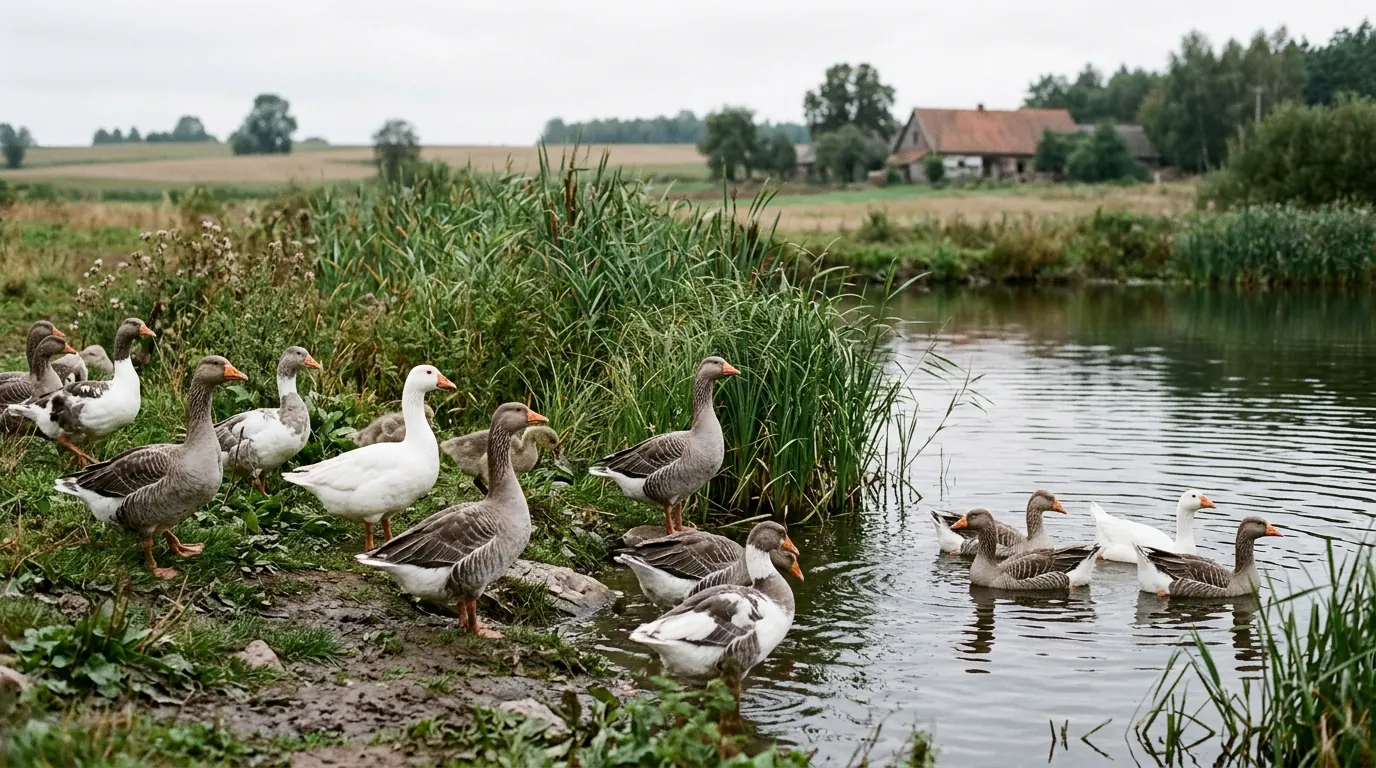
The gęgawa goose is a Polish native breed that farms in the countryside have kept for a long time. It is part of national efforts to preserve local breeds. The birds are medium to large, graze well on grass and cope with the Polish climate. The name comes from the loud honking of the birds. The breed gives meat and feathers, and its laying is lower than in breeds specialized for egg production. That is why it suits keepers who want pasture rearing and a longer production cycle.
How to tell it from other breeds
The gęgawa differs from specialized breeds mainly in growth rate, seasonal laying and its fit for grazing. For a comparison of the most commonly kept breeds, see our overview of goose breeds: landes, kholmogory, Cuban, grain-fed. When choosing a breed, look at your production goal, the range you have and whether you have buyers for meat or feathers.
Where the gęgawa goose comes from
Origin and name
Gęgawa geese developed in village flocks, without specialized selection for a single trait. That is why they kept their hardiness and good condition on pasture. Today the breed is less common on the market than specialized geese, so when you buy, ask about the birds' origin, their line and whether the flock was tested for diseases. Pedigree also helps you choose breeding birds, because it lets you avoid inbreeding in the flock.
Build and plumage
Gęgawa geese have a strong, compact build and well-developed legs made for long walks on pasture. The plumage is most often in shades of gray, which makes it easier to tell birds apart in the flock. Looks alone say nothing about laying or growth rate, though. When you select breeding birds, assess conformation, health and mobility, and record the results in your flock records.
Laying in gęgawa geese
Laying season
Goose laying is seasonal and depends on the time of year, day length and the condition of the bird. Gęgawa geese start laying in spring, and the season ends as light and temperatures drop. Outside the season a goose usually does not lay, so when you plan breeding, count on a limited number of eggs per female per year. The exact number depends on the line, the age of the bird and housing conditions, so base your plan on your own records from previous seasons.
Hatching and breeding
Geese often sit on their eggs naturally, but with a small flock keepers also use artificial incubation to control temperature and humidity better. When you order goslings, check whether the hatchery keeps origin records and pedigrees. You will find a list of hatcheries and ordering tips in our guide to poultry hatcheries in Poland: list and how to order chicks. Record each placement and hatch right away, because after the season it is hard to work out which birds came from which breeding batch.
Meat and feather use
Growth and fattening
Gęgawa geese grow more slowly than birds reared intensively for meat, and fattening takes longer. That time costs feed and space, but it gives birds with firm meat that many keepers sell directly. Profitability depends more on having buyers willing to pay for a native breed than on the breed itself. Track growth by weighing regularly and writing the results in your records, so you spot deviations from plan early.
Feathers and down
Goose feathers have practical value, but collecting them takes care and must respect the bird's welfare. Collect feathers only from birds in good condition and in a way that does not stress the animals. With larger volumes, sell feathers and meat separately so you can easily compare income from both and see which pays better in a given season.
Feeding and grazing gęgawa geese
Pasture
Geese make good use of grass and greens, so pasture cuts feed costs and gives the birds exercise. The area should be easy to reach from the building and free of chemical residues. A wet, trampled range quickly becomes a source of parasite and bacterial infections, so rotating ranges is basic good practice, not an extra.
Feed and standards
Feed rations for geese are matched to age, weight and production stage. You will find feeding standards in our material on feeding geese and ducks. Standards for laying hens do not carry over directly to geese, because their needs and the way they eat are different. Compare with feeding laying hens only as a point of reference. Change feed gradually and watch the birds for a few days.
Building, range and protection
Building
Geese need a dry, airy building without drafts, with bedding and a place to rest. We describe the requirements in our guide to housing requirements for geese. When you design doors and exits to the range, remember that the birds move as a flock and go out together, so narrow passages and thresholds slow them down.
Fencing and predators
Geese are loud and easy to hear, which helps predators find the flock. The range fence should be solid, and at night the birds must be shut in a secure building. Keep drinking and bathing water where it will not flood the bedding, because wet litter favors parasites and disease.
Health and biosecurity
Salmonella and parasites
Geese can carry Salmonella bacteria and pick up intestinal parasites, especially on wet pasture. We describe symptoms and what to do in our guides on Salmonella in geese and worms in geese. If you suspect disease, call a vet, who will choose the medicine and dose.
Withdrawal period and biosecurity
After a medicine is given, a withdrawal period applies: the time when you may not sell meat or eggs. The medicine's manufacturer states the length and the vet recommends it, so always check it before you sell. Keep new goslings separate while you observe them, and limit access to the range to staff. You can prepare a biosecurity plan with the biosecurity plan generator.
Frequently asked questions
Is the gęgawa goose a native Polish breed?add
Yes, the gęgawa goose is a Polish native breed. It was kept on farms in different regions of the country, and its preservation is supported through national breeding programs. For current information on the programs, see the website of the National Research Institute of Animal Production (Instytut Zootechniki PIB).
How many eggs does a gęgawa goose lay per season?add
Goose laying is seasonal and clearly lower than in breeds specialized for egg production. The exact number depends on the line, the age of the bird, the weather and feeding. It is best to base your plan on records from your own flock in previous seasons.
Can you keep gęgawa geese with other poultry?add
You can, but geese need a separate range, because they eat and move differently from chickens. On a shared range, watch the space at feeders and drinkers. Keep new birds apart while you observe them, which lowers the risk of spreading disease.
Do you have to register a goose flock in Poland?add
A poultry keeper must report the location of the flock, and the details come from veterinary regulations. Check the legal state as of 22.11.2026 in the Internet System of Legal Acts (Internetowy System Aktów Prawnych), and confirm current requirements with your county veterinarian (powiatowy lekarz weterynarii).
How fast does a gęgawa goose grow?add
Gęgawa geese grow more slowly than broilers, and fattening takes longer. Growth rate depends on the birds' origin, the feed and access to pasture. Weighing at regular intervals will show whether gains match your plan.
When can you sell goose meat after treatment?add
Only after the withdrawal period ends. The medicine's manufacturer states its length and the treating vet recommends it. Record every dose with the date given and the end of the withdrawal period.
Sources & resources
- linkNational Research Institute of Animal Production (Instytut Zootechniki PIB) — izoo.krakow.pl
- linkChief Veterinary Inspectorate (Główny Inspektorat Weterynarii) — gov.pl/web/wetgiw
- linkMinistry of Agriculture and Rural Development — gov.pl/web/rolnictwo
- linkEFSA — efsa.europa.eu
Prepared by: DlaFerm Team based on data from the sources listed · Publisher: INSTA-TECH sp. z o.o.
Do you keep geese alongside other poultry?
The <a href="/program-do-ewidencji-kurnika">house records module</a> lets you log bird groups, placements, weighings and treatments in one place. Create a free farm account in DlaFerm.pl or get in touch, and we will show you how it works for a goose flock.
Phone
+48 796 258 151