Poultry hatcheries in Poland: how to find one and order chicks
A poultry hatchery hatches chicks from breeder flock eggs and sells them as day-old chicks. Your choice of supplier shapes the state of your flock in the first days after placement. We explain where to look for a hatchery, what to ask before you order and how to judge chicks on arrival.
verifiedFrom the team that has organised work on poultry farms for years.
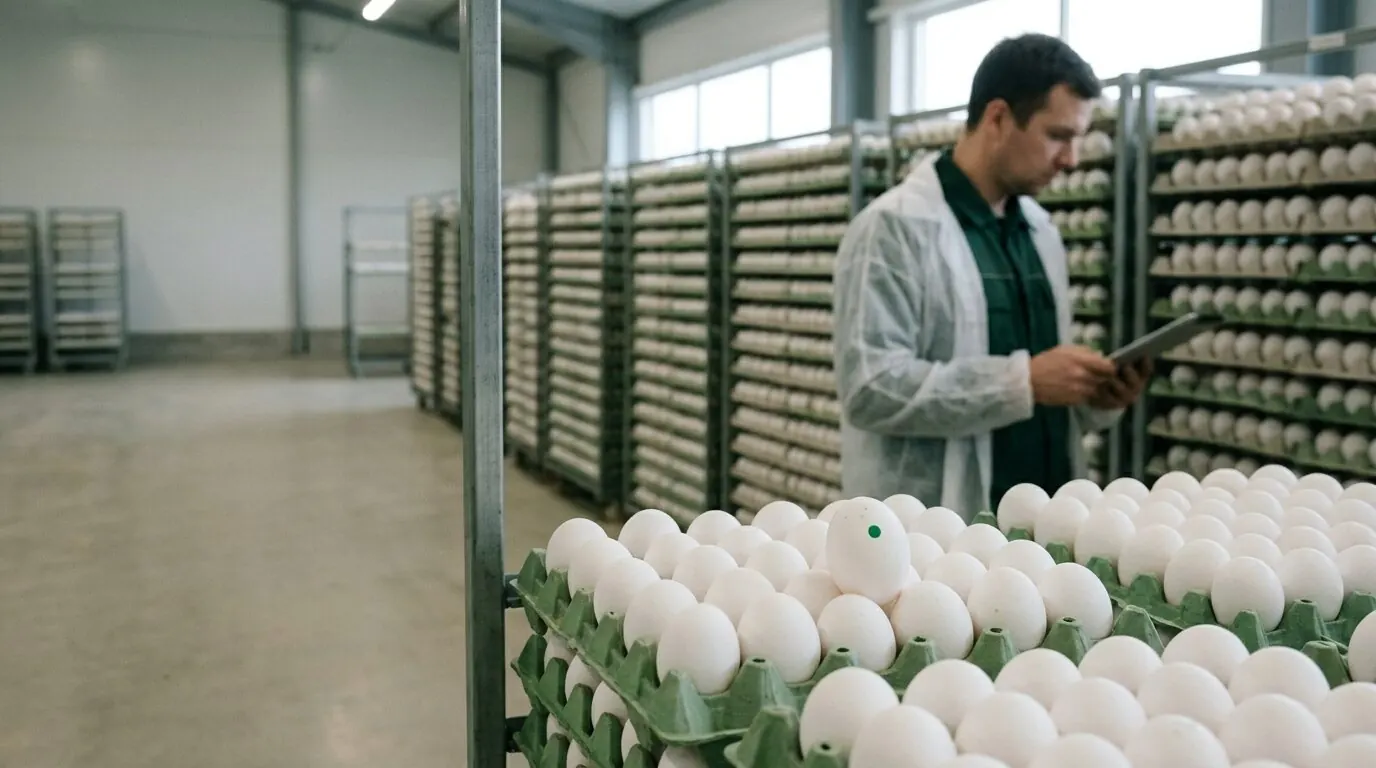
A poultry hatchery hatches chicks from eggs laid by breeder flocks and sells them to broiler, laying hen and turkey keepers as day-old chicks. There is no single reliable, up-to-date list of hatcheries, so the best way to find suppliers is to ask directly: your county veterinarian (powiatowy lekarz weterynarii), local keepers, and exhibitors at poultry trade fairs. Start your order with a question about where the chicks come from, not about price. Below we describe how to choose a hatchery, what to check on arrival and how to plan the placement of your flock.
Why the choice of hatchery matters
Chick quality is set in the hatchery, not on the farm. Breeding handbooks stress that good management of hatching, storage and chick transport maximizes chick quality and flock uniformity. If conditions are poor in the hatchery, during transport or in the house, the quality problem gets worse. Before your first order, ask the supplier about the breeder flock, hatch dates and how the chicks are delivered.
How to find a hatchery and check the supplier
Sources of contacts
The most reliable information about hatcheries in your region comes from your county veterinarian and from other keepers who buy chicks on a similar scale. Poultry trade fairs also help, because suppliers present their offers there. Ask every supplier for the establishment's veterinary number and check it in the lists kept by the Chief Veterinary Inspectorate (Główny Inspektorat Weterynarii). If a supplier will not give you that number, treat it as a signal to verify further.
Registration and documents
With every delivery, ask for documents confirming where the chicks come from and the health status of the breeder flock. You can check the details of the requirements in Poland's online legal database, the Internetowy System Aktów Prawnych, and for questions about the establishment, talk to your veterinarian. Record the supplier's details and document numbers in your farm records, so you can trace the history of the batch after placement.
What to ask before ordering chicks
Breeder flock origin
Ask which breeder flock the chicks come from, how old it is and what its hatch results are. A good hatchery answers this without hesitation. Also ask about the breeder flock's vaccination program and how the hatch is run. Write the answers in your batch records, because they affect placement results and your assessment of the supplier after the cycle. In Poland, a broiler producer must also keep documents on the source of hatching eggs and chicks, and a copy of the latest Salmonella test result of the breeder flock must travel with the chick shipment. Records are kept for 3 years.
Delivery date and timing
Agree the placement date well in advance, then check that the house is ready, disinfected and warm. Delayed collection of chicks raises the risk of poor quality and losses. When you plan, take into account stocking density, the cycle and the date the birds go to slaughter. A good step is to go through the schedule in the placement planning module, which shows successive cycles in one place. Chick prices change, so ask several suppliers for a current offer before you order.
Day-old chick quality on arrival
Look and behavior of day-old chicks
A good day-old chick is clean after hatching, stands firmly and walks well. It is alert and active, the navel is fully healed and the yolk sac is absorbed. The chick should make contented sounds. Birds with deformities, soiled down or an inflamed, weeping navel are a reason to report the problem to the hatchery. Write down how many chicks you checked and which defects you found, so you have a basis for talking to the supplier.
Transport conditions
According to the Ross Broiler Management Handbook 2025, the chick cloacal temperature should be 39.4–40.5°C (103–105°F). Relative humidity should stay within 50–65%, and minimum ventilation is 0.71 m³ per minute per 1000 chicks. CO₂ concentration should be below 3000 ppm. The Ross Parent Stock Management Handbook 2023 gives the same values. Vehicle settings can differ with the design of the vehicle, so check them with your carrier. You can read more about the rules in our separate guide: poultry transport rules in Poland.
The first days after delivery
Water and feed from the first moment
The Ross 308 Broiler Performance Objectives 2022 recommend easy access to water and feed as soon as the chicks are placed. The switch to automatic feeders and drinkers should happen around day 4–5. Humidity below 50% needs attention, and minimum ventilation must be set from day one. If you want to spot feeding problems sooner, see the method in our guide to early feeding of chicks.
Checking weight over the first 7 days
The same handbook advises monitoring crop fill, behavior at feeding and drinking, and live weight at day 7. Data from this period helps you improve house settings in later cycles. Weighing samples by hand takes time, so many keepers use camera-based poultry weighing, which gives you a view without entering the house.
Cycle, target weight and batch records
Target weight and feeding
The Ross 308 / 308 FF Broiler Nutrition Specifications 2022 split their recommendations by target weight: up to 2.0 kg, from 2.0 to 3.5 kg and above 3.5 kg. Which table you use depends on the weight you want to reach and by when. Set your feeding plan and target weight before you order, because they decide which chicks you order and when.
Batch and delivery records
Record every delivery with the date, number of chicks, document number and supplier name. This makes it easier to compare results between hatcheries and to discuss complaints. Link the entries to the farm entry log, so you know who had access to the house and when. Keep your records in poultry farm management software and your cycle plan in the placement planning module.
Frequently asked questions
Where can I find a list of poultry hatcheries in Poland?add
There is no single, current list of hatcheries in one place, so look for suppliers directly. Your county veterinarian, other keepers in the region and poultry trade fairs can help. Check each supplier through the establishment's veterinary number.
What should I ask a hatchery before ordering chicks?add
Ask about the breeder flock's origin, its age and its hatch results. Ask about the breeder flock's vaccination program and about the delivery date and method. Write the answers down so you can compare them after the cycle.
How do I judge day-old chicks on arrival?add
A good day-old chick is clean, stands firmly and walks well. The navel should be healed and the yolk sac absorbed. Report chicks with deformities or soiled down to the supplier straight away.
What temperature and humidity should chicks have during transport?add
The Ross Broiler Management Handbook 2025 gives a cloacal temperature of 39.4–40.5°C and relative humidity of 50–65%. Minimum ventilation is 0.71 m³ per minute per 1000 chicks. Check vehicle settings with the carrier, because they depend on the vehicle's design.
Do chicks need feed and water from day one?add
Yes, the handbooks recommend easy access to water and feed as soon as the chicks are placed. The switch to automatic feeders and drinkers happens around day 4–5. Watch how the chicks behave at feeding and drinking.
How can I tell whether placement is going well?add
Monitor live weight at day 7 and crop fill. Humidity below 50% needs a response, and minimum ventilation should be set from day one. Record the results in your cycle records.
Sources & resources
- linkRoss Broiler Management Handbook 2025
- linkRoss Parent Stock Management Handbook 2023 (Interactive)
- linkRoss 308 / 308 FF Broiler Performance Objectives 2022
- linkRoss 308 / 308 FF Broiler Nutrition Specifications 2022
- linkChief Veterinary Inspectorate (Główny Inspektorat Weterynarii) — gov.pl/web/wetgiw
Prepared by: DlaFerm Team based on data from the sources listed · Publisher: INSTA-TECH sp. z o.o.
Want your chick orders and cycle plan in one place?
The placement planning module in DlaFerm.pl joins delivery dates, the flock cycle and batch records. Create a free farm account or get in touch, and we will show you how it works in practice.
Phone
+48 796 258 151