Meat chicken breeds: broiler lines and traditional breeds compared
Meat chickens fall into two groups: broiler lines, which are fast-growing hybrids, and traditional dual-purpose breeds, which grow more slowly and cope better with free range. Your choice depends on who buys the meat, your housing system and how long you have to reach carcass weight. Below we compare both types and list what to check before you buy chicks.
verifiedFrom the team that has organised work on poultry farms for years.
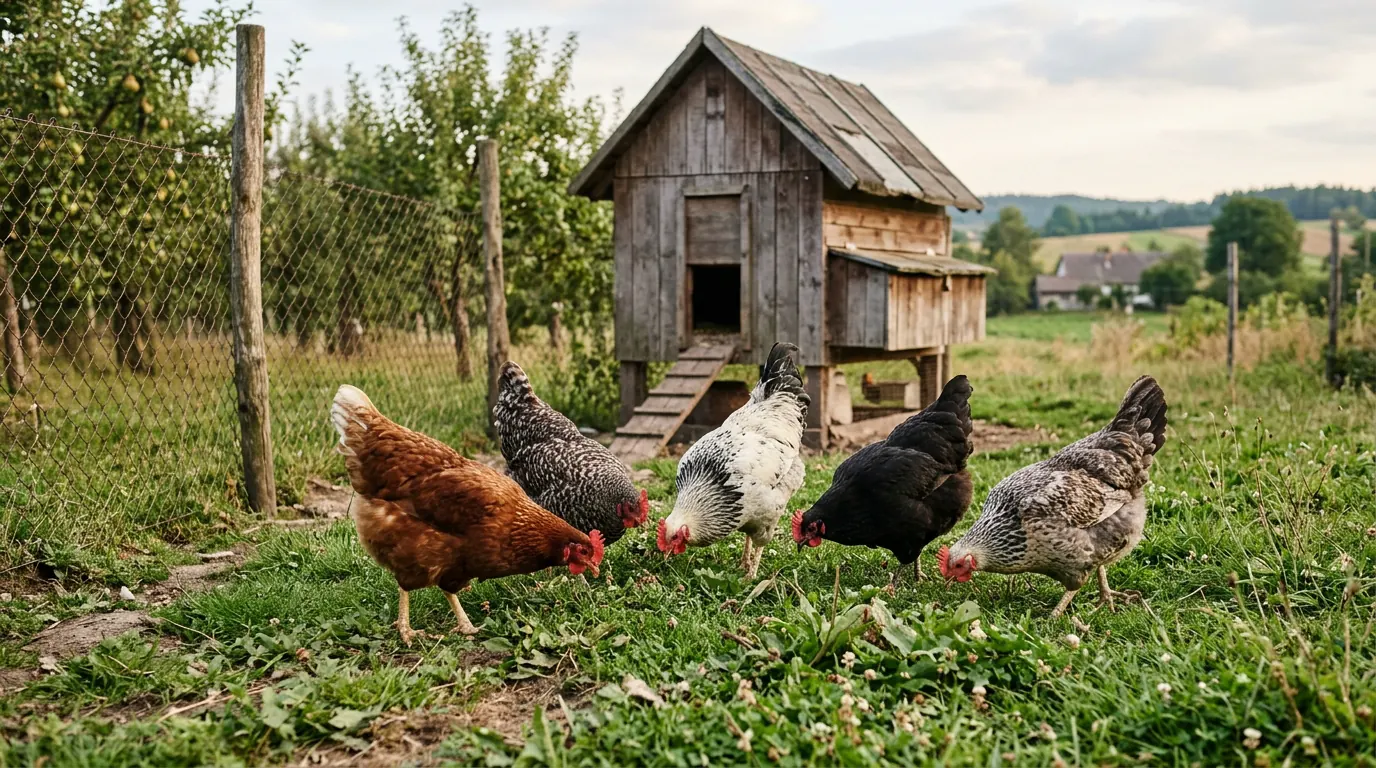
We split meat chickens into two groups. Modern broiler lines are hybrids bred for fast weight gain. Traditional dual-purpose breeds grow more slowly, give meat with a different character and do better on range. For most keepers the housing system decides: litter in a poultry house, free range or a closed building. Below we describe both groups and what to check before you buy chicks.
Why breed is more than looks
With meat chickens three things count: growth rate, feed use and how well the bird copes with your conditions. According to the Ross Broiler Management Handbook 2025, breeding broiler lines balances several traits at once: growth, feed conversion ratio (FCR), livability, meat yield and meat quality, plus leg health and cardiovascular fitness. The handbook stresses that these traits work together: if one part of flock management is weak, results for the whole flock drop. The name of the line is not enough. Look at the conditions in which the birds will be kept.
Broilers: lines specialized for meat
What broiler lines are
Most poultry meat comes from birds produced in selection programs run by specialized breeding companies. These are not pure breeds in the show-standard sense. They are parent lines crossed to produce a commercial bird. You buy chicks from a hatchery and usually do not breed them yourself. For a farm this means a predictable result under clearly described conditions, but also dependence on your chick supplier.
What a selection program covers
According to the Ross Broiler Management Handbook 2025, line selection covers a wide set of traits: performance, growth, livability, meat yield, meat quality, welfare, and leg and cardiovascular robustness. The handbook assumes that flock management will use this potential. So compare lines not only by the stated weight, but also by the conditions and feeding it needs. Collect results from your own farm in your records and compare them through FCR and EPEF indicators.
Dual-purpose and traditional meat breeds
How they differ from broilers
Traditional breeds grow more slowly and reach a higher weight at maturity. The bird has stronger legs and copes better on range, but uses more feed per kilogram of gain. The meat often differs in taste and texture. Many customers value that, while others expect softer, broiler-style meat. Talk through these differences with your buyer before you agree on a price and slaughter date.
Who they suit
Traditional breeds suit farms focused on direct sales, markets or regional products, where the story and taste of the meat matter. Lower stocking density and a longer cycle call for different planning, and the profitability calculation differs from broilers. If you compare the two systems, start with feed cost and time to slaughter from your own data, not from general assumptions.
Housing conditions that decide the result
Litter, density and ventilation
Stocking density, litter quality and ventilation affect flock results more than breed alone. Too many birds make litter damper, and wet litter leads to leg and skin problems. Record ventilation and litter condition in your poultry house records, so that when results drop you know what changed.
Health and withdrawal periods
A vet always treats the flock and chooses the medicine and dose. Your job is to record every treatment and observe the withdrawal period before slaughter. A missing entry in the records is a common reason a batch of meat cannot be sold. Keep treatments and withdrawal dates in the treatment and withdrawal module.
How to choose a meat chicken breed for your farm
Production goal
Start with the buyer. Selling carcasses to a processing plant needs a different weight and timing than selling at a market. The goal decides whether you choose a fast-growing line or a slower-maturing breed. Write down the required parameters: live weight, slaughter age and meat yield, and only then compare supplier offers.
Conditions and range
A bird that goes out on range needs different fitness and resilience than a bird kept indoors. Before you order chicks, check whether your house and range will allow the growth rate of the chosen line or breed. We describe fencing, bird movement and protection in our article on the chicken range.
Placement plan
The chick placement date should fit the pickup date and the empty period of the house after the previous batch. With several batches a year, plan the cycle in advance. Placement and cycle planning helps by showing when the next batch will take the place of the last one.
Native breeds and large working breeds
Native breeds
Polish native chicken breeds were kept for years on village farms and are still chosen today for backyard keeping and direct sales. People often point to how easily they brood their own eggs and how well they suit local conditions. Check each breed separately, though, because data on weight and growth rate differ between sources. You will find an overview in our article on Polish native chicken breeds.
Large breeds
Brahma, cochin and Jersey Giant are large breeds that give heavy birds, but they grow for a long time and eat more feed. For most meat farms they are interesting mainly as an addition to the range or for conservation keeping. We compare their size and needs in the overview of the largest chicken breeds.
Recording results for a meat flock
What to record
For each batch record the placement date, number of chicks, origin, weight at chosen stages, feed use and losses. This data lets you calculate feed use and compare batches. Notes on paper soon get out of step, so it is better to keep them in a system, for example the digital flock record.
Rules and sources
Requirements for welfare, transport and slaughter can change, so before any change to your housing system check the current text of the rules in ISAP (Poland's Internetowy System Aktów Prawnych, the online legal database). Animal health and food safety are overseen by the Chief Veterinary Inspectorate (Główny Inspektorat Weterynarii), and its notices are worth keeping at hand when you plan stocking and placements. Always confirm specific requirements with the vet who looks after your flock.
Frequently asked questions
What are the best chicken breeds for meat?add
Broiler lines, the hybrids bred for meat production, grow fastest. Traditional dual-purpose breeds grow more slowly, but cope better on range and give meat with a different taste. Your choice depends on the buyer, your housing system and the weight and slaughter date in your contract.
What is the difference between a broiler and a meat breed?add
A broiler is a breeding line selected for performance, while a meat breed is a traditional bird with a fixed standard. You buy broilers as chicks from a hatchery and usually do not breed them in your own flock. Traditional breeds can be bred on, but their results are less predictable.
How much does a meat chick cost?add
Chick price depends on the line, the hatchery, the season and the size of the order. We do not give amounts because they change regularly, so ask several suppliers for the price per chick and pickup terms. Compare offers on line parameters, not only on price per chick.
How do I check whether a breed suits my farm?add
Start with the production goal and slaughter date, then check your house and range. Compare indicators from your own batches with the supplier's data instead of relying on promises. Keep batch records so that results show up in numbers.
Can meat chickens be kept on free range?add
Yes. Traditional and native breeds are kept on range, while broilers are usually kept in houses. Range needs solid fencing, protection from predators and access to shelter. We describe the rules in our article on the chicken range.
What should I record for a meat flock?add
Record the placement date, origin of the chicks, weight at stages, feed use, losses and every treatment with its withdrawal date. The records are the basis of inspections and settlements with the buyer. A vet always sets the medicine and dose.
Sources & resources
- linkRoss Broiler Management Handbook 2025
- linkChief Veterinary Inspectorate (Główny Inspektorat Weterynarii) — gov.pl/web/wetgiw
- linkInternetowy System Aktów Prawnych (Poland's legal acts database) — isap.sejm.gov.pl
- linkNational Research Institute of Animal Production (Instytut Zootechniki PIB) — izoo.krakow.pl
Prepared by: DlaFerm Team based on data from the sources listed · Publisher: INSTA-TECH sp. z o.o.
Do you keep a meat chicken flock?
The <a href="/cyfrowa-karta-stada-brojlera">digital flock record</a> in DlaFerm.pl stores placements, feed use and the results of every batch in one place. Create a free farm account and see how it looks with your own data.
Phone
+48 796 258 151