Black Chicken Breeds and Their Egg Laying
Black is a feather color, not a separate production group. Egg laying depends on the breed, the breeding line and how you keep the birds, so compare specific breeds, not feather color. Below we describe naturally black breeds, the factors that affect laying and how to keep flock records.
verifiedFrom the team that has organised work on poultry farms for years.
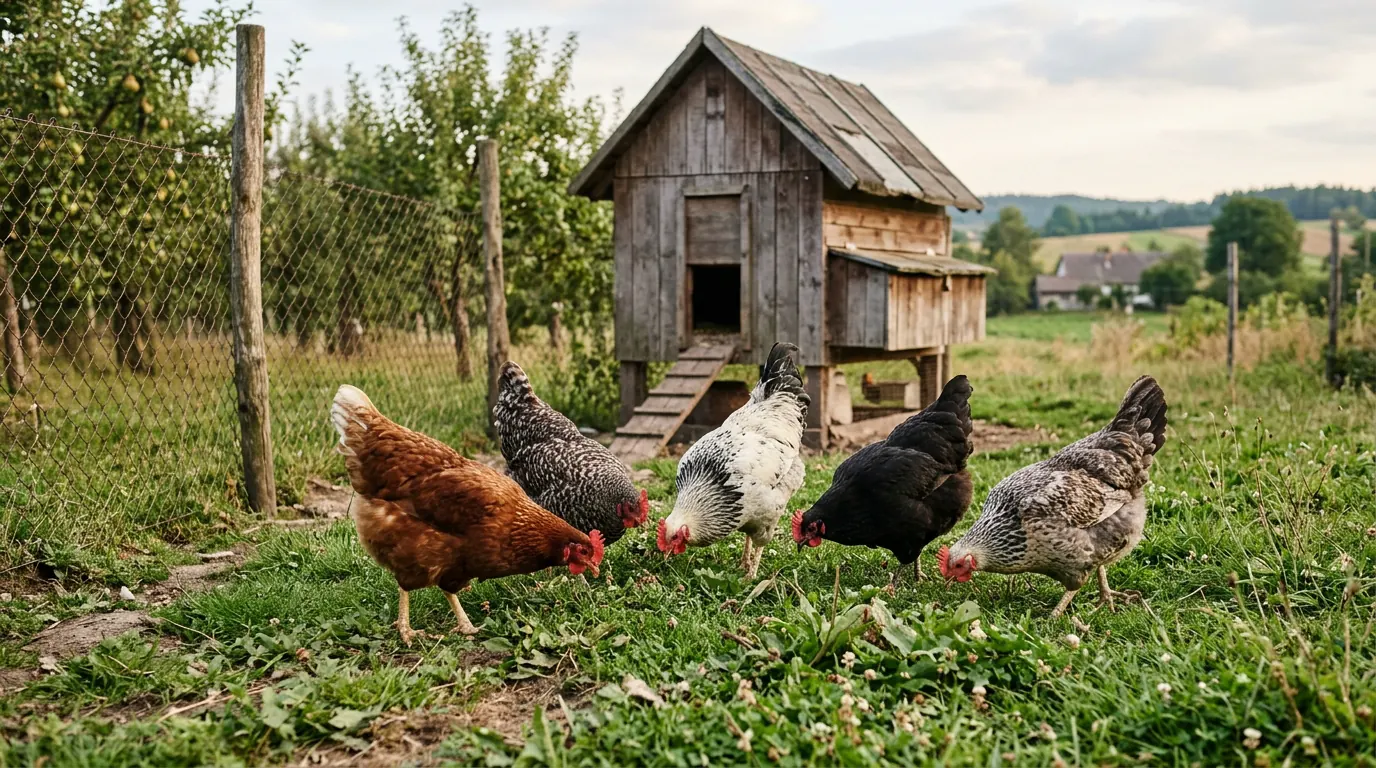
Black chickens are not one breed. Black is a plumage color found in many breeds with different body types and purposes. How many eggs a black hen lays depends mainly on her breed, breeding line, age and housing, not on the color of her feathers. Black plumage tells you nothing about egg numbers. Before you buy, check which type the breed belongs to and compare it with laying hen breeds.
What a "black" chicken means
Black plumage comes from pigment in the feathers and is part of the standard of many breeds. Naturally black breeds include the Minorca, the Australorp and the Langshan, as well as the black variety of the Orpington. Each has a different build, body weight and purpose: some are bred for laying, others for shows and ornamental keeping. Eggshell color depends on the breed, not on feather color. We cover colored shells separately in the guide to hens that lay green and blue eggs.
Black chicken breeds: an overview
Naturally black breeds
The Minorca lays large white-shelled eggs and stands out for its upright build and large comb. The Australorp has a reputation for good laying and a calm temperament, so it often ends up on small farms. The Langshan is a heavy bird with feathers that have a greenish sheen, and it is a dual-purpose breed. The black Orpington is kept for eggs or for looks, depending on the line. Before you choose a breed, ask the breeder about adult weight, purpose and laying data from recent seasons.
Varieties and lines within a breed
Black lines within the same breed are sold on the market, and they differ in build, size and performance. The label "black hen" guarantees nothing. Compare pedigree, data from earlier flocks and the breeder's reputation. If you buy a larger group, ask for performance figures from the same line, not from a single show bird. When you buy, record the origin of each group, because it makes it easier to judge laying later.
What affects egg laying in black hens
Breed and genetic line
Laying potential is set by the genetics of the line. Pure laying breeds usually do better than dual-purpose or ornamental breeds. Age matters too: laying rises once hens come into lay, peaks and then gradually falls. So do not compare hens of different ages. Compare data only from the same weeks of life and the same group.
Housing and feeding
Laying is affected by day length, coop temperature, access to water and feed quality. Stress after moving, noise, overcrowding and a lack of perches all lower results. Feed should match the laying stage, and its composition is worth checking. We describe feeding rules in the guide to feeding laying hens. When laying drops suddenly, first check feed, water and stress in the flock. A vet determines any disease cause.
Keeping black hens in a flock
Run and shade
Dark plumage heats up more in the sun, so on hot days provide shade in the run and constant access to fresh water. Birds also need a place to shelter from rain and wind. A fence protects against predators, and the coop must be shut at night. Choose the number of square meters per bird to suit the breed, because large hens need more room than ornamental ones.
Vaccination and prevention
A vet sets the vaccination and prevention program, taking into account diseases in your area and the age of the birds. In practice, keep a fixed schedule in your records, with dates and the name of the product given. We describe a vaccination calendar for a backyard flock in the guide to vaccinating chickens. Records also help when you check laying after a treatment.
How to keep records of black breeds on your farm
Group register and daily laying
Record each group separately: breed, line, placement date and number of birds. Note the number of eggs laid every day and convert it to eggs per hen in the group. Comparing with previous weeks quickly shows a drop. In coop records you keep group data in one place, and poultry farm management software sets it against feed and costs.
Treatment and withdrawal periods
After every treatment, record the name of the medicine, the date, the dose given by the vet and the withdrawal period. Do not sell eggs from birds in withdrawal until the period has ended. The length of the withdrawal period comes from the leaflet and your vet's advice, not from general rules. Keep these records in the treatment and withdrawal module so you do not mix up dates.
Black chickens for sale: what to watch for
Ornamental, utility or slow-growing
Sellers use the name "black chickens" for ornamental birds, utility birds and crossbreeds. Before you pay, ask about the breed, purpose and growth rate. If you want meat rather than eggs, read the guide to the slow-growing chicken. Choosing a breed always starts with your goal.
Origin of chicks
When you buy chicks, ask the breeder for details: breed, parents, hatch date and vaccination information. Record them in your records right away, before the chicks go into the coop. Without information on origin, it is harder to judge laying later and to limit disease in the flock.
Frequently asked questions
Do black hens lay more eggs than hens of other colors?add
Feather color alone does not decide laying. The number of eggs depends on the breed, breeding line, age of the bird and housing. Compare results of a specific breed, not the whole group of black hens.
Which black hens are the best layers?add
The Australorp and the Minorca are most often named as breeds with good laying, but results depend on the line and conditions. Before you choose, ask the breeder for data from recent seasons and check them on your own flock.
What color eggs do black hens lay?add
Shell color depends on the breed, from white to brown. Feather color does not change shell color. If egg color matters to you, check the breed, not just the color of the bird.
Are black chickens a laying breed?add
The name "black chickens" describes a color, not a purpose. Birds sold under that name may be ornamental, slow-growing or crossbreeds. Always ask about the breed and its purpose.
How do I check my hens' laying rate?add
Record the number of eggs in each group every day and convert it to eggs per hen. Compare the result with previous weeks to spot a drop. If laying falls suddenly, talk to a vet.
Sources & resources
- linkChief Veterinary Inspectorate (Główny Inspektorat Weterynarii) — gov.pl/web/wetgiw
- linkNational Research Institute of Animal Production (Instytut Zootechniki PIB) — izoo.krakow.pl
- linkMinistry of Agriculture and Rural Development — gov.pl/web/rolnictwo
- linkInternet System of Legal Acts (Internetowy System Aktów Prawnych) — isap.sejm.gov.pl
Prepared by: DlaFerm Team based on data from the sources listed · Publisher: INSTA-TECH sp. z o.o.
Do you keep a flock of black hens?
The DlaFerm coop records module stores laying data for each group and breed in one place. Create a free farm account on DlaFerm.pl or get in touch, and we will show you how it works in practice.
Phone
+48 796 258 151