Włoszka chickens: breed, egg laying and temperament
Włoszka hens (kury włoszki) are light laying hens of Italian origin, kept in several color varieties. Their laying and temperament depend on the specific line, not on the name alone. We explain how they differ from laying hybrids, what drives egg production and what to check before you buy.
verifiedFrom the team that has organised work on poultry farms for years.
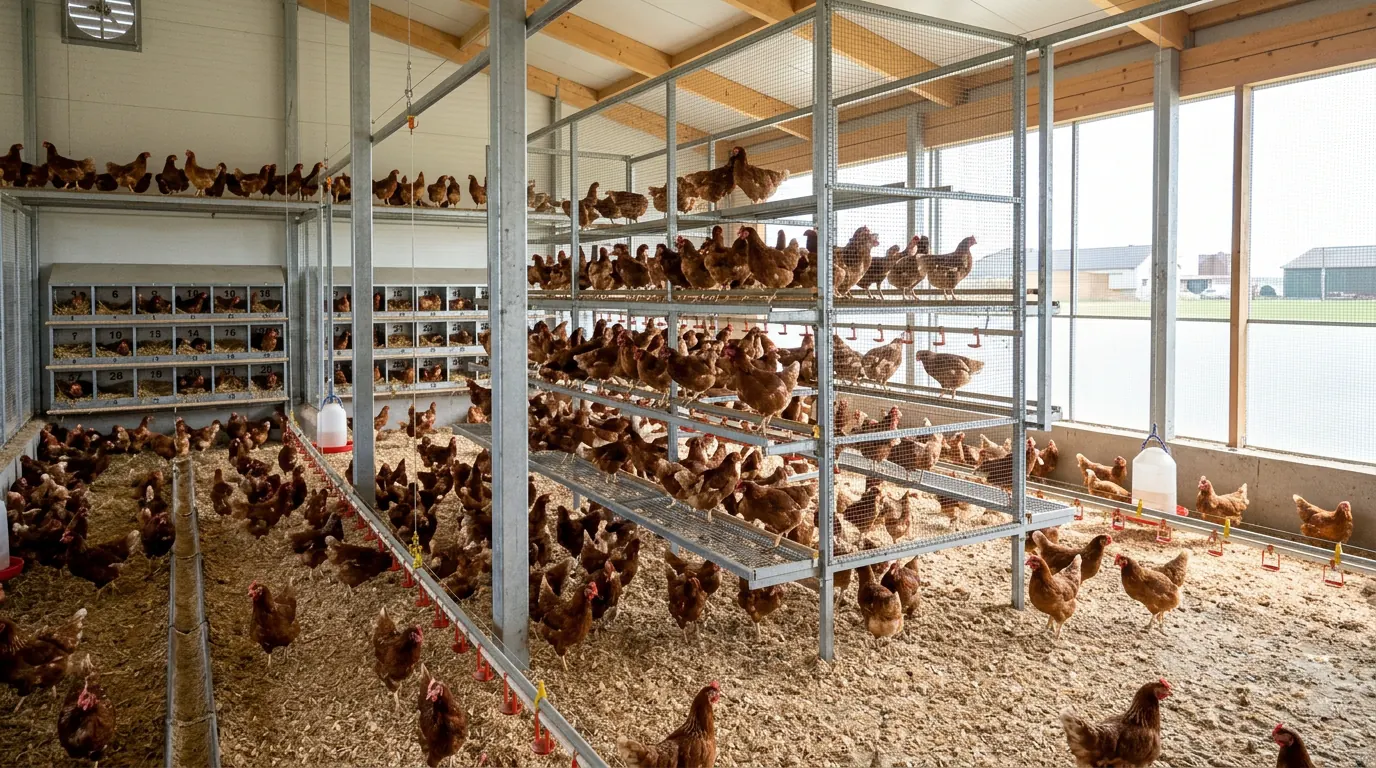
Włoszki (Italian hens) are a group of light laying chickens of Italian origin. In everyday use the name covers birds that look quite different, so before you buy, find out exactly which breed or line you are getting and check the standard with the breed club. If you want predictable egg production, compare włoszki with laying hens.
How a włoszka differs from a laying hybrid
Laying hybrids such as Rosa or Messa are bred for a set egg output and usually give even results in the first laying year. Purebreds such as włoszki rarely show such even performance, but they keep their own look and breed-standard traits. The choice depends on your goal: eggs for sale, or a breeding or ornamental bird. When you buy, ask the breeder about the origin of the flock and the laying results of earlier batches.
Appearance and build of włoszki
Body shape
Włoszki have a light, slim body typical of laying breeds. The comb, earlobes, and the color of skin and legs are part of the standard described by the breed club. When you assess birds from your own flock, check that these traits repeat from one generation to the next. Departures from the standard can point to a crossbreed, and that affects how predictable laying is.
Color varieties
Włoszki come in several color varieties, each with its own description of plumage, beak color and leg color. If you buy birds for shows, color matters most. For a working keeper, the line and the health of the flock matter more than plumage color.
Egg laying in włoszki: what it depends on
Breeding line
A hen's laying depends first of all on her genetic line. Two hens with the same name can lay a very different number of eggs if they come from different breeders. Ask the breeder for data from their flock records: the age of the birds, and the number and weight of eggs from earlier batches. Without such data it is hard to judge what to expect. Start keeping records from day one, for example in coop records.
Feeding and age
Laying results depend on feed, access to water, lighting and the age of the bird. Egg production rises up to a point and then falls gradually. Feeding standards for laying hens are set by institutes and feed producers, so set the ration according to the recommendations for the given age group and talk to a feed adviser. You can read more in the guide to feeding laying hens.
Temperament and behavior of włoszki
Disposition
Light laying breeds are usually more active and flighty than heavy dual-purpose breeds. Włoszki can react quickly to noise and strangers in the coop. Calm handling, spending time near the birds and a steady daily routine reduce stress. Watch the flock every day, because changes in behavior often show up before laying drops.
Mixing with other breeds
Mixing włoszki with larger, calmer breeds needs watching. Stronger birds can push lighter ones away from the feeder, drinker and perches. Check that every hen has equal access to feed and water. If one group is always at the back, separate the birds while they settle in and return to a shared run once the flock calms down.
Keeping włoszki in the coop
Coop and run
Włoszki need a dry, well-ventilated coop without drafts, with perches and nest boxes. Nest boxes should be dark and placed so that hens do not lay on the floor. The run must be fenced tightly, because light birds are an easy target for predators. Check the required space per bird in the standards for laying poultry rather than assuming a figure.
Health and biosecurity
Keep every new hen apart before she joins the flock and watch her daily: behavior, droppings, plumage, any drop in laying. If you suspect illness, contact a vet, who will choose the medicine and dose. After treatment a withdrawal period applies, so record every dose and do not sell eggs before the period the vet gives has passed. Treatment and withdrawal records help with this, and you can build a hygiene plan in the biosecurity plan generator.
Buying, documents and veterinary supervision
What to check before buying
Ask the breeder about the origin of the flock, its health and any vaccinations. Ask whether they keep records and can show them. Hen prices depend on the line, age, color variety and place of purchase. Do not compare the price of a włoszka with that of a hybrid without allowing for the difference in laying. Check current offers with breeders and at poultry markets, because prices change fast.
Flock registration and supervision
The rules on flock registration and animal identification are published in ISAP, Poland's online legal acts database (Internetowy System Aktów Prawnych), and details on payments and notifications are on the website of ARiMR (Agency for Restructuring and Modernisation of Agriculture). Check the current wording of the rules before you buy, because they can change. In practice, the district veterinary inspectorates (Inspekcja Weterynaryjna) expect records to be kept up to date and bird movements to be documented. Keep your purchase and sales documents.
Frequently asked questions
Do włoszka hens lay a lot of eggs?add
Laying depends on the line, the age of the bird and how she is kept. There is no single figure for all hens with this name. Ask the breeder for data from their records and compare it with the results of laying hybrids.
What is the difference between a włoszka and a laying hen?add
A laying hen is usually a hybrid bred for egg output, while a włoszka is a purebred that keeps the traits of the breed standard. Which to choose depends on whether you want predictable production or a breeding or ornamental bird.
How do you keep włoszka chickens in a free-range run?add
You need a dry coop with perches and nest boxes, a tight fence and constant access to water and feed. Watch light birds when the weather changes. Keep new hens apart at first.
How much does a włoszka hen cost?add
The price depends on the line, age, color variety and place of purchase. We give no amounts because they change. Check current offers with breeders and at poultry markets.
Do you have to register włoszki in the flock register in Poland?add
Registration duties apply to poultry keepers whatever the breed. You can find the current rules in ISAP, Poland's online legal acts database, and if in doubt ask the district veterinarian. Keep your records up to date.
How do you treat włoszka hens?add
A vet always chooses the medicine and dose. After treatment a withdrawal period applies, meaning a time during which you must not sell the eggs. Record every dose in your treatment records.
Sources & resources
- linkChief Veterinary Inspectorate (Główny Inspektorat Weterynarii) — gov.pl/web/wetgiw
- linkNational Research Institute of Animal Production (Instytut Zootechniki PIB) — izoo.krakow.pl
- linkInternet System of Legal Acts (Internetowy System Aktów Prawnych) — isap.sejm.gov.pl
- linkARiMR — gov.pl/web/arimr
Prepared by: DlaFerm Team based on data from the sources listed · Publisher: INSTA-TECH sp. z o.o.
Do you keep several poultry breeds on one farm?
The DlaFerm.pl <a href="/program-do-zarzadzania-ferma-drobiu">farm management program</a> lets you keep records for your flock and bird groups in one place. Create a free farm account on DlaFerm.pl and see how it works in practice.
Phone
+48 796 258 151