Laying Hens: Where to Start, What They Cost and Which Breed Is Best
You keep laying hens for eggs, and how you start depends on your goal, breed and housing system. There is no single best breed, but you can match one to the conditions on your farm. We explain where to start, what drives the price and how to keep records from day one.
verifiedFrom the team that has organised work on poultry farms for years.
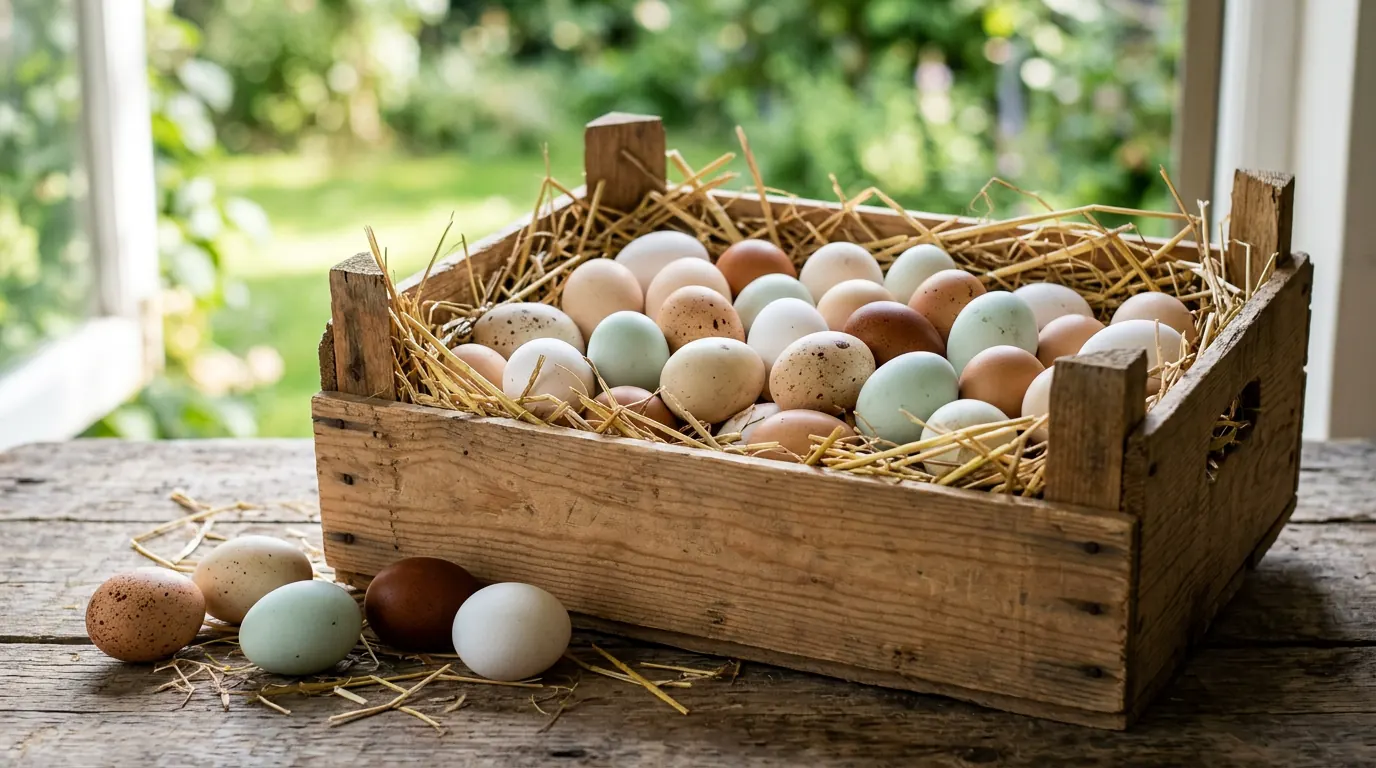
A laying flock is kept for table eggs. To start, you need three things: birds from a reliable source, a hen house suited to your housing system, and a plan for the first weeks, covering feed, drinkers, perches and nests. There is no single best breed. The best one fits your goal, your budget and the way you run the farm.
Laying hen or ornamental hen
A laying hen is kept for production. What counts is laying rate, feed use and resistance to stress over a long cycle. Ornamental hens are kept mainly for looks and shows. If your goal is eggs to sell or eat at home, start with laying breeds or hybrids. We cover ornamental breeds separately, including their weaker points in production.
What to do first
First decide how many birds you need, the housing system and your monthly feed budget. Only then choose a breed and a supplier. For every decision, check what drives the cost and where to find current data, because prices and rules change over time.
Where to start with laying hens
Goal and scale
Start by asking why you keep hens: to sell eggs, for your own use or to round out the farm. The goal sets the number of birds, the housing system and whether you need a registered business. On paper it is easy to count how many eggs a flock will give, but in practice you must allow for losses: birds that die in the first weeks, laying breaks after stress, and feed use that grows with the flock. Only with these numbers can you build a budget. See also our guide to laying hen profitability.
Registration and paperwork
Register the location of your flock in IRZ (Poland's animal identification and registration system) and check the registration duties on the websites of ARiMR (Agency for Restructuring and Modernisation of Agriculture) and the Chief Veterinary Inspectorate (Główny Inspektorat Weterynarii). We describe the legal position as of 22.11.2026. Rules change, so before you register, check the current requirements in ISAP (Internetowy System Aktów Prawnych, Poland's online legal database). From day one, keep records of birds, medicines and visits to the farm, because in an inspection documents count, not the keeper's memory.
Which laying hen breed is best
Laying breeds and hybrids
In practice most keepers choose laying hybrids, because their laying rate and feed use are predictable. Their offspring are not worth keeping for breeding, since the production traits break up, and you buy new chicks from a hatchery. Purebred hens, for example Sussex or Wyandotte, usually lay fewer eggs, but their offspring keep the breed's traits and suit gradual flock renewal better. For more on the traits of two breeds, see our pages on the Karmazyn breed and the Jersey Giant.
How to compare breeds
Compare breeds on three points: laying rate in the first year, egg weight and feed used per egg, not just the number of eggs quoted in a catalog. Ask the seller for the breeder's manual data for the specific line and check the conditions in which it was collected. Results from another climate or housing system will not carry over directly to your farm.
What it costs to start and run laying hens
What drives the price of a laying hen
The price depends on the age of the bird when you buy it: a chick, a young hen before lay or a bird already laying. Breed, origin and whether you buy from a proven hatchery also matter. Season plays a part, because demand for chicks and young birds rises in spring. Market prices change often, so do not treat any price you find online as current. Ask several suppliers about the same batch and compare health documents, not just the price. For typical prices, see how much a hen costs.
Running costs that are easy to miss
Feed is the largest running cost. Next come heating in colder weather, litter, energy for ventilation and lighting, and replacing birds that die. Add vaccinations and medicines, which a vet chooses. Once you work out the cost of one egg on your own farm, you can see whether your selling price covers it. For help with flock numbers and feed, see our guides to laying hen feeding and grains for laying hens.
Cages, litter or aviary
Three main systems
Cages make it easy to control the flock and collect eggs, but they need equipment that costs money and frequent checks of the cages. Litter systems give birds more movement and natural behavior. They need dry litter and good ventilation so that moisture and ammonia do not build up. An aviary combines floor space with levels and is convenient for larger flocks, but it makes catching birds and checking each hen's health harder. For hen house requirements, see hen house requirements for laying hens.
Rules on cages
European Union rules restrict the use of battery cages and set conditions for the other systems. Check detailed requirements for dimensions, equipment and stocking density in the current text of the acts and regulations in ISAP and with your district veterinarian (powiatowy lekarz weterynarii). Do not plan an investment on the basis of opinions from years ago, because the rules have changed many times. Before you build a hen house, ask the inspectorate for a list of the current requirements.
Watching the flock and treatment
What to look at every day
Check every day whether birds eat and drink, whether any keep away from the flock, whether droppings have changed color or consistency, and whether combs and feathers look normal. A bluish comb may mean a circulation problem or an infection, and a lethargic hen needs a quick check. Leave finding the cause to a vet: do not guess and do not dose medicines by eye. For vitamins and calcium, see vitamins for chickens and laying hens and lime, shells and grit for hens.
Medicines and withdrawal periods
A vet chooses the medicine and the dose. The keeper is responsible for recording what was given, when and at what dose, and for knowing when the withdrawal period ends, which is the time after which eggs or meat can be sold. Record it straight away, not afterwards. Without such records it is hard to show in an inspection that the rules are followed. The treatment and withdrawal period module in DlaFerm.pl helps you keep these records.
Running the flock day to day
What to record
Note each batch placed, with date and origin, daily egg count, deaths with the cause, feed use, and all treatments and medicines. From this data you work out flock performance and the cost of an egg, and you see when the hens start to decline. Paper notes are easily lost or unreadable, so many keepers move them into software.
Software instead of a notebook
Farm management software collects flock data in one place, and the hen house records module keeps records for each house separately. That lets you compare a house's results after a change of feed or housing system. Without hard numbers it is difficult to judge whether a change paid off, so start recording before the first egg.
Frequently asked questions
How much does a laying hen cost?add
The price depends on the bird's age, breed, origin and the season. Prices change often, so do not rely on a single figure from the internet. Ask several sellers about the same batch and compare health documents.
Which laying hen breed is best?add
There is no single best breed. Laying hybrids give predictable laying, and purebreds suit flock renewal better. The choice depends on your housing system and production goal.
How many laying hens should I buy to start?add
Set the number by your egg sales goal, the floor space available and the losses you expect in the first months. Before buying, check that the hen house meets the stocking requirements for your chosen system, and work out your feed budget.
Do laying hens need to be registered in Poland?add
You register the location of your flock in IRZ, and you can check the duties on the websites of ARiMR and the Chief Veterinary Inspectorate. We describe the legal position as of 22.11.2026, so check the current requirements before registering.
When do hens start laying eggs?add
The time of the first egg depends on the breed and line, so the seller gives it in the documents. First eggs tend to be smaller, and the laying rate rises gradually. Record the dates of the first eggs, as they help you assess the flock.
How can I tell if a hen is sick?add
Watch appetite, behavior, comb and droppings. A lethargic hen, a bluish comb or a drop in laying are signs to seek advice. Plan treatment with a vet, who chooses the medicine and the dose.
Sources & resources
- linkChief Veterinary Inspectorate (Główny Inspektorat Weterynarii) — gov.pl/web/wetgiw
- linkARiMR — gov.pl/web/arimr
- linkMinistry of Agriculture and Rural Development — gov.pl/web/rolnictwo
- linkInternetowy System Aktów Prawnych (online legal database) — isap.sejm.gov.pl
Prepared by: DlaFerm Team based on data from the sources listed · Publisher: INSTA-TECH sp. z o.o.
Keeping a laying flock and want your records in one place?
The hen house records module and the farm management software let you keep flock data, medicines and withdrawal periods in one system. Create a free farm account and see how it looks with your own flock.
Phone
+48 796 258 151