Calcium for laying hens: oyster shell, limestone and grit
A laying hen builds the eggshell from calcium, and she has to get it from her feed and from a separate source. Oyster shell and limestone supply calcium. Grit only helps digestion. We explain how to offer calcium, when, and what to avoid.
verifiedFrom the team that has organised work on poultry farms for years.
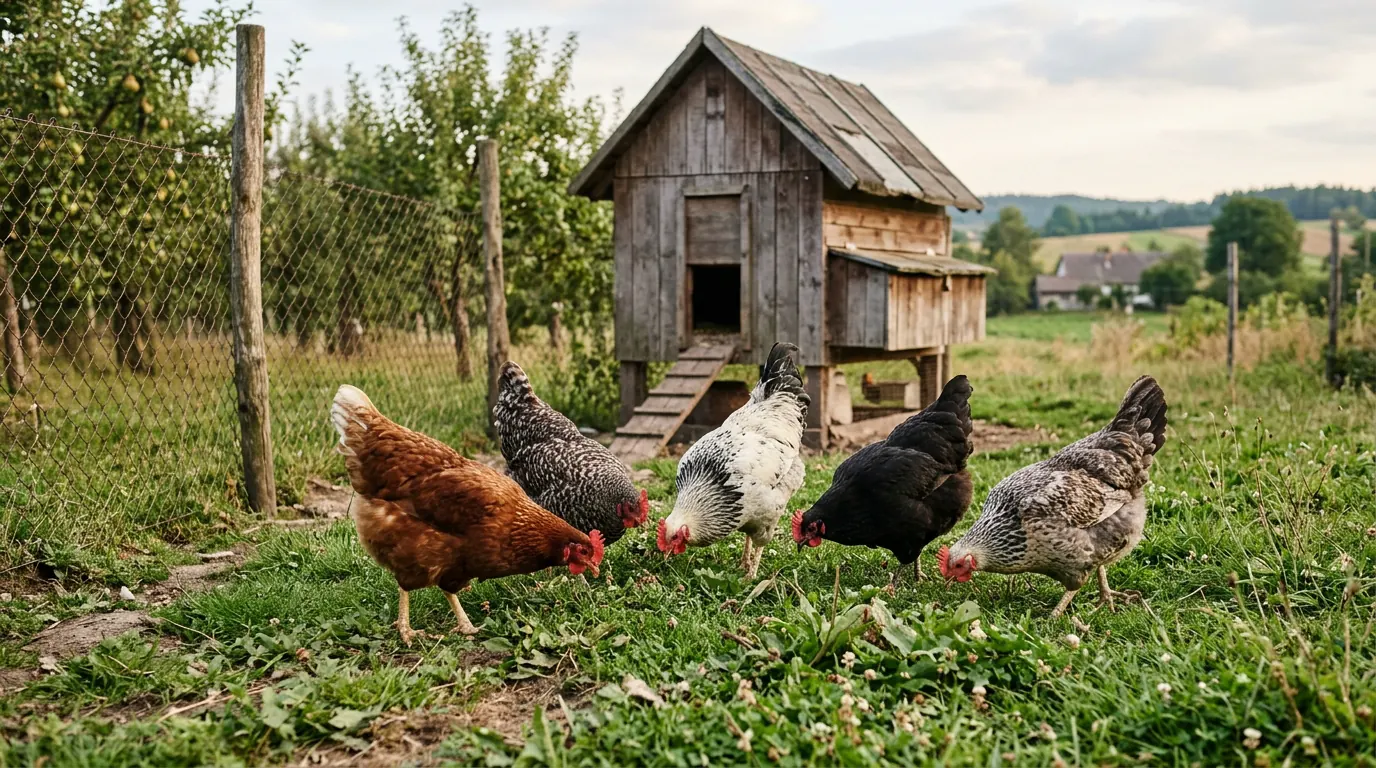
A laying hen needs calcium mainly to build the eggshell. She gets it from her feed and from oyster shell or limestone offered separately. If the daily diet lacks calcium, the bird starts to draw it from her own bones, and shells become thin, brittle or rough. Calcium for hens does not replace good feed, it adds to it, so match the amount to how well the flock is laying and how you feed it. We describe the feeding basics in Feeding laying hens.
Calcium, oyster shell and grit: three different things
Oyster shell and limestone are sources of calcium, the mineral a hen uses to make the shell. Grit, the small hard stones, is something else: it goes to the gizzard and helps grind grain, but it gives no calcium. This leads to a common mistake: a keeper pours out grit and thinks the birds have their calcium covered. You can read more about it in Grit for chickens.
Why a hen needs calcium
The shell forms overnight
The eggshell forms in the shell gland over several hours, mostly at night when the hen is not eating. The calcium the bird ate during the day has to be stored and used later. The daily feed ration alone does not always cover it, because during the night rest the hen needs a ready reserve in her digestive tract. This is why both the feed formula and the way you offer calcium matter in practice.
What happens with a deficiency
When calcium is too low, shells turn thin, soft or porous, and eggs crack in the nest or while you collect them. Laying drops, and the hen starts to use calcium from her own bones, which weakens the flock over time. The same sign can have another cause, so if shells change suddenly, ask a vet to assess the flock before you change the diet.
Oyster shell, limestone and grit: how they differ
Oyster shell and limestone
Oyster shell and ground limestone are the most common calcium sources offered separately, next to a complete feed. The hen decides how much to eat, so a separate feeder lets her match intake to her needs that day. Larger pieces dissolve more slowly and give a longer reserve, finer ones act faster. When buying, check the composition, contaminants and the producer's declaration on the pack. We give no prices because they change every week, so check with your feed supplier and agricultural wholesalers.
Grit is not calcium
Grit is hard, rounded gravel that a hen swallows to grind grain in her gizzard. Without it, grain and feed are broken down less well, which makes digestion harder. Grit does not replace calcium and does not fix a deficiency. Top it up regularly, especially when birds have no access to a run, because outdoors they pick up small stones themselves.
How and when to give calcium to hens
A separate feeder instead of mixing
The simplest way is to put calcium in a separate feeder next to the feed, not mixed into the complete ration. The bird then controls her own intake, and you do not have to work out a dose for each hen. Mixing calcium into feed means every hen gets the same share, whatever she needs. Place the feeder in a dry spot, away from the drinker, so the calcium does not get wet and cake into lumps. We describe the house layout and feeding points in Laying hen house requirements.
Time of day and the effect on the shell
Because the shell forms at night, many keepers see higher calcium intake in the afternoon. Keep calcium available all day, not only in the morning, because the hen eats it when she needs it. Watch whether the birds go to it on their own, and write down changes in intake in the flock log. A lighting program that shapes the laying rhythm is a good addition, described in Lighting program for laying hens.
What ruins the shell even with calcium in the feed
Too high doses and a poorly thought-out formula
Too much calcium also does harm. A large excess can disturb the absorption of other nutrients, including phosphorus, and lead to kidney problems. So do not add calcium on your own to feed that is already enriched with it. Check the feed composition first, then decide on a supplement. Vitamin D takes part in calcium balance, so rule out a shortage too, as we explain in Vitamins for chickens.
Disease and stress
Infectious diseases, parasites and stress from a change of flock or conditions lower laying and worsen shell quality. When laying drops, do not assume at once that the feed is to blame. Watch the birds' condition, water intake and behavior in the flock. If you suspect disease, contact a vet, who will choose the medicine and dose. We cover risks and prevention in Salmonella in laying hens.
Origin of the material and flock records
Quality and origin of the material
When you buy calcium and feed, look at the declared composition, the origin and information on contaminants. Feed rules are published in ISAP, Poland's online legal acts database (Internetowy System Aktów Prawnych), and you should check the legal state on the day of purchase because rules change. The information here reflects the state as of 22.11.2026. In doubtful cases the quickest contact is the county veterinarian (powiatowy lekarz weterynarii). Scientific opinions on the safety of feed additives are published by EFSA.
Records of laying and use
Write down how much calcium you give and when, how many eggs you collect, and the shell quality. After a few weeks you will see links that memory does not show. The DlaFerm system makes it easier to keep records in one place, and we describe production indicators, including FCR and EPEF, in FCR and EPEF online. Keep the notes together with the flock data, so it is easy to compare shell changes with the diet.
Frequently asked questions
Do laying hens need calcium?add
Yes. A laying hen needs calcium all the time, because she builds the shell of every egg from it. A deficiency shows as thin, brittle shells and lower laying. Calcium should be part of the diet, not an extra given only when problems appear.
Is grit the same as calcium for chickens?add
No. Grit is gravel that helps grind grain in the gizzard, not a source of calcium. Calcium comes from oyster shell and limestone, and you offer grit separately to support digestion.
How much calcium should I give my hens?add
We give no dose, because it depends on age, laying rate, feed composition and the condition of the flock. Let the hens control their own intake from a separate feeder and note what you see. Set the plan with a vet or a feeding adviser.
When should I give calcium to hens, morning or evening?add
Keep calcium available all day, because the hen eats it when she needs it. The shell forms at night, so many keepers see higher intake in the afternoon. Do not change the timing without a clear reason, and watch the flock's behavior.
What affects the price of calcium for chickens?add
The price depends on the type of material, particle size, packaging, supplier and transport distance. Prices change often, so we give no amounts. Check current prices with your feed supplier and agricultural wholesalers, and compare offers by weight and composition.
Can calcium harm chickens?add
Yes. Too much calcium disturbs the absorption of other nutrients and can harm the kidneys. Do not add calcium to feed that is already enriched with it. If you notice unusual signs, tell a vet.
Sources & resources
- linkChief Veterinary Inspectorate (Główny Inspektorat Weterynarii) — gov.pl/web/wetgiw
- linkNational Research Institute of Animal Production (Instytut Zootechniki PIB) — izoo.krakow.pl
- linkEFSA — efsa.europa.eu
- linkInternetowy System Aktów Prawnych (Poland's online legal acts database) — isap.sejm.gov.pl
Prepared by: DlaFerm Team based on data from the sources listed · Publisher: INSTA-TECH sp. z o.o.
Do you track laying rate and shell quality?
The poultry farm management software in DlaFerm.pl helps you keep laying flock records in one place. Create a free farm account and see how record keeping works on your farm, or get in touch with us.
Phone
+48 796 258 151