Jersey Giant Chicken: The Largest Chicken Breed
The Jersey Giant is the largest pure chicken breed in the world. Under the American standard a rooster weighs about 5.9 kg and a hen about 4.5 kg. It grows slowly, lays brown eggs and needs more space and feed than an ordinary hen.
verifiedFrom the team that has organised work on poultry farms for years.
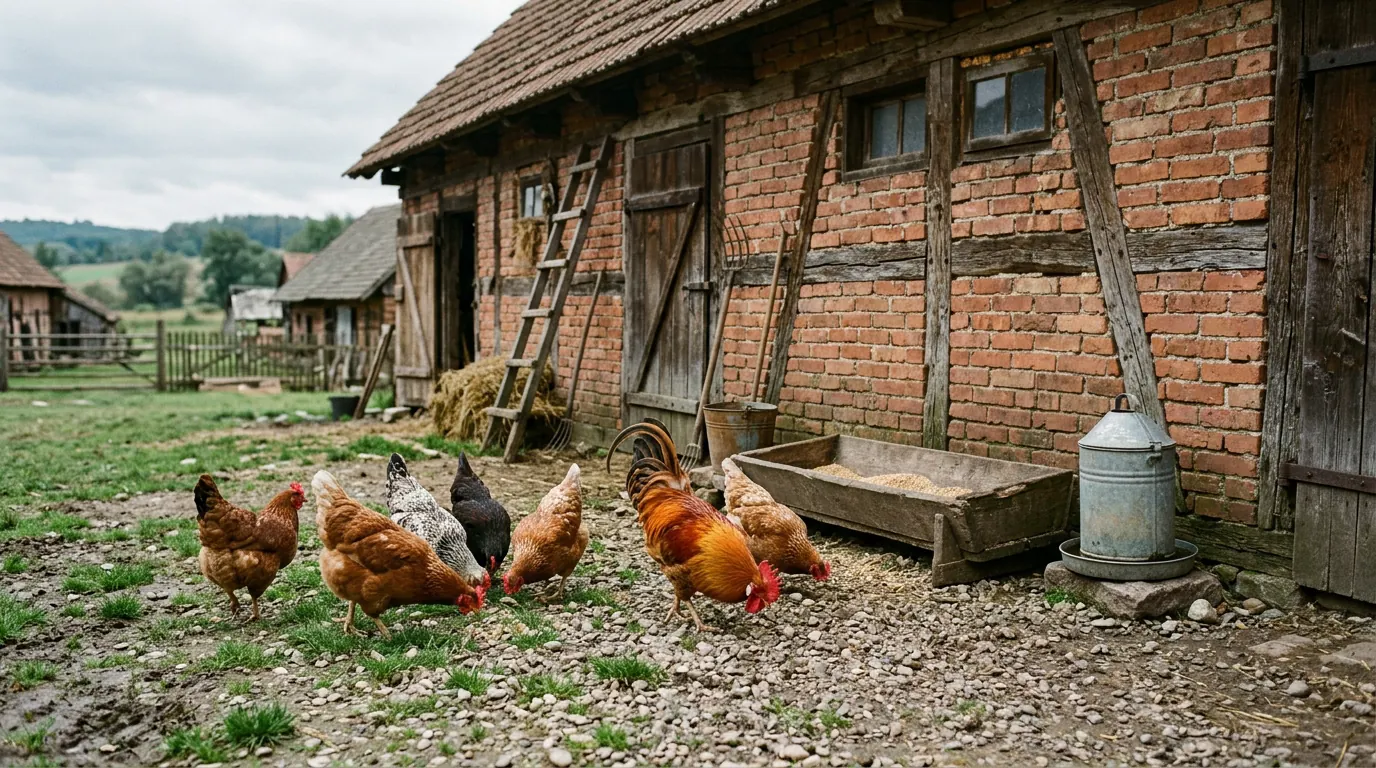
The Jersey Giant is an American breed, developed in the state of New Jersey in the second half of the 19th century as a bird for meat. Under the American breed standard a rooster reaches about 5.9 kg (13 pounds) and a hen about 4.5 kg (10 pounds). It is the heaviest recognized chicken breed. In Poland you will mostly meet it with enthusiast breeders, because among the largest chicken breeds it is the heaviest, but also the most demanding.
Why the breed dropped out of commercial production
The Jersey Giant was meant to compete with capons and large roasting chickens. Growth rate changed that. For comparison, according to Aviagen data from 2022, a Ross 308 broiler weighs about 2998 g at 42 days and about 3490 g at 47 days. A Jersey Giant reaches its weight much later, usually after many months. That is why today it is kept for home use, for shows and to preserve the breed.
What a Jersey Giant looks like
Build and colors
The Jersey Giant has a broad, deep body, strong legs and a straight back. Size makes the first impression: the bird is clearly taller and heavier than a typical farm hen. The breed standard recognizes three colors: black, white and blue. Black is the oldest and the most common. Black birds have dark legs, often with a greenish sheen, and the skin can be yellow. The comb is single and medium-sized.
Temperament
The Jersey Giant is calm and gentle. Roosters are usually not aggressive toward people, but with such a heavy body any contact with them needs care. Big hens get along with other calm breeds, but they may push smaller birds away from the feeder. If you are comparing calm heavy breeds, see also the description of the Langshan chicken.
Eggs and meat
How many eggs a Jersey Giant lays
Hens lay large brown eggs, but fewer than laying breeds. We do not give a yearly egg count as a fixed value, because it depends on the line, the hen's age, lighting and feeding. Laying starts later than in light breeds, because the hen has to grow up first. If eggs matter most to you, choose a laying breed, for example New Hampshire or Amrock. The Jersey Giant is for people who want a big bird and a few eggs on top.
Meat and growth rate
The bird grows for a long time and gains weight slowly compared with a broiler. Young cockerels reach a large size only after many months, so you pay for feed, space and care for longer than in commercial production. The meat has a traditional flavor, but the cost of producing a kilogram is higher than with broiler chickens. If you like old meat breeds, see also the description of the Dorking.
Coop and run requirements
Space and perches
For Jersey Giants, allow more space per bird than for ordinary hens. Match the stocking density to your coop and ventilation, and if in doubt ask a vet or an adviser from an agricultural advisory center. Make perches low, wide and strong. Heavy hens handle jumping down from height badly, because foot and toe injuries come more easily. Ideally the perch is only a few dozen centimeters above the floor, with a ramp to reach it.
Floor, feeders and drinkers
The floor should be dry, with a thick layer of litter, because a heavy bird loads its feet harder. Place feeders and drinkers so that several birds can eat at once. Big birds eat more feed and drink more water. Check legs and the soles of the feet once a week. To fight mites you can use diatomaceous earth in a dust bath and in the coop.
What to feed Jersey Giants
Feed for growing birds
Young Jersey Giants need feed with the right protein and mineral content. Growth that is too fast on poor feed strains bones and joints. So follow the recommendations for each age and avoid overfattening. You will find the basics of building a ration in the article on feeding laying hens, and the rules for giving grain in the text on grains for laying hens.
Hens in lay
During laying, hens need feed with calcium for the shells and enough protein. A ration that is too fatty lowers laying and strains the legs. Weigh the birds every few weeks on the same scale and write down the results. Then you will quickly spot a hen that is losing weight, which is often the first sign of disease.
Health and flock management
What to watch
The Ross Broiler Management Handbook 2025 states that when investigating the cause of disease you need to know the normal behavior and parameters of the breed, and contact a vet right away when you see problems in the flock. This rule applies to Jersey Giants too. Watch for lameness, foot inflammation, apathy, loss of appetite and eye symptoms, for example those described in the article on conjunctivitis in chickens. The medicine and dose are always chosen by a vet.
Flock records
Write down placement dates, weights, eggs laid, deaths and treatments. With a slow-growing breed these notes show whether the birds are growing as expected. In DlaFerm coop records you keep this data in one place. Also remember biosecurity rules and veterinary regulations for your farm. You will find current information from Poland's Chief Veterinary Inspectorate (Główny Inspektorat Weterynarii).
Frequently asked questions
How much does a Jersey Giant chicken weigh?add
Under the American breed standard a hen weighs about 4.5 kg (10 pounds) and a rooster about 5.9 kg (13 pounds). Actual weight depends on the line, age and feeding. Backyard birds are often lighter than the standard.
Is the Jersey Giant the largest chicken breed?add
Yes, the Jersey Giant is regarded as the largest pure chicken breed by body weight. Other large breeds, such as Brahma or Cochin, are lighter or comparable. You will find a comparison in the article on the largest chicken breeds.
What colors do Jersey Giants come in?add
The breed standard recognizes black, white and blue. Black is the oldest and the most common. The varieties differ in feather color, not in size or temperament.
Do Jersey Giants lay well?add
Hens lay large brown eggs, but laying is moderate and lower than in laying breeds. They start laying later than light breeds, because they must grow up first. The exact number of eggs depends on the line and housing conditions.
Is it worth raising Jersey Giants for meat?add
The bird grows slowly, and feed and space cost money for many months. Compared with a broiler, which according to Ross data from 2022 weighs about 2998 g at 42 days, the cost per kilogram of meat is higher. The breed suits keepers who want a traditional bird and care about preserving the breed.
How much does a Jersey Giant chicken cost?add
The price depends on the line, age, color and whether you buy hatching eggs, chicks or adult birds. Check current offers with breeders and poultry breeders' clubs.
Sources & resources
- linkInstytut Zootechniki PIB (National Research Institute of Animal Production) — izoo.krakow.pl
- linkRoss 308 / 308 FF Broiler Performance Objectives 2022
- linkRoss Broiler Management Handbook 2025
- linkGłówny Inspektorat Weterynarii (Chief Veterinary Inspectorate) — gov.pl/web/wetgiw
Prepared by: DlaFerm Team based on data from the sources listed · Publisher: INSTA-TECH sp. z o.o.
Keep records for large breeds in one place
DlaFerm coop records let you log weights, laying, deaths and treatments for each flock, including slow-growing breeds. Create a free farm account or get in touch with us.
Phone
+48 796 258 151