Diatomaceous earth for chickens: dust baths and red mites
Diatomaceous earth for chickens works mainly as a dust bath material and, in a supporting role, against red mites. It does not replace cleaning the coop or treatment prescribed by a vet. We explain how to use it, what risks the dust carries and how to record it in your farm log.
verifiedFrom the team that has organised work on poultry farms for years.
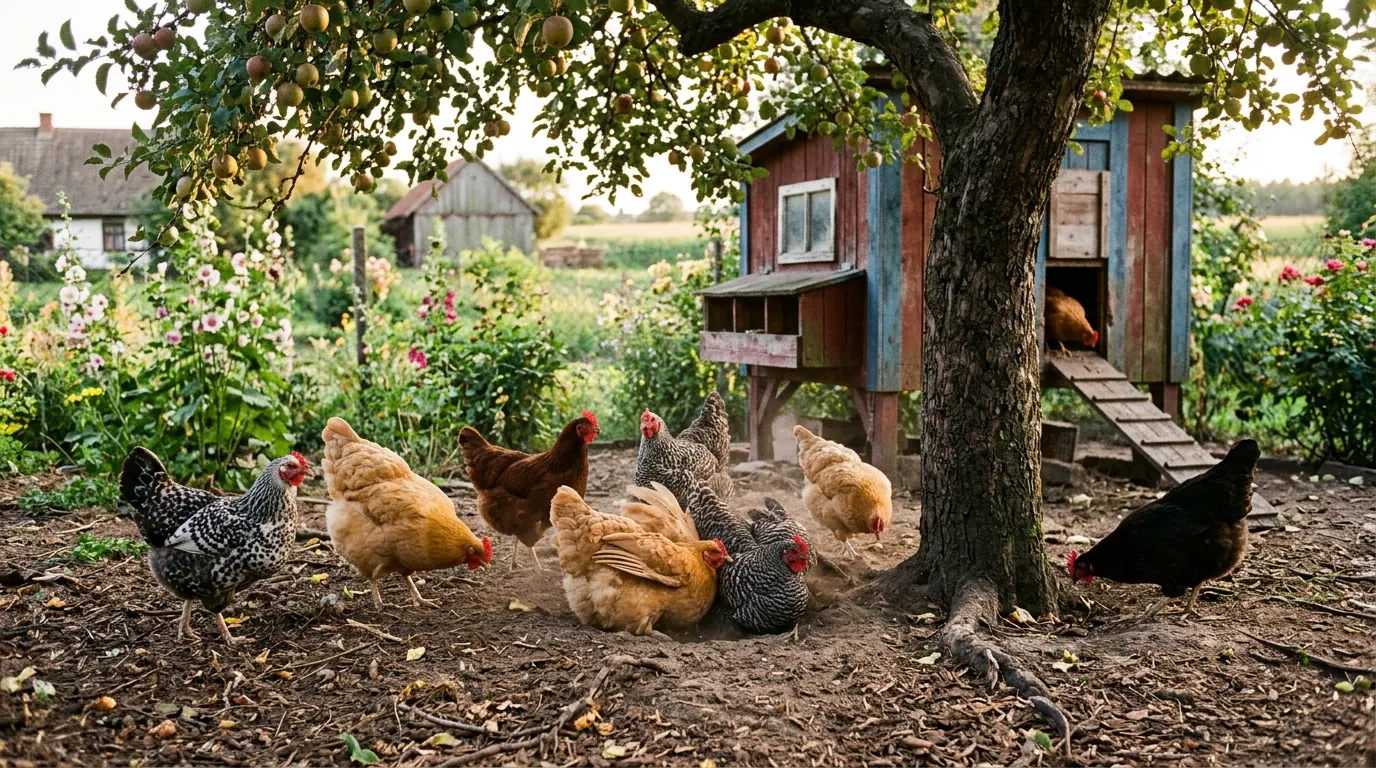
Diatomaceous earth has two uses for chickens: as a material for dust and ash baths, and as a supporting aid against the poultry red mite. It does not replace cleaning the coop or treatment prescribed by a vet. We give no doses or limits here, because the materials this guide is based on do not contain them. We describe principles and risks, and the legal position is checked as of 22.11.2026. If you see mites in your flock, start with the signs of red mites and how to check for them.
What diatomaceous earth is
Diatomaceous earth is a sediment formed from the shells of diatoms, single-celled algae. It consists mainly of amorphous silica, a very fine, light powder. Only a type made for animals, with a producer's declaration of its composition, is suitable for a coop or for feed. Technical grades, for example filtration or building grades, may contain crystalline silica and do not belong in a coop. Before you buy a bag, check the label and the safety data sheet.
Diatomaceous earth for dust bathing
Why hens need a dust bath
Hens bathe in dry, loose material. The movement and the dust help remove excess grease from the feathers and some parasites from the skin. A bird with no access to such material often looks unkempt and may scratch at its plumage more. Diatomaceous earth suits this purpose because it is dry and fine. It works best when hens have it within reach all the time, not only now and then.
How to set up a dust bath
The simplest option is a shallow box or a hollow in the floor in a dry spot. Mix the diatomaceous earth with sand and wood ash so it does not clump. Place the bath away from the drinker, because spilled water turns dust into mud. Top up the material and sift out droppings. If the earth gets damp, replace it with dry. A bath near the run is easy to keep clean, but in a large flock it is better to set out several smaller ones.
Diatomaceous earth against red mites
What red mites are
The poultry red mite, Dermanyssus gallinae, feeds on birds mostly at night and hides by day in cracks in the coop, in perches, in nests and in corners of the structure. The problem develops quietly: egg production drops, birds are restless, and small dark spots appear on bedding and perches. So the most important step is to look for mites in the cracks at night, not just to watch the birds by day. According to EFSA, the poultry red mite is the most common blood-feeding mite in Europe and most layer flocks there are affected.
What it does and what it doesn't
Diatomaceous earth acts in two main ways. Abrasive particles can damage the mite's shell, and sorption binds the fats in its outer layer. The literature describes this mechanism, but results in practice vary and are poorly confirmed in controlled studies. Do not treat it as enough on its own. The basics remain cleaning, sealing cracks, changing litter, disinfection as the producer recommends, and a plan agreed with your vet.
Dust, bird health and your own
Dust in the coop
Silica in dust can irritate and damage the airways, and with long exposure it can damage the lungs. Work with diatomaceous earth in a well-ventilated space, ideally when the hens are not inside. Wear a dust mask and goggles, and open the bag slowly so you do not raise a cloud. Do not sweep dust dry with a broom. Collect it with a damp cloth or a vacuum with a suitable filter.
Hens and dust
Birds have a sensitive respiratory system. Do not dust the whole house or spread large amounts on the floor. Offer it in the dust bath, in the amount the hens use during the day, and remove the rest. Constant access to a dry, clean spot is part of good coop design, which we cover in a separate guide, a coop design for 10 hens.
Adding diatomaceous earth to feed
Status in feed
Feed additives fall under feed law, and their approval, composition and conditions of use must comply with the rules in force. We do not have an act number for this specific use, so we do not give one. Check the current position in ISAP (Poland's online database of legal acts, Internetowy System Aktów Prawnych) and with the Chief Veterinary Inspectorate (Główny Inspektorat Weterynarii). If in doubt, ask your county vet (powiatowy lekarz weterynarii). For laying hens the whole diet counts, not a single additive, so also read the rules for feeding laying hens.
When hens eat the earth
Hens sometimes eat the bath material, especially when they lack things to peck at or are stressed. If you see them eating a lot of it, do not give more. First check the feeding and their access to grit. See also our guide to grit for chickens, because a hen needs grit to grind her food.
How to record treatments in the coop
What to write down
For every treatment, record the date, the place in the coop, the product, how it was used, who did it and the date of the next check. Also note changes of bath material and the results of crack inspections. After a few weeks you will see whether the problem returns. Coop records in DlaFerm keep treatments and inspections in one place.
When to call a vet
Call your vet when egg production clearly drops, birds look pale, weaken or scratch their feathers in large numbers, and small dark spots show on the perches. The vet, not the keeper, chooses the medicine and the dose. For any medicine, observe the withdrawal period and record it in your treatment and withdrawal records, because the safety of eggs and meat depends on it.
Frequently asked questions
Does diatomaceous earth kill red mites in chickens?add
It may help as a supporting aid, but results in practice vary and are poorly confirmed in controlled studies. It does not replace cleaning, sealing cracks or treatment prescribed by a vet.
How do I use diatomaceous earth for a chicken dust bath?add
Set out a shallow box or a hollow in a dry spot, away from the drinker. Mix the earth with sand or wood ash and replace it when it gets damp or dirty.
Can you add diatomaceous earth to chicken feed?add
Only a type made for animals, with the producer's declaration of composition. Check the additive's status in ISAP and with your county vet, because the rules can change.
Is diatomaceous earth dust harmful?add
The dust can irritate the airways, and long exposure can damage the lungs. Work in a well-ventilated space, wear a dust mask and clean up damp.
How do I tell if my laying hens have red mites?add
You usually see lower egg production, restless birds and small dark spots on bedding and perches. Mites feed at night, so check the cracks after dark and discuss the result with your vet.
Are eggs safe if I use diatomaceous earth?add
It depends on whether the earth got into feed without approval and whether any medicine was used without observing its withdrawal period. Record all treatments, keep to the dates and raise doubts with your vet.
Sources & resources
- linkChief Veterinary Inspectorate (Główny Inspektorat Weterynarii) — gov.pl/web/wetgiw
- linkISAP, Poland's online database of legal acts — isap.sejm.gov.pl
- linkNational Research Institute of Animal Production (Instytut Zootechniki PIB) — izoo.krakow.pl
- linkEFSA — efsa.europa.eu
Prepared by: DlaFerm Team based on data from the sources listed · Publisher: INSTA-TECH sp. z o.o.
Do you keep treatment records for your coop?
The DlaFerm coop records module keeps treatments, inspections and the state of the bath material in one place. Create a free farm account and see how it works in practice.
Phone
+48 796 258 151