Langshan chicken: breed, varieties, egg laying
The Langshan is an old breed from China: a tall hen with an upright stance, feathered legs and glossy plumage. It is a dual-purpose breed with moderate egg laying and a steady temperament. We describe its looks, color varieties, eggs and housing needs.
verifiedFrom the team that has organised work on poultry farms for years.
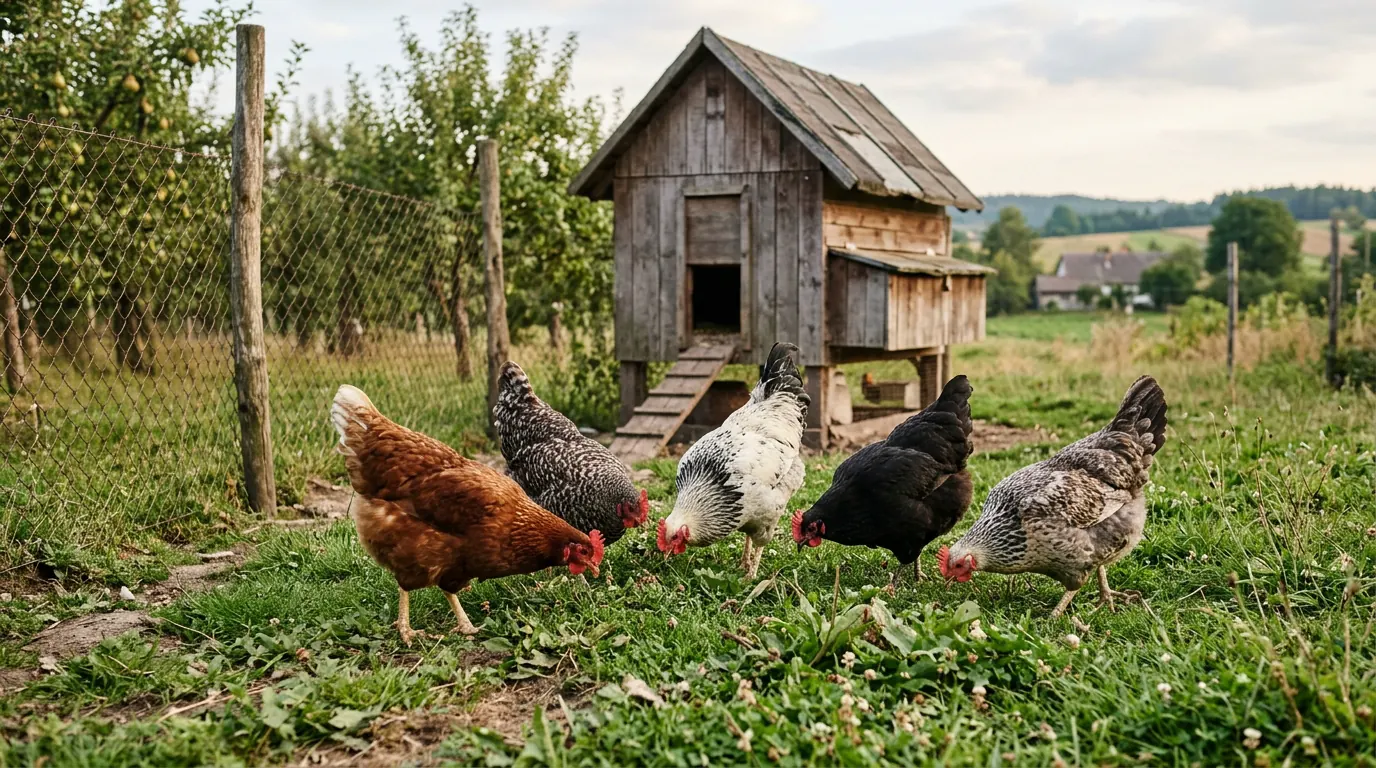
The Langshan is a dual-purpose chicken breed, kept mainly by hobby keepers and fans of heritage breeds. Hens lay brown-shelled eggs in moderate numbers, so this is not a breed for a farm aiming at the maximum number of eggs. Keepers value its calm temperament, its tolerance of cold and its looks: the bird is tall and upright, with long legs and a tail carried high.
Where the Langshan comes from
The breed comes from northern China and reached Europe in the second half of the 19th century, first England. Breeders in Great Britain and Germany then developed two slightly different types from it. The English type is lower and more compact. The German type is taller, slimmer and more upright. When you buy, check which standard the breeder follows, because the differences in build are clear.
Who this breed suits
The Langshan suits a farm that keeps hens for its own use and wants calm but fairly large birds. If you want a breed with similar uses, compare it with the Amrock hen or the New Hampshire. If bird size matters most, read about the Jersey Giant.
What a Langshan chicken looks like
Outline
The Langshan stands tall and upright. The back forms a gentle U-shaped line: it drops from the neck to the middle and rises toward the tail. The tail is carried high and the breast is well filled. The legs are long and strong, so the bird looks bigger than its weight suggests. The head is small with a single comb, and the eyes are clearly dark.
Feathered legs
The breed's typical trait is feathers on the outer side of the shanks and toes. On a run after rain the feathering quickly picks up mud. Wet leg feathers can freeze in winter, so keep the litter dry and do not keep birds on soggy ground. Check the legs regularly, because scaly leg mites develop faster under feathers than on bare legs.
Skin and leg color
Langshan skin is light, whitish or pinkish, despite the black plumage of the most popular variety. The legs are dark blue-gray with paler soles. Show judges check these traits, and breeders cull birds with yellow legs or dark skin.
Langshan color varieties
Black variety
The black variety is the best known. Its plumage has a greenish sheen in the sun, especially on the tail and wings. The color of the undercolor is hidden but visible on close inspection: it should be dark, without light patches. Check young birds for small white feathers when you select them for further breeding.
White and blue varieties
Breed standards also include a white and a blue variety. The blue variety comes from crossing, and its offspring split into different colors, so an even color is harder to keep in a flock. If you want to breed blue Langshans, plan extra space for birds of other colors that appear in the hatches. For a hobby keeper the black variety is easier to maintain.
Langshan egg laying and eggs
How many eggs a Langshan lays
The Langshan is not a high-laying breed. Laying is moderate and depends on the breeding line, feeding, the age of the hen and coop lighting. We give no exact figures, because they differ between lines, and reliable data come from a specific breeding stock keeper. If egg numbers matter, compare the breed with the layers described in Leghorn or Messa before you choose.
Eggs
Langshan eggs have a brown shell, often a darker shade, sometimes with a light powdery bloom. Egg size is medium to large. Shell color can fade in older hens and at the end of the laying season. When you sell Langshan eggs, buyers usually ask about the brown shade, but the price depends on the local market, not on the breed.
Hen age and laying
After the first laying year a hen lays fewer eggs, which applies to every breed. How to plan flock replacement and what to do with older hens is covered in our article on hens after one year. Langshans mature fairly late, so the first eggs usually come later than with light breeds.
Langshan housing needs
Coop and run
Because of its height and long legs, the Langshan needs higher perches and a wider pop hole than low breeds. Fit the perch at a height where the bird can get up without effort and does not knock its tail feathers against the wall. On the run, provide a dry spot under a roof so feathered legs do not stand in mud. Dense plumage protects well against cold, so the birds usually need no heating in winter.
Feeding
The breed grows more slowly than meat chickens and matures later. Young birds need chick feed with a suitable protein content, and hens need a complete layer feed with calcium from the start of laying. Whatever the breed, monitor feed and water use and keep flock records. It is easy to do in flock record software such as coop records.
Temperament
Langshans are calm and gentle and tame easily. The hens sit well on eggs and are caring mothers, which makes natural rearing easier. Roosters can be confident but are usually not aggressive toward people. In a mixed flock, gentle birds may lose out in the fight for feed, so make sure there are enough feeders.
How to buy a Langshan and what to watch for
Where to look for birds
Purebred birds are best bought from breeders belonging to clubs and associations of purebred poultry breeders. Ask about the flock's origin, the type (English or German), the color variety and the age. If you plan your own breeding, buy at least two unrelated roosters or eggs from different lines to limit inbreeding. The heritage breed is also described by the Institute of Animal Science (Instytut Zootechniki PIB), where you can check information on native breeds.
Registering the flock and biosecurity
Hens kept on a farm are subject to registration and biosecurity rules, which the Veterinary Inspection (Inspekcja Weterynaryjna) explains. Keep new birds in quarantine, apart from the flock, before you join them with the rest. Check current requirements with the Chief Veterinary Inspectorate (Główny Inspektorat Weterynarii) or the county veterinarian, because they depend on the number and purpose of the birds. For other breeds in our catalog, such as Italian hens (włoszki) or the Orloff (orłowska), the rules are the same.
Frequently asked questions
Is the Langshan a good laying hen?add
The Langshan lays a moderate number of eggs, fewer than typical laying breeds. It is a dual-purpose breed, valued also for its calm temperament and looks. If you want many eggs, choose a laying breed or hybrid.
What color are Langshan eggs?add
The eggs have a brown shell, usually a darker shade, sometimes with a powdery bloom. In older hens the shell can be paler. The color also depends on the breeding line.
What varieties of Langshan are there?add
The most popular is the black variety with a greenish sheen. White and blue varieties also exist. The blue splits in its offspring, so birds of other colors appear in the hatches.
Can Langshan chickens handle winter?add
Dense plumage protects the bird well against cold. The problem is wet, feathered legs, which can freeze. Provide dry litter and a dry corner of the run under a roof.
What is the difference between English and German Langshans?add
The English type is lower and more compact. The German type is taller, slimmer and more upright. When you buy, ask the breeder which standard the flock follows.
Are Langshans good broody hens?add
Hens of this breed readily sit on eggs and look after chicks well. This lets you rear chicks naturally without an incubator. Give the broody hen a quiet, separate nest.
Sources & resources
- linkInstitute of Animal Science PIB (Instytut Zootechniki PIB) — izoo.krakow.pl
- linkChief Veterinary Inspectorate (Główny Inspektorat Weterynarii) — gov.pl/web/wetgiw
- linkMinistry of Agriculture and Rural Development (Ministerstwo Rolnictwa i Rozwoju Wsi) — gov.pl/web/rolnictwo
Prepared by: DlaFerm Team based on data from the sources listed · Publisher: INSTA-TECH sp. z o.o.
Keep your purebred flock records in one place
Coop records in DlaFerm let you log eggs laid, losses and feed use for each flock separately. Create a free farm account or get in touch.
Phone
+48 796 258 151