Laying hens after one year: egg drop and what to do next
After a year a hen usually lays fewer eggs than at her peak, but a sudden or long drop is a signal to check the flock. We show which causes to check first, how to record data and when to consider replacing the flock. A vet always chooses the medicine and dose.
verifiedFrom the team that has organised work on poultry farms for years.
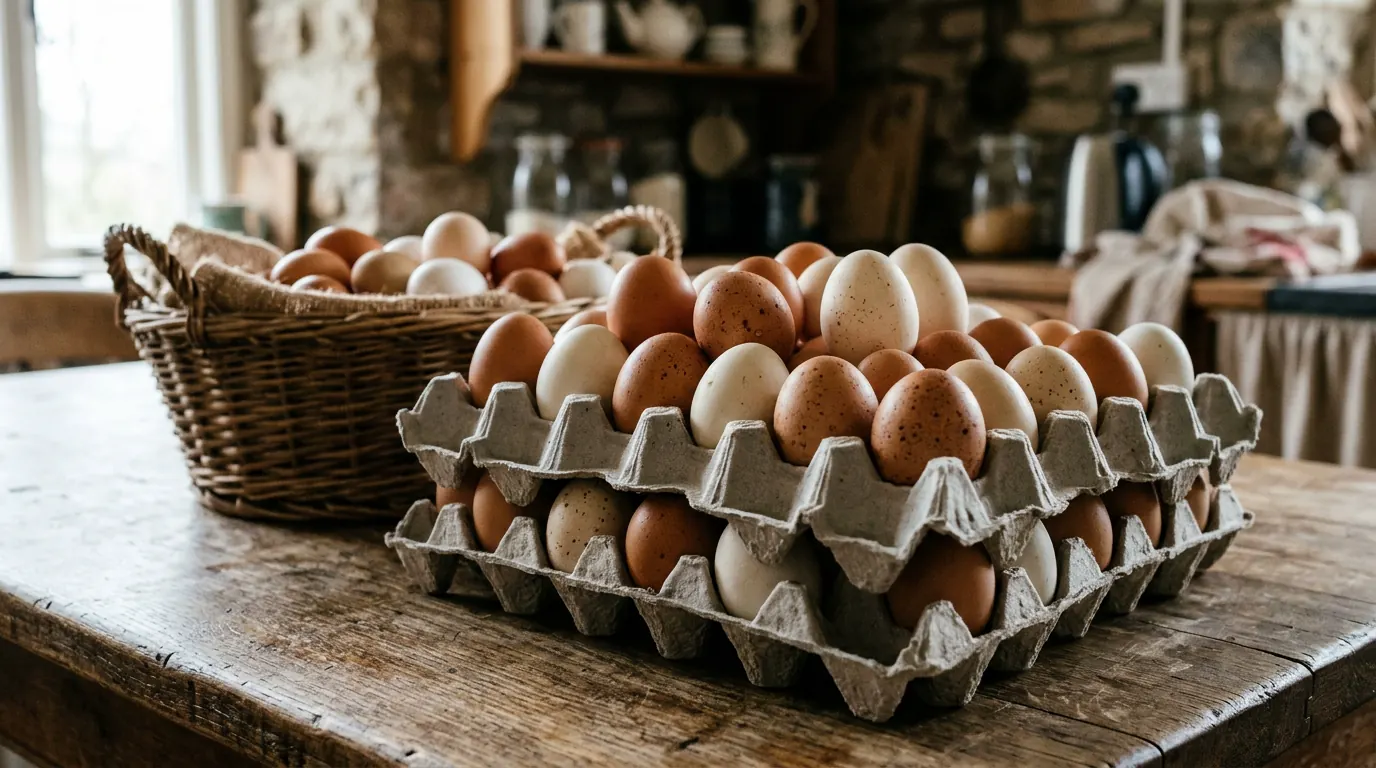
After a year a laying hen usually lays fewer eggs than at peak production. This is a natural part of the cycle, but the speed of the drop decides whether the flock still pays. Before you look for a cause or think about replacement, check the data from the last few weeks and compare it with what you expect from your hybrid. You can find a wider description of flock management in our guide to keeping laying hens.
A drop after the first year does not always mean disease
After the first year of lay, production slides down slowly from its peak. The exact course depends on the hybrid, feed quality, flock health and housing conditions, so there is no single number that tells you the flock is fine. Instead of comparing yourself with a neighbor, record the number of eggs laid every day and the laying percentage. Then you see a trend, not one bad day. You can work out the percentage quickly in the laying rate calculator.
When a drop is worrying
A sudden change is a worry, not a gentle curve. If laying falls clearly within a few days, eggs are weaker or hens look dull, look for the cause at once. If you suspect disease, contact a vet, who will judge whether tests are needed. Do not choose medicines yourself.
What most often lowers laying after one year
Feeding and feed allowance
You need to adjust the feed allowance when results move away from target. The Ross Parent Stock Management Handbook 2023 recommends reviewing the feed allocation when daily egg production, egg weight, body weight or feed clean-up time departs from what is expected. The handbook covers parent stock, but the rule of reacting to deviations applies to any laying flock. The Ross 308 Parent Stock Nutrition Specifications 2021 are based on an energy level of 2800 kcal/kg. When the energy of your feed is different, the nutrient values must be recalculated in proportion. We describe feeding rules in our article on feeding laying hens.
Temperature and feed condition
Heat and cold change feed intake, and so nutrient intake. The Ross Parent Stock Management Handbook 2023 notes that to judge the allowance you also need to know the ambient temperature. Check that the feed is not damp, caked or contaminated, because hens eat less when the feeder looks bad. Only after ruling out these faults should you consider supplements that stimulate laying, and then only after talking to a vet or adviser.
How to check what is happening in the house
Record data every day
The Ross Parent Stock Management Handbook 2023 lists daily egg production and daily egg weight as parameters to watch every day. Without this data you cannot tell a natural decline from a problem. Keep a simple record: number of eggs laid, number of hens, notes on feed and weather. You can keep the records in the henhouse records module and see the results on a weekly chart.
Order of checks
Start with the simplest and cheapest things. Check that the hens have constant access to water, that nests are clean and that there are no drafts in the house. Look at feathers, combs and droppings, because changes there often appear before the drop in laying. Write down the results and compare them after a week. If laying does not rise after you improve conditions, it is time to contact a vet.
Keep the flock or replace it
Profitability of the flock
Work out what it costs to keep one hen per egg and compare it with the price you get for eggs. Both values change over time, so do not set fixed amounts for good. You can check feed and egg prices with suppliers, at buying points and in trade listings. They depend on season, demand and raw material costs. When the cost of an egg exceeds its value for a long period, consider replacing the flock. More on this in our article on laying hen profitability.
Replacing the flock and buying young hens
Young hens that are starting to lay are usually bought at 16–20 weeks of age. Age affects the price and the date they start laying, so compare offers carefully. The placement planning module helps you plan placement dates and the production cycle. When replacing a flock, also remember to clean the house and follow biosecurity rules.
Does the hybrid matter
Laying hybrids
Each hybrid has its own laying pattern, egg weight and sensitivity to conditions. Compare your results with the norms of that specific line, not with a general idea of a laying hen. Breeder data for the line, such as the laying curve and recommended feed allowance, is your reference point. When your results are clearly below it, start by checking feeding and conditions. See also our overview of laying hen breeds.
Mixed flocks and age
A flock bought at different ages has no common laying curve. Older hens drop out of lay earlier, while younger ones may still be improving. So keep separate records for each batch. Then you see at once which group is falling and can decide to replace only that part of the flock.
What to do step by step
The first days
Write down the current laying result and the date it started to fall. Check conditions in the house, access to water and feed quality. Compare the allowance with your records from previous weeks and change it only if you have grounds to. Do not change feed, lighting and flock makeup at the same time, or you will not know what worked.
Vet and withdrawal period
If the egg drop comes with signs of illness, call a vet. The vet decides on tests and treatment. The vet chooses the medicine and dose, and you enter them in the records together with the withdrawal period date. We describe record rules in the treatment and withdrawal module. Rules on medicines and withdrawal periods are on the website of the Chief Veterinary Inspectorate (Główny Inspektorat Weterynarii); legal status as of 22.11.2026.
Frequently asked questions
Why does a laying hen lay fewer eggs after one year?add
Laying usually falls gradually after the first year, because the bird goes through the natural curve of the cycle. The drop is not always normal, though, because feed, housing conditions and flock health affect it. Compare results with earlier weeks, not with an idea of a perfect hen.
Does an egg drop after one year mean disease?add
Not always. A sudden, clear drop in a short time, with dull hens or poorer eggs, needs a quick check. Tell a vet, who will decide on tests.
How do you calculate the laying rate?add
The laying percentage is the number of eggs laid divided by the number of hens on that day, multiplied by one hundred. You can work it out in the laying rate calculator on DlaFerm.pl. The trend over several weeks matters most, not a single day.
Should you change the feed when hens lay less?add
First check the allowance and how it fits the flock's results. A feed change should come from analyzing the composition and recalculating nutrients, not from a random mix. Make changes gradually and write each one down.
When does it pay to replace a laying flock?add
The decision depends on the feed cost per egg and the price you get for eggs. These values change over time, so check them regularly with suppliers and buying points. When cost exceeds income for a long period, consider replacement.
How long after treatment can you not sell eggs?add
The withdrawal period comes from the documentation of the specific medicine, and the vet sets the date. You must not sell eggs before the withdrawal period ends. Enter the medicine and date in the records so you do not make a mistake.
Sources & resources
- linkRoss Parent Stock Management Handbook 2023 (Interactive)
- linkRoss 308 Parent Stock Nutrition Specifications 2021
- linkChief Veterinary Inspectorate (Główny Inspektorat Weterynarii) — gov.pl/web/wetgiw
- linkNational Research Institute of Animal Production (Instytut Zootechniki PIB) — izoo.krakow.pl
Prepared by: DlaFerm Team based on data from the sources listed · Publisher: INSTA-TECH sp. z o.o.
Do you keep a laying flock and want to see the egg drop in numbers?
The henhouse records module in DlaFerm.pl logs daily laying and shows the trend over several weeks. Create a free farm account and see how it works in practice.
Phone
+48 796 258 151