Orlovka chicken: a Russian breed that handles frost
The Orlovka (Polish: kura orłowska) is a Russian breed with dense feathering, a small pea comb and a distinctive beard. It tolerates cold well, but lays at a moderate rate and grows slowly. We cover its looks, performance and keeping needs.
verifiedFrom the team that has organised work on poultry farms for years.
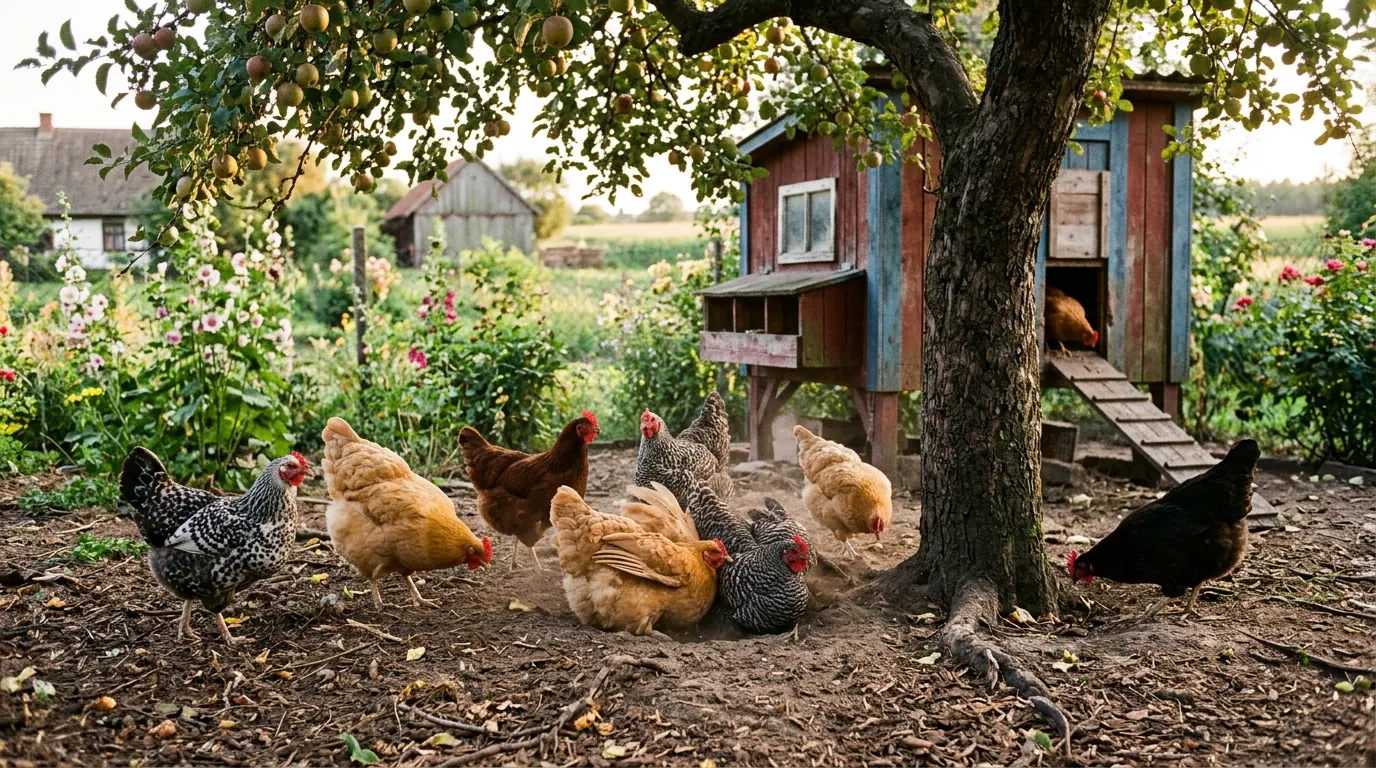
The Orlovka is a Russian breed. You can recognize it by its upright stance, short pea comb and feathers that form a beard and muffs. This head shape protects the bird from cold: a small comb is hardly ever hit by frostbite, and dense feathering insulates the body. The Orlovka is neither a high-laying nor a fast-growing breed, so on a commercial farm it cannot compete with commercial lines. It suits keepers who value hardiness, an unusual look and a rare breed.
Where the Orlovka comes from
Most descriptions trace the breed to Russia, and link its name to Count Orlov, who is said to have created it from birds brought in from different regions. It used to be seen as a dual-purpose bird: it gave eggs and meat, and was also strong and feisty. Details of its origin and the breed standard are described by animal science institutes and breeders' associations, for example the Instytut Zootechniki PIB (Poland's National Research Institute of Animal Production). Before you buy, check the current standard for the variety you choose.
What an Orlovka looks like
Build and body shape
The Orlovka has a strong, upright build with a medium-long, broad-set body. The neck is raised and the legs are fairly tall and sturdy. The bird looks compact and tough, which fits the history of the breed. By weight it is a medium-heavy type, smaller than giants such as the Jersey Giant we describe elsewhere. Take exact weights for hens and cockerels from the current breed standard, because they differ between lines.
Comb, beard and colors
The head stands out for its low pea comb, full beard with muffs and short, strong beak. The brows are prominent and give the bird a stern look. Several colors exist, including rusty brown, white, black and spotted. The set of recognized varieties depends on the standard of a given country or breeders' association, so when you buy, ask which standard the seller uses to select birds.
Frost hardiness in practice
Why the Orlovka copes well with winter
Its tolerance of low temperatures comes from three traits: dense, close-fitting feathering, a small pea comb and a stocky build. In breeds with a large single comb, frost often ends in frostbite; here the risk is much smaller. The beard also shields the area around the beak and throat. We describe similar hardiness, with a different look, in the New Hampshire.
How to set up the coop for winter
Frost hardiness does not excuse a poorly kept coop. Damp and drafts are more dangerous than cold itself. Provide dry litter, ventilation above roost height and a drinker that does not freeze. Check in the morning that water is available, because birds without water quickly drop in laying. Choose roosts so that hens can cover their feet with feathers while sitting.
Eggs and meat
How many eggs an Orlovka lays
Laying in Orlovka hens is moderate, clearly lower than in laying lines. Eggs usually have a light brown or cream shell. Hens mature late, so laying starts later than in light breeds. We do not give an exact yearly egg count, because it depends on the line, feeding and coop lighting. If you plan a flock for egg production, consider a breed with higher laying, for example the Amrock.
Meat and growth rate
Orlovkas grow slowly and reach full weight late. The meat is firm and fairly lean, which is a plus for some buyers and a minus for others. With slow growth, the feed cost per kilogram of meat goes up, so the breed will not replace commercial broilers. For comparison, look at the Dorking, an old meat breed, or the Langshan, which gives heavier carcasses.
Behavior and flock management
Cockerels and social relations
The breed has a fighting background, so cocks can be aggressive toward each other and other males. Two adult cocks in one pen usually will not get along without fights. Keep one cock per group of hens or split the males into separate pens. Hens are calmer, but in a mixed flock they may dominate gentle breeds. Watch young birds from the first weeks and group them by strength.
Run and feed
Orlovkas like to move and make good use of a run. Solid fencing and a roof reduce the risk of predator attack. Adjust the feed ration to the stage: one for young birds, another for layers and another outside the laying season. With slow growth, do not overfeed, because excess fat lowers laying. Choose a balanced mix following the recommendations for dual-purpose breeds.
Breeding, records and health
Breeding and bird selection
With a rare breed, selection decides its quality. For breeding, choose birds that match the standard: pea comb, beard and correct stance. Avoid mating closely related birds, because it lowers hatch viability. If you plan to replace your flock, note that the drop in laying after the first year affects utility breeds too, as we describe in the article on the laying hen after one year.
Records and flock health
The Ross parent stock handbook lists data worth recording daily: egg numbers, eggs laid outside nests, feed and water use, bird body weight, mortality and culled birds. The same handbook advises knowing normal behavior and benchmarks for the breed, and contacting a veterinarian when you see or suspect a health problem. In DlaFerm's coop records you can log this data for each group, while treatment and withdrawal periods are kept separately. You can prepare a plan to keep diseases out in the biosecurity plan generator.
Frequently asked questions
Is the Orlovka chicken cold hardy?add
Yes, it is one of its main strengths. Dense feathering and a small pea comb reduce the risk of frostbite. The coop must still be dry and free of drafts, with water that does not freeze.
How many eggs does an Orlovka lay?add
Laying is moderate and lower than in laying breeds. The exact result depends on the line, age, feeding and lighting. Hens mature late, so the first eggs come later than in light breeds.
Is the Orlovka aggressive?add
Cocks can be aggressive toward other males, because the breed has a fighting past. It is best to keep one cock per group of hens. Hens are calmer, though they can dominate in a mixed flock.
What is the Orlovka chicken used for?add
It is a dual-purpose breed: it gives eggs and firm meat, but grows slowly. It works best for hobbyists and small flocks where hardiness and an unusual look matter more than high output.
Where can I check the Orlovka breed standard?add
You will find the standard in materials from poultry breeders' associations and animal science institutes, such as the Instytut Zootechniki PIB. Before buying, ask the seller which standard they use for selection.
Sources & resources
- linkInstytut Zootechniki PIB (National Research Institute of Animal Production) — izoo.krakow.pl
- linkRoss Parent Stock Management Handbook 2023 (Interactive)
- linkRoss Broiler Management Handbook 2025
- linkChief Veterinary Inspectorate (Główny Inspektorat Weterynarii) — gov.pl/web/wetgiw
Prepared by: DlaFerm Team based on data from the sources listed · Publisher: INSTA-TECH sp. z o.o.
Keep coop records for rare breeds too
The coop records module in DlaFerm lets you log eggs, mortality, feed and bird weight separately for each group, including a small pedigree flock. Create a free farm account or get in touch.
Phone
+48 796 258 151