Vitamins for Chickens and Laying Hens: When and Which
Vitamins should come from a feed formula balanced for the bird's age and purpose. Extra supplements make sense in specific situations: after placement, when you change feed, in hot weather and at peak lay. A veterinarian always chooses the product and the dose.
verifiedFrom the team that has organised work on poultry farms for years.
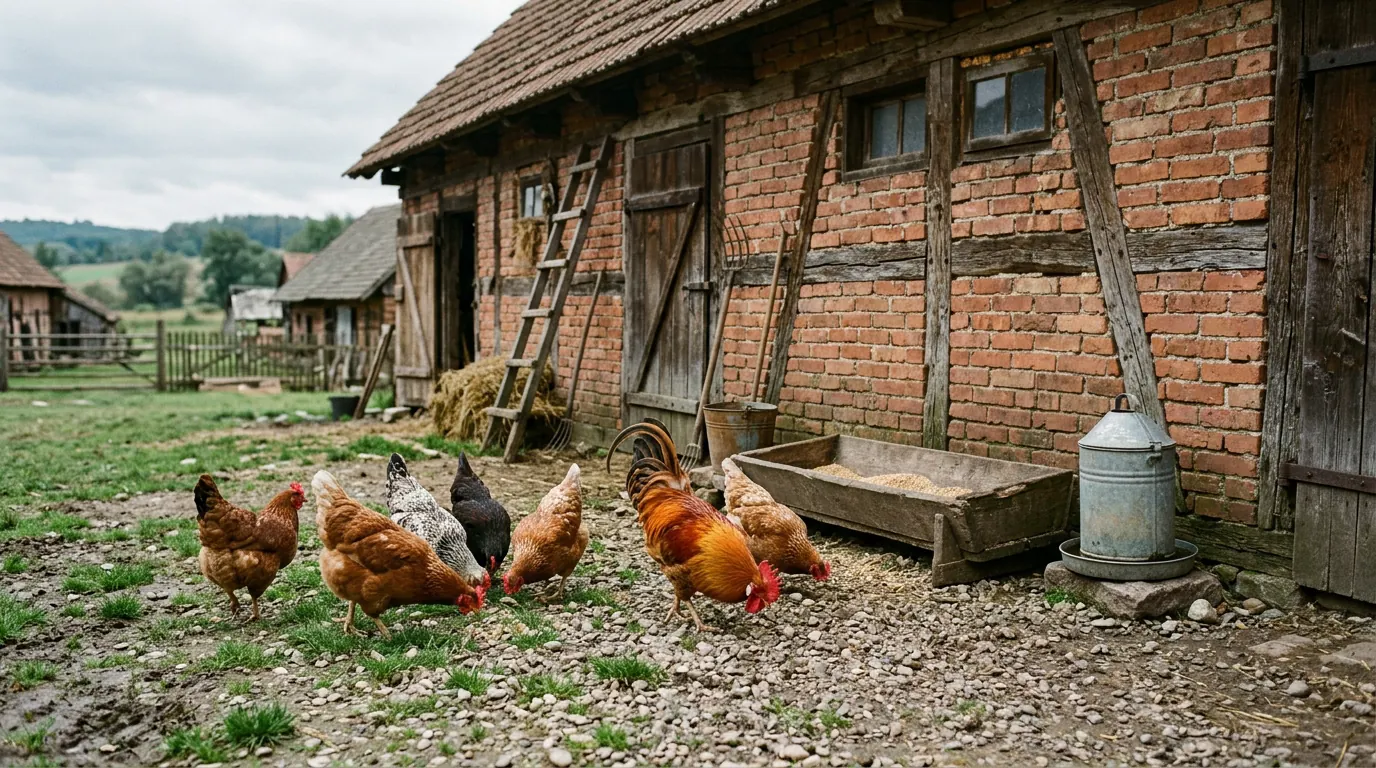
Chickens and laying hens get their vitamins mainly from well-balanced feed. For young birds, what counts is fast, even growth and good feed use. For laying hens, it is steady egg production and shell quality. Never add vitamins by eye, because an excess can be as harmful as a deficiency. The amount should follow the feed formula and the manufacturer's instructions, and if you have a dosing problem, the veterinarian decides. You can read more about feeding standards in our guide to feeding laying hens.
When vitamins are especially needed
Vitamin support makes sense in a few situations. The first is the days after chicks are placed, when birds are recovering from transport and stress. The second is a feed change, because a new formula may have a different composition. The third is hot weather, which lowers feed intake, so the bird gets fewer nutrients. The fourth is peak lay, when a hen needs more nutrients to build eggs. The fifth is the period after illness or procedures such as vaccination. Each of these changes the need, but none replaces good feed. If the flock shows clear signs of deficiency, first check the feed's composition, expiry date and storage, and only then think about supplements.
Vitamins and treatment
Some products given in water or by injection are medicinal products, not ordinary feed supplements. A withdrawal period applies to them: the time from the last dose until the birds or eggs may be used as food. Record every product you give in your treatment and withdrawal records, and set the date from the label and your veterinarian's advice. Do not choose a dose yourself from articles, including ours.
Vitamins for chicks in the first weeks
The first days after placement
When the chicks arrive, first check that they can reach water and starter feed. Chicks must find the drinker and the feed quickly, because their appetite is often poor after transport. A well-set automatic drinker lets you check that water flows and that birds are drinking. Give vitamin supplements in water only as the manufacturer or your vet advises, because some components break down in water and can foul the lines. Write down the placement date, the type of feed and every supplement, so you can compare results later.
Growth and feed use
Aviagen's nutrition specifications for Ross 308 say the diet is designed individually. The aim is the lowest cost of live weight produced, or the best margin over feed cost. The specifications are based on digestible amino acids, which according to Aviagen helps avoid deficiencies and improves protein use. Vitamins work in the same system: a deficiency lowers weight gain even when the feed has plenty of protein. So when gains drop, do not look for a single cause right away. Check the feed composition, the water and the house temperature.
Signs of deficiency
A vitamin deficiency rarely gives one clear sign. More often you see weaker gains, an uneven flock, walking problems, poorer feather condition or more birds with movement problems. These signs can have many other causes, such as disease, parasites or ventilation errors. If you see such changes, contact a veterinarian, who will assess the flock and suggest what to do. Do not treat a flock based only on the symptoms listed in an article.
Vitamins for laying hens during lay
Vitamins and shell quality
The shell is built mainly from calcium carbonate, so a hen needs calcium in the feed and well-absorbed phosphorus. Calcium absorption also depends on vitamin D, so a shortfall here affects egg quality. If you see more eggs with thin or soft shells, do not raise the vitamin dose right away. First check that the feed has the right calcium level, that the limestone is fresh and that the birds have access to a calcium source. The problem may also come from disease, so you need to consult a veterinarian.
Lighting program and feed intake
Light affects appetite and egg production. Changes in day length or sudden gaps in lighting can reduce feed intake, and with it the supply of vitamins and minerals. Before you add a product, check that the house has a steady, well-planned program. A lighting program for laying hens helps with planning.
Ventilation and hot weather
The Ross Broiler Management Handbook 2025 shows how to calculate fan run time within a cycle. In its example with a 5-minute cycle (300 s), the fan runs for 143 s and the pause lasts 157 s, but the authors stress that these values are theoretical. You need to set the real values for your own house, its air quality and the behavior of the birds. In hot weather, weaker ventilation lowers feed intake, so before you decide vitamins do not work, check the climate inside the building. We describe house requirements in our article on hen house requirements for laying hens.
How to give vitamins so they work
In feed or in water
A supplement mixed into feed gives a more predictable dose, because the feed is uniform and birds eat it fairly evenly. A supplement in water acts faster, but it must be fully dissolved and you must keep checking that the birds drink. With either method, keep drinkers clean, and remember that water with a supplement spoils quickly, so mix only enough for a few hours, not a few days. Before you choose a method, ask your vet which product and which form suit your flock.
Records and checks
Every supplement should have an entry: the date, product name, method of giving, group of birds and the person who gave it. This tells you what the flock received and when. Such records are easy to keep in poultry farm management software, where feed, treatment and performance data sit in one place. When you check results, compare them with your own earlier cycles, not with general tables, because every flock is different.
Talking to your veterinarian
The veterinarian assesses the flock, chooses the product and sets the dose and the length of treatment. Prepare data on the birds' age, feed composition, water, laying or weight-gain results and what you have already given. This information shortens the diagnosis and helps you avoid accidental double dosing. Also note when the signs began and how they change from day to day.
How to tell whether vitamins helped
Comparing with a growth table
The Ross 308 performance objectives table from 2022 lists body weight and FCR (feed conversion ratio) day by day. For day 21 it gives a weight of 1012 g and an FCR of 1.142. By comparing your flock's results with such a table, you can see whether the birds are heading the right way. Remember that the table applies to a specific line and specific conditions, so treat it as a reference point, not a pattern to copy.
Cost versus effect
Prices of vitamins and feed change often, so we do not give specific amounts. They depend on the manufacturer, the form of the product, the pack size and raw material prices. Judge the cost of a supplement against the effect: weight gain, FCR, egg production or the number of eggs with good shells. You can collect profitability data in an analysis of laying hen profitability, and check current prices with your feed supplier or wholesaler.
What to know about the rules
Feed, additive and medicine
Feed additives and medicinal products are covered by separate regulations. Poland publishes legal acts in its online legal database, the Internetowy System Aktów Prawnych (isap.sejm.gov.pl). We describe the legal position as of 22.11.2026. Before you change a product, check its status and instructions in the current rules and with your veterinarian. Do not assume that a product sold in a shop is approved for every use.
Veterinary supervision
Supervision of animal health and feed quality lies with the Chief Veterinary Inspectorate (Główny Inspektorat Weterynarii, gov.pl/web/wetgiw) and the county veterinarians. In practice, inspectors expect a farmer to show which products were given, when and in what dose. So keep records from day one, not only when an inspection comes.
Frequently asked questions
Do chicks need vitamin supplements?add
Feed balanced for the bird's age and type usually contains the vitamins it needs. A supplement makes sense in times of higher stress, after a feed change, in hot weather or after illness. Discuss any extra supplement with your veterinarian.
What vitamins should I give laying hens?add
A laying hen's needs depend on her laying rate, the feed composition and the housing conditions. The vitamins most often discussed are those that affect calcium absorption and shell quality. Your veterinarian chooses the specific product and dose.
How can I tell if my chickens have a vitamin deficiency?add
A deficiency usually gives unclear signs, such as weaker gains, poorer laying, thinner shells or movement problems. The same signs can have other causes, so do not diagnose from the look of the flock alone. Report the problem to your veterinarian.
Are vitamins in water better than in feed?add
Neither form is better in advance. A supplement in feed gives a more even dose, and one in water acts faster but needs clean drinkers and frequent changes of the water. The choice depends on the flock's situation and your vet's advice.
Is there a withdrawal period after giving vitamins?add
A withdrawal period applies to medicinal products, not to every feed supplement. If you give a medicinal product, the withdrawal period is on the label and your veterinarian sets it. Record every dose so you know when eggs or birds can be used.
How much vitamin should I add to chicken feed?add
The dose comes from the feed formula, the manufacturer's instructions and your veterinarian's assessment. Do not copy doses from articles or forums, because they depend on feed composition, the birds' age and their health. Giving too much can also do harm.
How do I check whether vitamins are working?add
Compare the flock's results before and after: weight gain, FCR, egg production and shell quality. For chicks you can compare weight with the Ross 308 performance objectives table. Remember that the effect also depends on ventilation, temperature and the health of the flock.
Sources & resources
- linkRoss 308 / 308 FF Broiler Nutrition Specifications 2022
- linkRoss 308 / 308 FF Broiler Performance Objectives 2022
- linkRoss Broiler Management Handbook 2025
- linkChief Veterinary Inspectorate (Główny Inspektorat Weterynarii) — gov.pl/web/wetgiw
- linkInternet System of Legal Acts (Internetowy System Aktów Prawnych) — isap.sejm.gov.pl
Prepared by: DlaFerm Team based on data from the sources listed · Publisher: INSTA-TECH sp. z o.o.
Do you keep a flock of chickens or laying hens?
The poultry farm management software in DlaFerm.pl keeps your feed, treatment and performance records in one place. Create a free farm account or get in touch, and we will show you how it works in practice.
Phone
+48 796 258 151