How much does a chicken, duck or goose cost? Live poultry prices from breeders
The price of a live chicken, duck or goose depends on the type of bird, age, weight, origin and season, so no single fixed price exists. We show what drives the price, how to read breeder offers and where to check market quotes. We give no amounts, because they change every week.
verifiedFrom the team that has organised work on poultry farms for years.
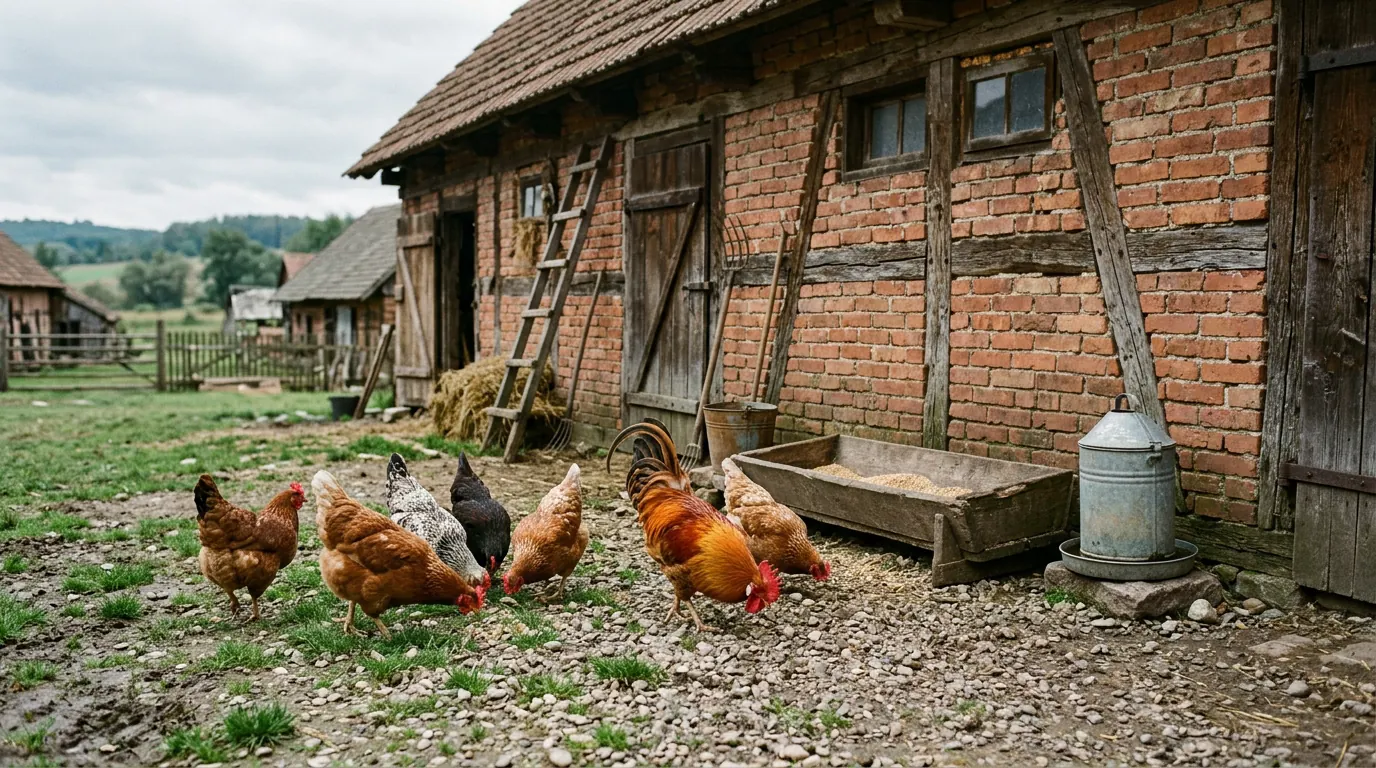
A live chicken, duck or goose has no single fixed price. It depends on the type of bird, age, weight, origin and season, and on whether you buy a chick, a young bird or a bird ready for slaughter. That is why this guide gives no amounts. Instead it shows what drives the price and how to compare breeder offers. Market quotes change every week, so a price without a date quickly loses its value.
How to read an offer
First, decide exactly what you are buying: a bird for rearing, a working bird or a show-quality specimen. Second, check the unit. Some sellers quote a price per bird, others per kilogram of live weight. Before you compare two offers, convert them to the same basis: same age, same sex and same form of sale. Without that, a price gap often reflects a different product, not a seller's honesty.
What sets the price of live poultry
Type and purpose of the bird
A laying hen, a meat chicken, a broiler, a duck and a goose are different products, even when they stand side by side in one pen. Birds for meat, for eggs and for show are priced differently, because they are raised differently and sold differently. Ornamental and heritage breeds are usually priced by breed standard and pedigree, not by weight or number of eggs. So state your purpose up front and ask the seller whether the bird comes from a production line or an ornamental one. You can read more about the differences in our guide to ornamental and heritage breeds.
Age and weight
A day-old chick, a young bird and an adult are three different prices. Younger birds are cheaper to buy, but they need time and feed before they bring any value. For broilers, flock uniformity also matters. The Ross Broiler Management Handbook 2025 describes the coefficient of variation (CV%) as a measure of flock uniformity: the lower the figure, the more even the flock. An even batch has a predictable weight, which makes it easier to plan slaughter and sales.
Origin and documents
A bird with documented origin, from a registered flock and with a described health status usually costs more than one sold without papers. It is also safer for you: you know where the bird came from and whether you are bringing disease onto your farm. Ask the seller for the flock premises number and the IRZplus registration (IRZplus is the online animal register run by Poland's ARiMR, the Agency for Restructuring and Modernisation of Agriculture). We explain the registration rules in a separate guide to registering a poultry farm.
Chicken, duck and goose: how their prices differ
Chicken
Chickens are most often bought as chicks, as young birds for backyard keeping or as laying hens. The price then depends on the breed, the line and whether the bird has been vaccinated. Keeping a chicken is usually cheaper than keeping a duck or goose, because it eats less feed, but it needs a dry coop and constant access to water. For ornamental birds the price can be clearly higher than for a production chicken, because buyers pay for the breed standard and pedigree.
Duck
Ducks grow fast and are popular for meat, especially before the holidays. Prices rise in season, because demand is packed into a short period. A duck needs water to swim in, or at least a large drinker, which adds to the cost of keeping it. When you buy, check that the seller gives the age and weight of the bird, not just the word "young".
Goose
A goose grows longer than a chicken or duck, so its price reflects a longer rearing period and more feed before the bird reaches weight. Demand is strongly seasonal and peaks before the holidays. Geese are usually bought well in advance, because supply does not always keep up with demand at the peak. Agree the pickup date and the weight of the bird before you pay a deposit.
Feed cost and the price of a broiler
What FCR measures
FCR (feed conversion ratio) shows how much feed was used per kilogram of live weight. According to the Ross Broiler Management Handbook 2025, you calculate it as total feed intake divided by total live weight. The lower the FCR, the better the bird turns feed into weight. The handbook gives an example: 10 birds with a combined live weight of 31,480 g ate 36,807 g of feed, which gives an FCR of 1.169.
Why it affects the price
The Ross 308 nutrition specifications from 2022 say the diet is chosen individually, aiming for either the lowest cost of live weight or the highest margin over feed cost. For a farmer the rule is simple: a bird with a worse FCR costs more feed per kilogram, and that shows up in its price at sale. We show how to calculate this ratio on your own farm in the FCR and EPEF online module. For an overview of batch costs and revenue, see our text on how much you can earn from poultry farming.
Where to buy a goose, duck and chicken
Directly from the breeder
The most reliable source is a breeder you can visit. You see the flock, the housing and how the birds behave. Ask about age, origin, vaccinations and feeding. Ask for documents on the flock. A good breeder answers these questions easily, and you can check the answers on the spot.
Fairs, markets and classified ads
At poultry fairs and in local ads prices vary widely, and sellers often do not give the origin of the bird. An ad with a photo and a price but no age or weight is not enough to compare. Decide what you want to buy before the visit and bring a carrier that fits the bird. For a larger batch, put the terms in writing, including pickup date, weight and method of payment.
What to check before you pay
Check whether the flock the bird comes from is registered, whether the seller keeps records and whether the description matches what you see. If you have doubts about the birds' health, talk to a vet. Current notices on poultry trade are published by the Chief Veterinary Inspectorate (Główny Inspektorat Weterynarii), and information on programs and ministry rules is on the website of the Ministry of Agriculture and Rural Development (Ministerstwo Rolnictwa i Rozwoju Wsi).
How to tell whether a price is fair
Where to look for quotes
Official poultry price reports are collected and published by Poland's Ministry of Agriculture and Rural Development. We discuss them in Minrol: official poultry prices. Official reports do not always cover ornamental birds and heritage breeds, so for those birds your reference points are breeder offers and breed clubs. Always note the date you checked, because last week's price may no longer apply.
Compare in the same unit
Put three offers side by side: age, weight, sex, origin and the price per bird or per kilogram. Drop offers that lack any of these. When you work out the profit from your own flock, keep cost records in farm management software or in a coop record. That way you know what one bird really costs you before you compare it with someone else's offer.
Frequently asked questions
How much does a chicken cost?add
We give no fixed amount, because the price of a chicken depends on breed, age, origin and whether you buy a chick, a young bird or a laying hen. You will find current offers from breeders and in ads. Compare birds of the same age and purpose, and for ornamental birds remember that official price reports do not always cover them.
How much does a duck cost?add
The price of a duck rises in periods of high demand, especially before the holidays, and depends on the age and weight of the bird. Compare offers in the same unit: per bird or per kilogram of live weight. A duck also needs access to water, which is worth counting in the cost of keeping it.
Where can I buy a goose?add
The best place to buy a goose is directly from a breeder who will show you the flock and tell you where the bird comes from. Poultry fairs and local ads are an alternative, but there you need to check age and documents more carefully. Agree the pickup date and the weight of the bird in advance.
Why are goose prices higher before the holidays?add
Demand for geese is packed into a short holiday period, and a goose grows longer than a chicken or duck. Supply at that time does not always keep up with demand, which pushes the price up. If you need a specific date, order the bird well in advance.
Does a pedigree bird cost more?add
Usually yes. A bird with documented origin from a registered flock is worth more, because you know where it comes from and what its health status is. For ornamental birds, pedigree and conformity to the breed standard matter most. Ask the seller for documents before you buy.
What does FCR mean for the price of a broiler?add
FCR is the number of kilograms of feed used per kilogram of live weight. The lower the figure, the cheaper each kilogram of live weight is to produce. The Ross Broiler Management Handbook 2025 shows the calculation in an example where FCR is 1.169, meaning 1.169 kg of feed per 1 kg of live weight.
Sources & resources
- linkRoss Broiler Management Handbook 2025
- linkRoss 308 / 308 FF Broiler Nutrition Specifications 2022
- linkChief Veterinary Inspectorate (Główny Inspektorat Weterynarii) — gov.pl/web/wetgiw
- linkMinistry of Agriculture and Rural Development (Ministerstwo Rolnictwa i Rozwoju Wsi) — gov.pl/web/rolnictwo
- linkNational Research Institute of Animal Production (Instytut Zootechniki PIB) — izoo.krakow.pl
Prepared by: DlaFerm Team based on data from the sources listed · Publisher: INSTA-TECH sp. z o.o.
Working out the cost of one bird on your farm?
The FCR and EPEF online module shows your flock indicators, and the coop record collects batch costs. Create a free farm account on DlaFerm.pl and start with your first batch, or get in touch with us.
Phone
+48 796 258 151