Checkered Giant rabbit: the large breed with colored patches
The Checkered Giant (Olbrzym srokacz in Polish) is a large rabbit with a white coat and colored patches on the nose, ears and back. In Poland you find it with hobby breeders and as the sire of crosses with the New Zealand White. We explain how to recognize it, what it is good for and how to keep it.
verifiedFrom the team that has organised work on poultry farms for years.
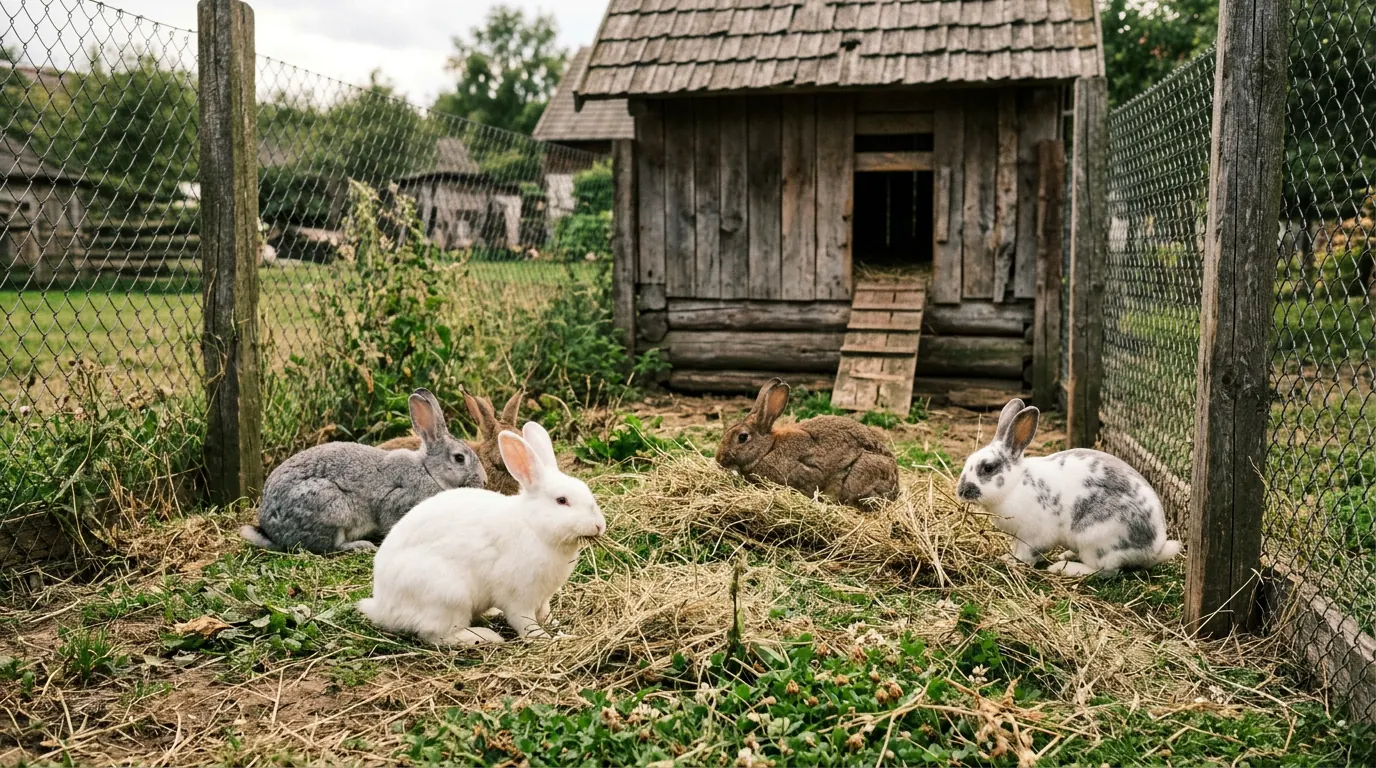
The Checkered Giant (Polish: olbrzym srokacz) is a large rabbit with a white coat and dark patches. Two colored "butterfly" marks on the nose, rings around the eyes, colored ears and a stripe along the back usually set it apart from solid-colored breeds. In the rabbit breed catalog you find it next to other giants, such as the Flemish Giant (olbrzym belgijski). In Polish it is also called "królik srokacz", though that term is used for other spotted varieties too.
Why the breed is found on Polish farms
According to a publication of IZ PIB (Poland's National Research Institute of Animal Production), until the 1980s normal-haired fur rabbits were popular, kept for their attractive coat colors. They included the New Zealand Red, Chinchilla, Alaska and the German Checkered. Today normal-haired pelts matter little in the fur trade because the products do not last long. The breed has kept its place mainly as a hobby breed and as a partner in commercial crossing.
What a Checkered Giant looks like
Body weight and build
According to IZ PIB, large rabbits are breeds whose minimum body weight should not be below 5.5 kg. An upper limit is usually not set. In practice giants have a long, strong body and large limbs, so they need roomy cages or pens. Check the exact weight standard for this breed in the current standard of the Polish Rabbit Breeders Association (Polski Związek Hodowców Królików).
Patched coat
The background color of the coat is white. The patches are dark, most often black or blue, though other colors are also allowed. Judges score the symmetry of the markings on the nose, ears and back, and the purity of the white. When you choose breeding stock, treat the standard as a checklist: an animal with irregular patches is fine for commercial keeping but not for the show table. To compare breeds by looks, see rabbit breeds.
What the Checkered Giant is used for
Production type
IZ PIB divides rabbits into meat, meat-and-fur, fur, wool, laboratory and hobby types. The Checkered Giant sits between the meat-and-fur and hobby types. Meat breeds and lines have the largest share in commercial production today, and we cover them in our guide to meat rabbit breeds. The Checkered Giant tends to appear there as part of a cross rather than as a pure breed.
Crosses with the New Zealand White
A publication by W. Potępka of Opole University of Technology (Wiadomości Zootechniczne, 2011) described Checkered Giant × New Zealand White crosses kept in a floor pen on litter. This kind of crossing combines the large size of one breed with the good meat performance of the other. Check your own dam breed in the description of the New Zealand rabbit. Results depend on the line, so start with a small trial and record weight gains.
Keeping and feeding
Feeding rules
According to Oregon State University Extension, feed for commercial breeds contains 14 to 18% protein, and feed with 16–18% protein gives the fastest growth in young rabbits. Hay completes the ration, keeps rabbits occupied and helps wear down their constantly growing teeth. Store feed cool and dry, in tight containers that rodents cannot get into. We describe rations and feeding periods in the article on rabbit feeding.
Cages and pens
Giants do not cope well with cramped space or hard wire floors, because sore hocks develop easily. Choose a cage or pen with a soft section of floor or with litter. Drinkers and feeders need to be large enough, usually those made for large breeds. We cover how to choose them in our guide to drinkers and feeders for rabbits.
Claws and condition checks
Oregon State University Extension recommends trimming claws regularly: back to the pink quick with its blood supply, and no further. On large breeds longer claws more easily hurt the animal and the handler. While you do it, check body condition and the state of the feet and coat.
Kindling, rearing and disease
Kindling and rearing the young
Prepare the nest a few days before the expected kindling and watch the doe without handling the litter more than needed. We describe weaning and litter size in the article on kindling and rearing young rabbits. For farm growth it also matters how many litters a year are realistic in your system. FAO reports that on the best French farms the average interval between litters fell from 90–100 days to 40 days, but that applies to specialized hybrid lines, not giant breeds.
Vaccination and disease
Rabbits are vaccinated against RHD and myxomatosis. You find the schedule and rules in our guide to rabbit vaccination, and the symptoms of each disease in the descriptions of RHD (rabbit hemorrhagic disease) and myxomatosis. A vet decides on treatment and vaccination. During treatment, keep to the withdrawal period before slaughter.
Is the Checkered Giant worth keeping
Economics and choice of breed
Feed price swings decide profit on rabbit farms. A 2011 publication reported that after purchase price rises in 2010 rabbit keeping became more profitable, but further feed price rises cut profits again. A large rabbit eats more feed, so for commercial production calculate feed cost per 1 kg of gain. We show the calculation in the article on rabbit farming profitability. If you prefer a strictly meat breed, see the Thuringian-type white (termondzki) or the Californian. When planning a farm, start with rabbit farming.
Frequently asked questions
Is the Checkered Giant a meat rabbit?add
It is not a typical meat breed. It is used mostly as a hobby breed or in crosses with meat breeds, for example the New Zealand White. We describe commercial breeds separately.
How much does a Checkered Giant weigh?add
According to IZ PIB, large rabbits have a minimum body weight of 5.5 kg. Check the breed standard for exact values for this breed, as they depend on the line.
What is the difference between a checkered rabbit and a Checkered Giant?add
"Checkered" (srokacz) describes a patched coat and is used for several breeds. The Checkered Giant is one specific large breed with a white background and dark markings. When you buy, ask for the pedigree and the standard.
How do you feed a large Checkered Giant rabbit?add
According to Oregon State University Extension, feed for commercial breeds contains 14 to 18% protein. Add hay and constant access to clean water. Allow for the higher needs of a large breed.
Do Checkered Giant rabbits need vaccinating?add
Yes, they are vaccinated against RHD and myxomatosis like other breeds. A vet decides the timing and the vaccine.
What cage does a Checkered Giant need?add
Use cages or pens larger than for medium breeds, with a soft section of floor or litter. For large rabbits, sturdy drinkers and feeders matter too.
Sources & resources
- linkIZ PIB — Wiadomości Zootechniczne — Little-known endangered rabbit breeds (D. Kowalska et al.), WZ XLV(2007)3:71–75
- linkIZ PIB — Wiadomości Zootechniczne — Problems and options in feeding rabbits on small farms (W. Potępka), WZ XLIX(2011)2:37–42
- linkOregon State University Extension — Living on The Land: Raising Rabbits for Meat — Providing Basic Care (EC 1655)
- linkFAO — The rabbit — husbandry, health and production (F. Lebas et al., FAO Animal Production and Health Series 21, revised ed.)
Prepared by: DlaFerm Team based on data from the sources listed · Publisher: INSTA-TECH sp. z o.o.
Keeping rabbits alongside other animals? Start with the QR entry log
DlaFerm.pl has general modules that help keep your farm in order: the <a href="/ksiega-wejsc-na-ferme">QR entry and exit log</a> and <a href="/ewidencja-leczenia-i-karencja-lekow">treatment and withdrawal period records</a>. Create a free farm account or get in touch with us.
Phone
+48 796 258 151