Californian rabbit: a meat breed with dark points
The Californian rabbit is a meat breed from the western USA, recognized in 1915. It came to Poland from England in the 1960s. We cover its origin, looks, performance, feeding and place in commercial production.
verifiedFrom the team that has organised work on poultry farms for years.
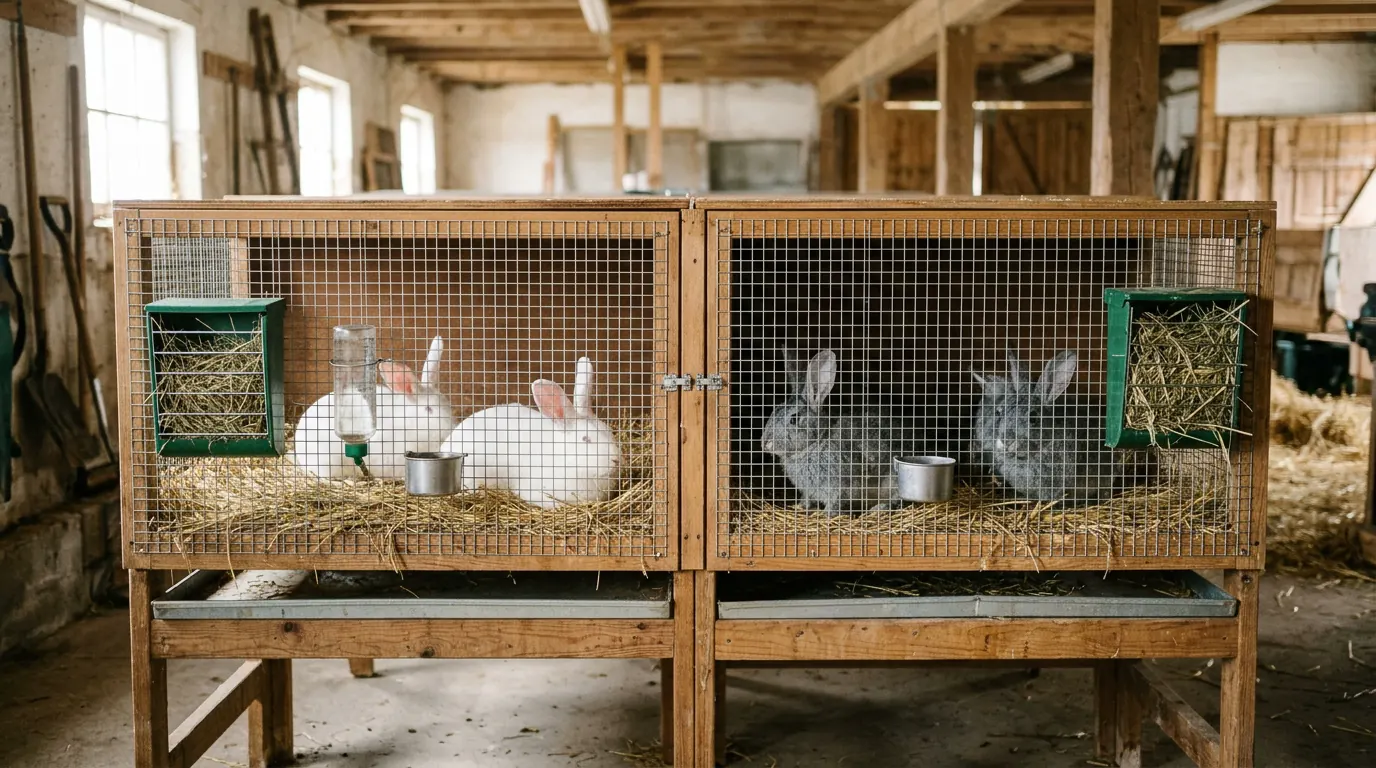
The Californian rabbit is a meat breed that commercial producers often pair with the New Zealand White. The handbook from the National Research Institute of Animal Production (IZ PIB) for breeders and members of rabbit meat producer cooperatives describes both breeds side by side. Both come from the western USA and were recognized as breeds in 1915.
Who this breed suits
Californians suit a farmer who wants to produce rabbit meat and prefers a breed with known, settled performance. If you are still planning your farm, start with our guide on how to start rabbit farming. You can compare other breeds in our list of meat rabbit breeds.
Where the Californian breed comes from
A breed from the western USA
According to the IZ PIB handbook edited by Z. Kryński, the Californian rabbit, like the New Zealand White, comes from the western United States. It was recognized as a breed in 1915. The breed is old and has an established standard. Buyers of breeding stock can compare animals with the breed description in Polish breeding publications. When you buy, ask about the animals' origin and whether the breeder keeps performance records.
The road to Poland
The same handbook says Californian rabbits came to Poland from England in the 1960s. Since then the breed has been known in the country as a meat breed, and breeders use it both pure and in crossbreeding. To see how it compares with other breeds kept in Poland, read our overview of rabbit breeds: meat, fur and giants.
How to recognize a Californian rabbit
Dark points
The Californian has light fur and dark markings on the ears, nose, feet and tail. This is how you tell it from the New Zealand White, although both are meat breeds with a similar origin. The IZ PIB handbook gives the exact breed standard, including adult body weight. Use it when you judge animals for breeding.
Compared with other breeds
When choosing a breed, set the Californian beside other meat breeds. Breeders often compare the White New Zealand rabbit and the Thuringian-type white Termond rabbit. We describe a fawn meat breed in the article on the Burgundy rabbit. Each has slightly different needs, so compare them before you buy animals.
Meat and crossbreeding
Crossing with the New Zealand White
The scientific literature includes studies on crosses between the Californian and New Zealand White breeds. A 2016 paper by Rybarczyk and Łupkowska on meat quality of non-pedigree rabbits and crosses of these two breeds is cited in a review by J. Składanowska-Baryza in "Wiadomości Zootechniczne" (2017). This shows that this crossing system is described and studied in Poland.
Scale of production
How fast a farm grows and how much labor a kilogram of carcass takes depends on the number of does and how you organize production. In a study by Lebas and co-authors, FAO shows that on French rabbit farms between 1950 and 1990 labor per 1 kg of carcass fell, while the number of does per farm rose. When you plan the number of cages, work out your costs using our article on rabbit farming profitability.
What to feed a Californian rabbit
Protein in feed
The Oregon State University Extension guide says protein in rabbit feeds ranges from 14 to 18 percent. For meat breeds, which include the Californian, feed with 16–18 percent protein gives the fastest growth. You will find this value on the pellet label. We cover feed, hay and water in more detail in our article on feeding rabbits.
Hay and feed storage
According to the same source, hay adds to the ration, keeps rabbits busy and helps wear down their constantly growing teeth. Timothy, alfalfa and other grass hays are most common. Store feed cool and dry so it does not go moldy, in closed containers that rodents cannot get into. Also choose suitable feeding and watering equipment, described in our article on rabbit drinkers and feeders.
Housing, health and records
Claws and flock checks
The Oregon State University guide recommends trimming claws regularly, because long, sharp claws hurt animals and people. Trim up to the pink part where you can see blood vessels. While you are at it, check the coat, eyes and nose. A nasal discharge can be a sign of the disease we describe in the article on pasteurellosis and snuffles in rabbits.
Vaccination and biosecurity
Californian rabbits need the same protection as other breeds. You will find the schedule in our article on rabbit vaccinations, and we cover the viral disease in the text on RHD. Record every visitor to the farm in a visitor log. Always treat animals on the advice of a vet, who chooses the medicine and dose. Remember the withdrawal period before slaughter.
Frequently asked questions
Where does the Californian rabbit come from?add
According to the IZ PIB handbook, the breed comes from the western USA and was recognized in 1915. It came to Poland from England in the 1960s.
Is the Californian rabbit a meat breed?add
Yes. IZ PIB handbooks list it among meat breeds and describe it together with the New Zealand White. Breeders use it pure and in crosses.
What does a Californian rabbit look like?add
It has light fur and dark markings on the ears, nose, feet and tail. Check the exact breed standard, including body weight, in the IZ PIB handbook or with a breeders' association.
How much protein should meat rabbit feed have?add
According to Oregon State University Extension, rabbit feed contains 14 to 18 percent protein. For meat breeds, feed with 16–18 percent gives the fastest growth.
What is the difference between a Californian and a New Zealand rabbit?add
Both breeds come from the western USA and are meat breeds. The Californian has dark markings on light fur, while the New Zealand comes in white and red varieties.
How much does a Californian rabbit cost?add
The price depends on the animal's age, origin and whether you buy breeding stock or animals for fattening. Ask a breeder or a rabbit producers' cooperative directly.
Sources & resources
- linkIZ PIB — Technology of rabbit meat production under higher animal welfare standards. Handbook for breeders and members of rabbit meat producer cooperatives (ed. Z. Kryński)
- linkIZ PIB — Wiadomości Zootechniczne — Rabbit: economic importance, choice of breeds and lines for meat production (J. Składanowska-Baryza), WZ LV(2017)3:13–23
- linkOregon State University Extension — Living on The Land: Raising Rabbits for Meat — Providing Basic Care (EC 1655)
- linkFAO — The rabbit — husbandry, health and production (F. Lebas et al., FAO Animal Production and Health Series 21, revised edition)
Prepared by: DlaFerm Team based on data from the sources listed · Publisher: INSTA-TECH sp. z o.o.
Keep biosecurity tight on your rabbit farm
The DlaFerm biosecurity plan generator helps you set clear rules for entry and hygiene on your farm, and the QR visitor log records every visit. Create a free farm account or get in touch with us.
Phone
+48 796 258 151