Burgundy rabbit: a fawn meat breed
The Burgundy rabbit (królik burgundzki) is a meat breed with a solid fawn coat that comes from France. In Poland you meet it far less often than the New Zealand or the Californian. We describe how to recognize it, what to expect from its performance and how to keep it.
verifiedFrom the team that has organised work on poultry farms for years.
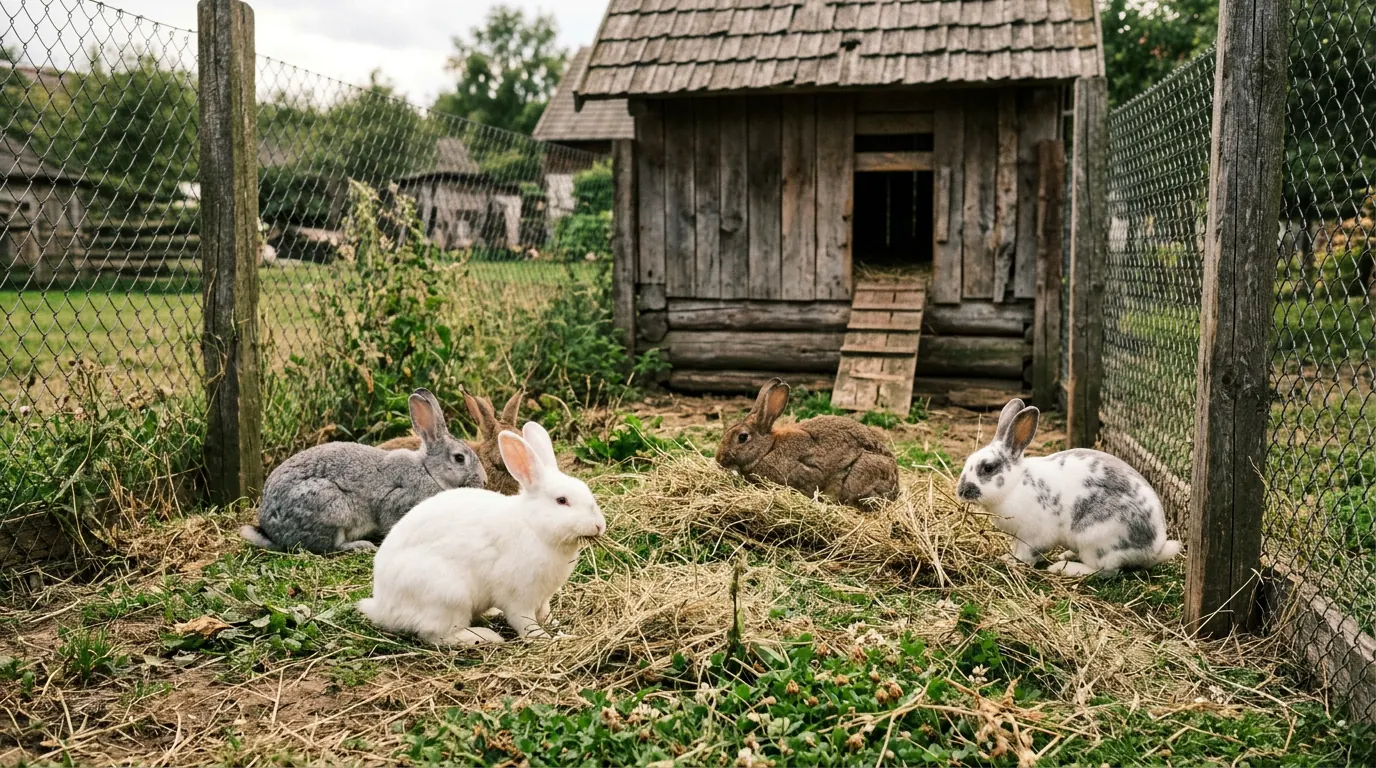
The Burgundy rabbit is a meat breed you recognize by its solid fawn (reddish-yellow) coat with no distinct markings. The name points to Burgundy in France. Keepers value it for its meaty build, and the fur is a bonus on top of the carcass. If you are comparing breeds for commercial production, set it beside the New Zealand rabbit and the Californian, which are used much more often in Poland.
Who this breed suits
The Burgundy suits a keeper who wants a meat rabbit with a distinctive look, not just the most typical commercial breed. Before you buy animals, find out where the breeding lines are in your area and whether the seller will show a pedigree. For a general overview see our article on meat rabbit breeds, and for how to start a whole farm read the guide to rabbit farming.
Origin and appearance
Where it comes from
According to breed descriptions, the Burgundy was developed in France, in the region it is named after. Breeds of this type were created for meat and good use of feed. In Polish studies of rabbit breeds from IZ PIB (the National Research Institute of Animal Production), meat breeds are divided by size and production purpose, and the Burgundy sits among the meat breeds. The Instytut Zootechniki PIB collects data on how many animals of the breed exist in Poland, so if you plan a foundation herd, ask there for current breeders.
How to recognize it
The defining trait is an even fawn coat. Do not look for white or dark patches, spots or a mask, as on marked breeds such as the Olbrzym srokacz (Giant Papillon-type spotted rabbit). Check three things: an even color on back and belly, a compact meaty build, and no conformation faults such as a narrow chest or weak hindquarters. Take exact weights and the color description from the current breed standard, not from classified ads.
Meat performance and profitability
What to expect from the breed
You judge a meat breed on three things: growth rate of young stock, dressing percentage and the fertility of the does. For the Burgundy we do not promise figures, because results depend on the line and on housing conditions. The whole sector, though, has learned a lot from French farm data. FAO reports that on the most efficient French farms between 1950 and 1990 the number of rabbits sold per doe rose from 20–25 to 65, and concentrate feed use per 1 kg of live weight fell from 6 to 3.3 kg. Those results came from specialized lines, not from pure breeds.
Pure breed or commercial hybrids
The same FAO table shows that the high results came from specialized hybrids. A pure breed such as the Burgundy rarely matches them for growth speed. It can, however, be good material for crossing and for selling breeding stock. Before you count profit, work out a budget based on your own feed costs and the prices your buyer pays. Our article on rabbit farming profitability helps with that. We do not give live-weight prices because they change every week, so ask the buyer and the producer cooperatives.
Feeding Burgundy rabbits
Protein and concentrate feed
You feed the Burgundy like other meat rabbits. The Oregon State University Extension guide says rabbit feeds contain 14 to 18% protein, and for meat breeds a feed with 16–18% protein gives the fastest growth. Give young stock and nursing does a complete feed from the upper end of the range. Adult bucks and does outside breeding need less. For details on rations, pellets and water see our article on feeding rabbits.
Hay and feed storage
Hay complements the ration, keeps the animals occupied and helps wear down their constantly growing teeth. Choose it to suit the needs of your rabbits. Store feed in a dry, cool place, because mold harms the animals, and keep it in tight, rodent-proof containers to protect it from pests that spread disease. Water must always be clean; we cover equipment in the text on drinkers and feeders for rabbits. W. Potępka also writes about feed choice and quality on small farms in Wiadomości Zootechniczne (2011).
Housing and breeding
Cages, claws and cleanliness
You keep Burgundy rabbits in cages or systems that meet welfare requirements. Choose cage and floor size to suit the animal; guidance for keepers is collected in the IZ PIB handbook on producing rabbit meat under higher welfare conditions. Check the claws from time to time. Oregon State University Extension advises trimming them to the pink part where you can see the blood vessels, and no deeper. Clean cages regularly, and treat access to clean feed and water as the foundation of herd health.
Mating, kindling and rearing
With a less common breed, watch pedigrees closely so you do not mate closely related animals. Separate young from one litter at the right age, because siblings try to mate within the litter, as Oregon State University Extension warns. Prepare the nest before kindling and plan weaning using the rules in our article on kindling and rearing young. Match the number of litters per year to the doe's condition, not to the calendar.
Herd health, biosecurity and paperwork
Diseases to watch for
The most dangerous rabbit diseases are rabbit hemorrhagic disease (RHD) and myxomatosis; vaccination protects against both, and we describe the schedule in our article on rabbit vaccination. For symptoms and reporting outbreaks, see the texts on RHD and myxomatosis. A vet decides every treatment, choosing the medicine and dose. You keep track of the withdrawal period, the time after giving a drug during which the animal must not go to slaughter.
Rules and sales
Requirements for registering, welfare and selling rabbits change, so check the legal position as of 23.11.2026 in our guide to rabbit farming and regulations, and on the websites of the Główny Inspektorat Weterynarii (Chief Veterinary Inspectorate) and the Internetowy System Aktów Prawnych (Poland's online legal acts database). We give no act numbers here, because they cover many topics and are easy to mix up. Before you buy animals, ask the county vet (powiatowy lekarz weterynarii) which documents you need for transport and sale.
Frequently asked questions
What is a Burgundy rabbit?add
It is a meat breed with a solid fawn coat that comes from France. It has a compact, meaty build. Check exact size and color in the breed standard.
Is the Burgundy rabbit a good meat breed?add
Yes, but pure breeds usually fall behind specialized hybrids on growth rate. Ask the breeder you buy from for the results of the Burgundy line.
How much protein should meat rabbit feed contain?add
According to Oregon State University Extension, rabbit feeds contain 14 to 18% protein. For meat breeds, 16–18% gives the fastest growth of young stock.
How do you tell a Burgundy from other fawn rabbits?add
Look for an even fawn color with no markings, a meaty build and the origin. A pedigree and the breed standard settle doubts better than a photo alone.
Where can I buy a Burgundy rabbit?add
Ask breeders in breeders' associations and at the Instytut Zootechniki PIB. The breed is less common, so ask for a pedigree and check health and vaccinations.
Sources & resources
- linkIZ PIB — Wiadomości Zootechniczne — Rabbit: economic importance, choice of breeds and lines for meat production (J. Składanowska-Baryza), WZ LV(2017)3:13–23
- linkFAO — The rabbit — husbandry, health and production (F. Lebas et al., FAO Animal Production and Health Series 21, revised edition)
- linkOregon State University Extension — Living on The Land: Raising Rabbits for Meat — Providing Basic Care (EC 1655)
- linkIZ PIB — Rabbit meat production technology under higher animal welfare standards. Handbook for breeders and members of meat rabbit producer cooperatives (ed. Z. Kryński)
Prepared by: DlaFerm Team based on data from the sources listed · Publisher: INSTA-TECH sp. z o.o.
Plan biosecurity and treatment records on your farm
DlaFerm.pl offers a <a href="/generator-planu-bioasekuracji">biosecurity plan generator</a> and a <a href="/ewidencja-leczenia-i-karencja-lekow">treatment and withdrawal period module</a> that help you set farm entry rules and keep track of withdrawal periods. Create a free farm account or get in touch.
Phone
+48 796 258 151