Rabbit kindling and raising kits: nest box and weaning
A doe carries her litter for 30–31 days, and kits are usually weaned at 34–38 days of age. We explain how to prepare the nest box, what to check after kindling, what to feed the doe and the kits, and when to wean.
verifiedFrom the team that has organised work on poultry farms for years.
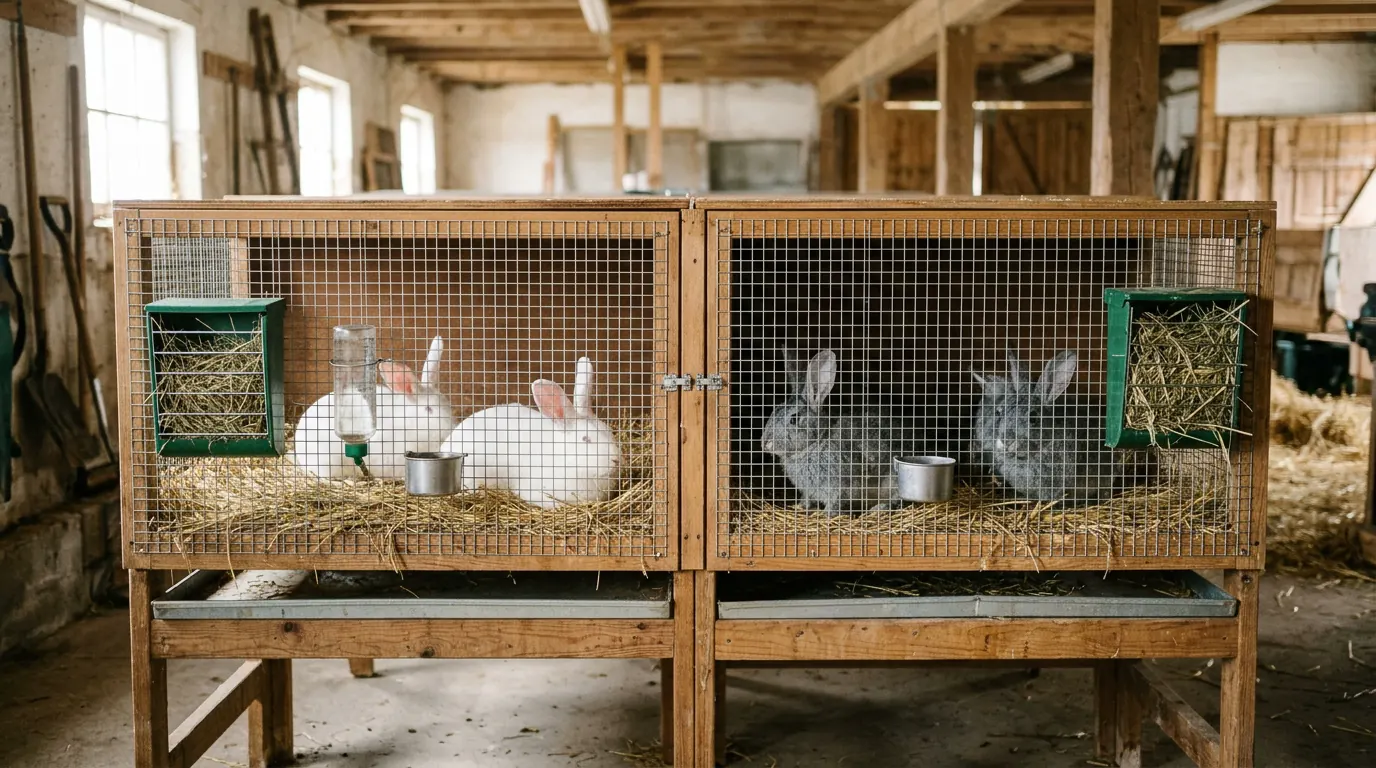
Kindling is the birth of a rabbit litter. Gestation lasts 30–31 days, and the doe usually gives birth at night or early in the morning. Three things matter most: a clean, dry nest box put in a few days before the due date, a look into the nest every day, and weaning the kits at the right time. According to FAO, modern farms wean at about 34–38 days. To work out the kindling date, see our guide to rabbit pregnancy.
Why kindling decides the farm's result
According to L.A. Gacek (Wiadomości Zootechniczne, 2010), the basis of success in rabbit meat production is selling 90–100 kg of rabbits per doe per year. At an average sale weight of 2.6 kg, that is more than 38 animals per doe. Such a result depends on the number of litters, on how many kits survive to weaning, and on doing the work on time. The author lists these daily tasks: feeding at fixed times, checking the nest boxes, mating does and checking who is pregnant. We describe the whole routine of a rabbit farm in the section on rabbit farming.
The nest box and preparing the doe
When to put in the nest box
Put the nest box in a few days before the expected kindling, in practice around day 28 of gestation. The box must be clean, disinfected and dry, and the bedding dry. Straw or shavings are used most often. The doe builds her nest from it and lines it with fur she pulls from her belly. If you put the box in too early, the doe may soil it with droppings and urine. In that case change the bedding, because a wet nest is the main cause of chilling and kit deaths.
Quiet and access to water
In the last days of gestation, keep noise down and keep strangers out of the building. The doe needs constant access to fresh water, because she drinks a lot after giving birth. Check that the drinker works; types and selection are covered in our article on drinkers and feeders for rabbits. Also keep the cage dry and free of drafts. Does raising a litter have higher nutritional needs than other groups, as we explain below.
What to do on the day of kindling and after
The first litter check
Look into the nest after kindling, when the doe has left the cage or is eating. Wash your hands and do not touch the kits without need. Remove dead kits and soiled bedding, and count the live ones. Kits are born blind and naked. They must be warm and gathered in a huddle under the doe's fur. If a kit lies scattered on the cold floor, put it back in the nest and cover it with fur. When a litter is very large, keepers sometimes move some kits to a doe with a similar kindling date, but this needs the does to accept them and clean hands.
Nursing by the doe
The doe usually nurses her kits once a day and only for a few minutes, so it is normal that she is not at the nest during the day. You judge whether the kits are fed by how they look: they have smooth, taut skin and lie quietly. Wrinkled, restless kits are hungry. Then check whether the doe has milk and whether she has mastitis (inflammation of the mammary gland). Report a sick doe or kits to the vet. Only the vet chooses the medicine and dose, and the withdrawal period must be recorded. Infectious diseases are described in our guide to pasteurellosis and snuffles.
What to feed the doe and the kits
The doe's needs while raising a litter
According to a table by W. Potępka (Wiadomości Zootechniczne, 2011), feed for a doe raising kits should contain 10.5 MJ/kg of metabolizable energy, 17.5–18% crude protein, 11.5% crude fiber and 4–5% crude fat. Her daily need for metabolizable energy is 2.38–3.68 MJ, depending on her weight. A nursing doe eats much more than a resting one, so do not restrict her feed. We cover the basics of rations in our article on feeding rabbits.
Feed for kits from week 3
Kits start eating solid feed from about week 3 of life, together with the doe. According to the same table, young rabbits aged 3–6 weeks need feed with 9.0 MJ/kg of energy, 15.5–16.0% crude protein and 15.5% crude fiber. More fiber than in the doe's feed helps protect the gut from diarrhea. Feed must be fresh, and feeders and drinkers must be within the kits' reach.
When and how to wean kits
Weaning age
FAO describes two schedules. With semi-intensive breeding, the doe is mated 10–20 days after kindling and the kits are weaned at four to five weeks. On European farms, since the late 1980s the standard has been to re-mate 10–11 days after kindling and wean at about 34–38 days. With this plan the interval between matings is 42 days, exactly six weeks, so tasks can be tied to days of the week. If feed quality is poor, FAO advises weaning at about day 40 and lengthening the break before the next mating a little.
Why not wait longer
According to FAO, weaning after six weeks gives no nutritional benefit. At that age the doe's milk covers at most 3–5% of the kits' daily feed intake, and the doe keeps wearing herself down. Wean the whole litter on one day. Move the kits to a separate cage or pen, leave them in familiar surroundings and do not change their feed suddenly. Watch the doe after weaning and note her mating date. Mating rules are in our guide to mating rabbits.
Raising young rabbits and welfare
Cages and groups
The guide from IZ PIB (Poland's National Research Institute of Animal Production) on a higher welfare standard describes cage modules with doe cages on one side and cages or pens for raising the young on the other. This layout makes it easier to move litters after weaning. When does are kept in groups, watch for injuries. According to an EFSA review (2020), in one study the share of does with injuries rose from 34% four days after the group was formed to 53% at weaning on day 36. Larger groups of does increase aggression.
Vaccination and biosecurity
Young rabbits are vaccinated as your vet recommends. Dates for RHD and myxomatosis are in our article on rabbit vaccination, and herd protection is in our guide to rabbit hemorrhagic disease (RHD). Do not bring outside animals into the rearing cages without quarantine, and disinfect cages between litters. We compare fast-growing breeds in our list of meat rabbit breeds.
Frequently asked questions
How long is a rabbit pregnant, and when do I put in the nest box?add
Gestation lasts 30–31 days. Put the nest box in a few days before the due date, in practice around day 28. Give clean, dry bedding that the doe can use to build her nest.
When should you wean baby rabbits?add
According to FAO, modern farms wean at 34–38 days, and with semi-intensive breeding at four to five weeks. With poorer feed you can wean at about day 40.
Does the doe need to stay with the nest all the time?add
No. The doe usually nurses once a day and only for a few minutes. It is normal that she is not at the nest during the day. You can tell the kits are fed by smooth, taut skin and calm behavior.
When should you re-mate a doe after kindling?add
According to FAO, with semi-intensive breeding the doe is mated 10–20 days after kindling. European farms use 10–11 days. The interval between matings is then 42 days.
What do you feed baby rabbits?add
From about week 3, kits eat solid feed together with the doe. According to Potępka's table, young rabbits aged 3–6 weeks need feed with 15.5–16.0% crude protein and 15.5% crude fiber. Water must always be available.
How do you measure rearing results on a rabbit farm?add
Gacek gives 90–100 kg of rabbits sold per doe per year as the basis. At an average weight of 2.6 kg, that is more than 38 animals. You can work out your results from the number of litters and the number of kits weaned.
Sources & resources
- linkFAO — The rabbit — husbandry, health and production (F. Lebas et al., FAO Animal Production and Health Series 21, revised ed.)
- linkIZ PIB — Wiadomości Zootechniczne — Rabbit meat production (L.A. Gacek), WZ XLVIII(2010)2–3:34–40
- linkIZ PIB — Wiadomości Zootechniczne — Problems and options in feeding rabbits on small farms (W. Potępka), WZ XLIX(2011)2:37–42
- linkEFSA AHAW Panel (copy in the CSIC repository) — Health and welfare of rabbits farmed in different production systems (EFSA Journal 18(1):5944)
- linkIZ PIB — Rabbit meat production technology under a higher animal welfare standard. Guide for breeders and members of meat rabbit producer cooperatives (ed. Z. Kryński)
Prepared by: DlaFerm Team based on data from the sources listed · Publisher: INSTA-TECH sp. z o.o.
Keep the daily farm rounds under control
The DlaFerm staff app helps you share daily tasks on the farm, while the QR entry log and the biosecurity plan generator keep your herd protected. Create a free farm account or get in touch.
Phone
+48 796 258 151