Embden goose: a large white meat goose
The Embden is a heavy breed with snow-white feathers and an orange bill and legs, kept mainly for meat and feathers. We cover how to recognize it, what to expect from laying and fattening, and how to keep it.
verifiedFrom the team that has organised work on poultry farms for years.
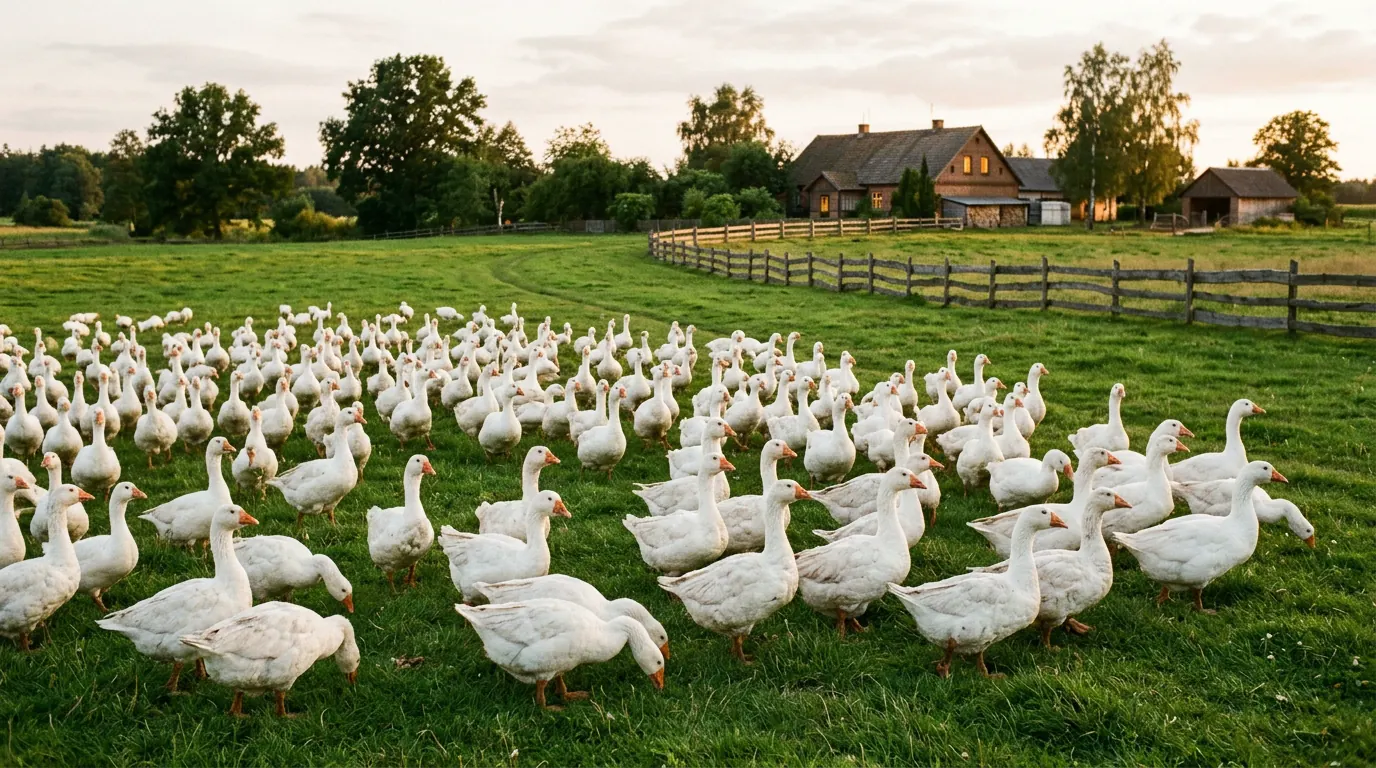
The Embden is a large white meat goose. You can spot it by its massive, deep body, orange bill and legs, and blue eyes. The breed comes from north-western Germany and has long been used for meat and feathers. Keepers value its fast growth and calm temperament. Its white skin and lack of dark feathers left after plucking make for a clean-looking carcass.
Where the Embden goose comes from
The breed is named after the city of Emden in Lower Saxony. Like every domestic goose, the Embden shares an ancestor with the wild goose, which we describe in the ancestor of the domestic goose. The breed was shaped by selecting for body weight and white plumage. In Poland you will see it less often than native lines, but it is crossed with other geese to raise the carcass weight of the offspring.
Who this breed suits
The Embden suits a keeper who wants to sell a heavy carcass, fat and feathers, or who needs a sire for crossing with lighter breeds. It is not a high-laying goose, so when you plan a flock, expect fewer eggs than from lighter breeds. We explain the general split of breeds by purpose in poultry production types.
How to recognize an Embden goose
Plumage, bill and legs
An adult Embden is completely white, with no saddle and no dark patches. The bill and legs are bright orange and the eyes are blue. This color sets it apart from the saddleback goose, covered in the saddleback goose: breed, looks and performance. Goslings hatch in yellowish-gray down, and the first white feathers appear as they grow. For your breeding flock, pick birds with an even, clean color of bill and legs.
Body build
The Embden has a long, broad body, a strong neck and a deep chest. It sits low, and the bird looks heavy and stable. The gander is clearly bigger than the goose. It is hard to tell the sex of young birds by eye, so use the tips in how to tell a goose from a gander when you select your flock. Before you buy breeding birds, look at them in full plumage.
Meat, fat and feathers
Fattening and carcass weight
According to the EFSA scientific opinion on the welfare of ducks, geese and quail, heavyweight geese such as the Embden, Pomeranian and Toulouse can weigh 7–10 kg (females 7–9 kg, males 8–10 kg). EFSA also says meat-type geese like the Embden have an exceptional growth rate and meat quality, but medium or weak reproductive traits. The exact weights and slaughter dates depend on the line, feeding and housing system. For breed-specific figures, check the breed standard or materials from Poland's Institute of Animal Science (Instytut Zootechniki PIB). Keepers usually record weight gain every week and use it to decide when to sell. Holding birds past the best slaughter point raises feed cost without a matching gain in muscle.
Fat and goose fat spread
Heavy geese lay down a lot of fat under the skin and in the body cavity. From the carcass you can render goose fat and goose spread (okrasa) and sell them as an extra product. We describe how to produce and sell them in goose fat and okrasa: production and sale. Before you sell food of animal origin, check with your county veterinary inspectorate (Inspekcja Weterynaryjna) what registration and direct-sale rules apply.
Feathers and down
White feathers and down are worth more than dark ones because they go into bedding without dyeing. The Embden is a handy breed in this respect, as it has no dark feathers. When you pluck, watch the condition of the skin and the molting period so you do not hurt the bird. We cover the technical details in plucking geese: feathers, plucker and rules.
Laying and incubation
How many eggs an Embden goose lays
Geese lay seasonally, mostly in spring as the days get longer. As a meat breed, the Embden usually cannot match light laying breeds such as the Chinese goose, covered in the Chinese goose: breed, laying and keeping. We describe the general rules and the factors that decide egg numbers in how many eggs a goose lays per season.
Incubation and hatching
Embden geese sit on eggs for several weeks. The incubation period of goose eggs is about a month. With big, heavy geese the risk of a shell cracking under the hen is higher, so give her dry, thick, clean bedding. Some keepers use an incubator or put the eggs under a smaller hen. We explain how to prepare the nest and what to watch during incubation in a goose sitting on eggs: how many days and how to help.
Feeding, housing and flock health
Feed and pasture
Geese make good use of grass and green forage, so in the growing season a large part of their diet can come from grazing. For fattening and during laying they need feed balanced for protein, energy and minerals. We collect feeding norms in feeding geese and ducks. Give constant access to clean water. A goose drinks a lot, and a dirty drinker makes disease more likely.
House and run
A goose does not need a heated house, but it needs dry litter that you top up regularly, shelter from rain and wind, and a safe place for the night. Heavy birds wear out litter faster and foul the run faster, so allow more space per bird. We list the housing requirements in housing requirements for geese.
Disease and hygiene
The most common problems in goose flocks are internal parasites and bacterial infections. We describe them in worms in geese and Salmonella in geese. Always treat on a vet's advice, because the vet chooses the medicine and dose. Remember the withdrawal period: you can sell carcasses and eggs from a treated flock only after it has ended.
The Embden next to other goose breeds
Embden, Kołudzka and native breeds
The white Kołudzka goose is a Polish dual-purpose breed, better suited to local conditions, as we explain in the white Kołudzka goose. We describe native conservation breeds such as the Pomeranian and Kartuzy in the Pomeranian and Kartuzy goose: Polish native breeds. The Embden does better when you want a big carcass, and worse when you count on high laying and the hardiness of a local breed.
Crossing and flock selection
Keepers often mate Embden ganders with geese of lighter breeds to get offspring with a higher weight and mothers that lay better. You will find an overview of other breeds in goose breeds: Landes, Kholmogory, Cuban, grain goose. Before you buy, check where the birds come from, ask for flock documents and make sure the seller is entered in the proper register.
Frequently asked questions
What does an Embden goose look like?add
It is a large white goose with a massive, deep body, an orange bill and legs, and blue eyes. The plumage is completely white, with no dark feathers. Ganders are clearly bigger than geese.
What are Embden geese raised for?add
Mainly for meat, fat and white feathers. The breed is also used for crossing with lighter geese to raise the weight of the offspring. As a layer it cannot match light breeds.
How heavy is an Embden goose?add
According to EFSA, heavyweight geese such as the Embden can weigh 7–10 kg: females 7–9 kg and males 8–10 kg. Actual weight depends on the line, feeding and housing.
How many eggs does an Embden goose lay?add
It depends on the line, the goose's age, feeding and day length. Meat breeds usually lay fewer eggs than light breeds, and the laying season falls in spring. For exact figures, check the breed standard or ask the breeder you buy from.
How is the Embden different from the Kołudzka goose?add
The Embden is a heavy breed from Germany, bred for carcass weight. The Kołudzka is a Polish dual-purpose breed, well adapted to local conditions. Both are white, but they differ in build, laying and use.
Where can I check breed data and the breed standard?add
Poland's Institute of Animal Science (Instytut Zootechniki PIB) keeps data on goose breeds. The Chief Veterinary Inspectorate (Główny Inspektorat Weterynarii) and your county veterinarian give information on registration and selling animal products. When you buy a flock, also ask the breeder for documents showing where the birds come from.
Sources & resources
- linkInstitute of Animal Science PIB — izoo.krakow.pl
- linkChief Veterinary Inspectorate — gov.pl/web/wetgiw
- linkMinistry of Agriculture and Rural Development — gov.pl/web/rolnictwo
- linkWelfare of ducks, geese and quail on farm (EFSA Journal 21(5):e07992)
Prepared by: DlaFerm Team based on data from the sources listed · Publisher: INSTA-TECH sp. z o.o.
Keep geese alongside other poultry? Start with flock records
The <a href="/program-do-ewidencji-kurnika">house records module</a> in DlaFerm lets you log flock numbers, losses and feed use for each group of birds in one place. Create a free farm account or get in touch, and we will show you how it works in practice.
Phone
+48 796 258 151