How many eggs does a goose lay in a season?
Geese lay seasonally, usually in spring. The number of eggs depends on breed, age, daylight and feed. There is no single figure for all geese, so it is best to compare laying within your own flock. Here is what to expect in a season and how to keep records.
verifiedFrom the team that has organised work on poultry farms for years.
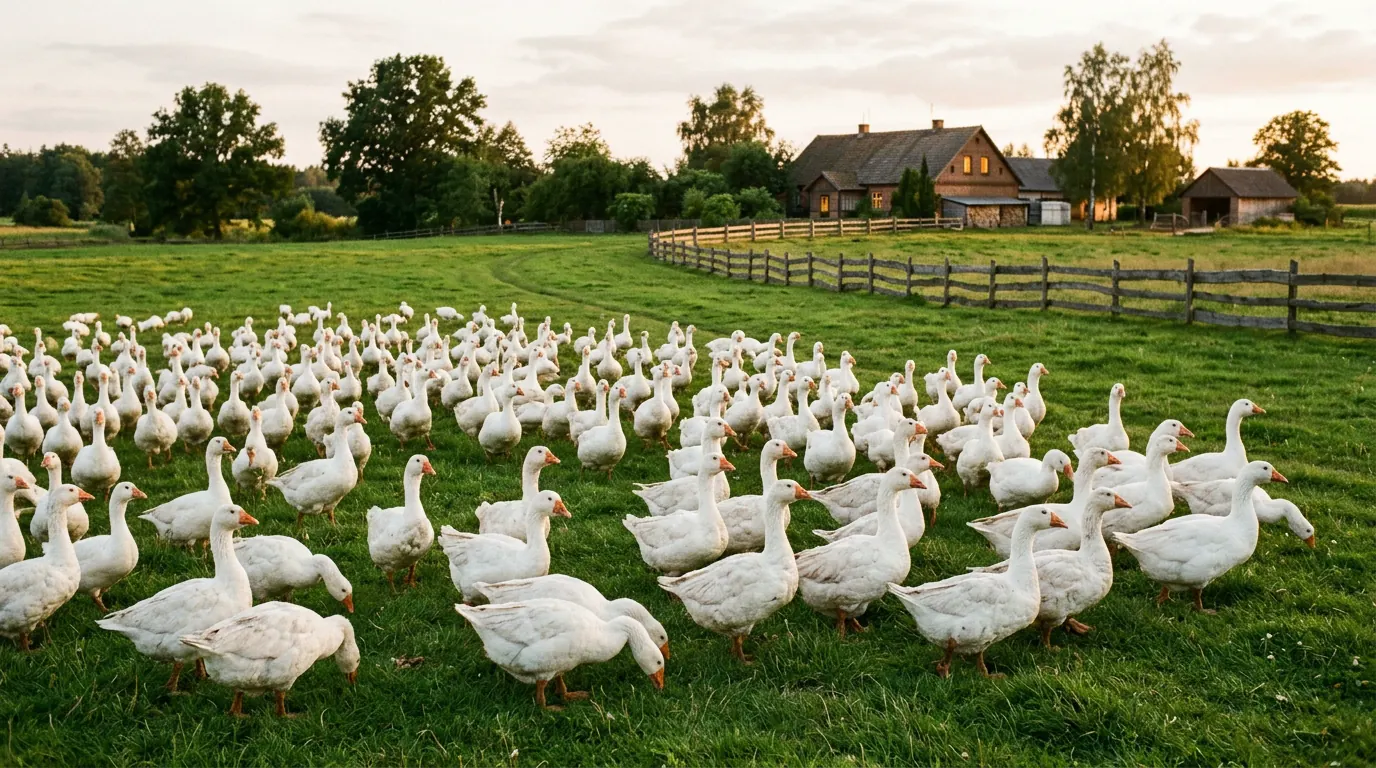
A goose does not lay all year. Laying is clearly seasonal: most eggs appear in spring, when days get longer and the birds are in good condition. How many eggs a goose lays in a season depends on the breed, the breeding line, the age of the bird and how you keep it. So instead of looking for one universal number, collect your own data over one season.
How the laying season starts
The first eggs usually appear once the birds reach sexual maturity and the days get longer. The DlaFerm.pl team advises not to expect full laying from young geese in their first year. Results usually settle in the following seasons, once the bird has developed well. Write down the date of the first egg in each flock. It lets you compare the start of the season between years and between groups of birds. If laying starts late, check feed and housing conditions first, and only then blame the breed.
Why numbers differ between farms
Two geese of the same breed can lay a different number of eggs, because many factors act at once: age, condition, day length, feed and stress. A mixed flock with too many ganders usually lowers egg fertility, not the number of eggs itself. So when you keep geese for hatching, judge laying by fertilization as well as egg count. When choosing a breed, read about the white Kołudzka goose, a common point of reference for keepers in Poland.
Eggs per season: what is realistic
Breed as a starting point
Breed sets the laying potential but does not guarantee the result. Egg-type geese differ from meat and ornamental breeds, and you should know what to expect before buying a flock. When choosing birds, ask the breeder for laying results from previous seasons. Check whether they give concrete data from flock records or only general statements. Data from your own farm is always worth more than forum opinions.
Day length and season
Geese lay seasonally, and the main signal to start is the lengthening day. You can use artificial light, but think it through so you do not force too early a season at the cost of the bird's condition. Record lighting hours in your logs, which makes it easier to compare years. Changes to these conditions always affect laying, so do not change them without a note.
Record eggs from day one
The simplest way to learn your flock's laying is to note the number of eggs collected every day, split by pen or group. Record the date, the egg count and any remarks, such as a weather change, a feed change or illness. After a few weeks you will see a clear laying curve, and after the season it is easy to tell which group did better. Without records, every assessment rests on memory, and memory can be unreliable.
A goose on the eggs: when and how long
Signs of a broody goose
A goose that starts sitting is usually restless, defends the nest and rarely leaves it for long. She lays no new eggs during this time, so a drop in collection can signal broodiness. Record when a bird starts sitting, as it helps you plan hatching and assess laying. If a goose leaves the nest, it is hard to return to the earlier rhythm, so prepare the place well. More in our guide to goose incubation.
Incubation time
Goose eggs usually incubate for about 28–30 days, and the exact time depends on breed and conditions. A sitting bird needs quiet, water and feed close to the nest. Check the sitting start date in your records to predict the hatch date. If sitting lasts longer than expected, talk to a vet.
When to separate the bird
If you want as many eggs as possible, take the goose off the nest a few days after she starts sitting and change her surroundings to break the habit. Methods should be gentle, without stress for the bird. Do not use abrupt measures, as they lower condition and laying in the following weeks. Record each such step so you can judge its effect next season.
What affects goose laying
Feeding
In the laying season, feed should contain enough protein and calcium so the bird can form eggshells. We describe feeding standards in a separate guide on feeding geese and ducks, and you should set ration details with a feed adviser. Make sure birds have access to greens and water, since both affect flock condition. Change feed gradually so you do not cause a drop in egg collection.
Housing and conditions
Geese need a dry, airy house without drafts and a quiet place to nest. The requirements for a goose house depend on the number of birds and the way you keep them. Damp and dirty litter lower flock condition and can limit laying. Check litter and nests regularly: it is a cheap way to better results.
Flock health
Illness usually shows first as a drop in egg collection. Record every drop with its date and symptoms, since this helps you decide when to call a vet. A vet always chooses medicines and doses, and you must observe withdrawal periods when giving them. The DlaFerm.pl team recommends keeping a separate treatment log so you do not mix up dates.
How to keep laying records for a flock
What to record daily
Every day, record the number of eggs collected, the group or pen, the weather and any feed changes. If the flock has ganders, note their number relative to females. Data from a few weeks helps you spot deviations before they become a serious problem. Note bird losses too, as they affect laying per female.
Comparing seasons
After the season, put the data from different years side by side: first egg date, laying peak, number of days without eggs and the total. The comparison shows whether changes in feed, housing or flock improved results. Write conclusions down with the data, because after a year it is hard to recall why something worked. This lets you decide on replacing birds based on your own numbers.
Frequently asked questions
How many eggs does a goose lay in a season?add
The number depends on breed, age of the bird, day length, feed and housing. There is no single figure for all geese, so the best way to learn your flock's laying is to note egg collection every day through the whole season.
How long does a goose sit on eggs?add
Goose eggs usually incubate for about 28–30 days. A goose sitting on eggs stops laying, so a drop in collection is often the first sign of broodiness. Record the start date to predict the hatch date.
When do geese start laying eggs?add
Laying usually starts after sexual maturity, and its intensity depends on day length. Geese lay mainly in spring. Young birds usually do not reach full laying in their first season.
Does a goose lay eggs without a gander?add
A goose can lay eggs without a gander, but the eggs will not be fertilized and no goslings will hatch. A male matters only if you want a hatch. If you keep geese for eggs only, you do not need a gander.
What should I do if my goose stopped laying?add
First check whether the bird is sitting on a nest and whether conditions changed: feed, water, litter or noise. If the drop continues and the bird looks sick, talk to a vet. Record your observations to work out the cause.
How can I check my flock's laying rate?add
The simplest way is a daily record of egg collection by group, comparing results between weeks and seasons. The records show whether changes in feed or housing made a difference.
Sources & resources
- linkNational Research Institute of Animal Production (Instytut Zootechniki PIB) — izoo.krakow.pl
- linkChief Veterinary Inspectorate (Główny Inspektorat Weterynarii) — gov.pl/web/wetgiw
- linkMinistry of Agriculture and Rural Development — gov.pl/web/rolnictwo
- linkEFSA — efsa.europa.eu
Prepared by: DlaFerm Team based on data from the sources listed · Publisher: INSTA-TECH sp. z o.o.
Keeping a goose flock and want to track laying?
The <a href="/program-do-zarzadzania-ferma-drobiu">poultry farm management software</a> in DlaFerm.pl lets you record egg collection, broody birds and treatment in one place. Create a free farm account or get in touch, and we will show you how it works in practice.
Phone
+48 796 258 151