How to Tell a Goose from a Gander
A gander is usually bigger and heavier than a goose of the same breed, with a thicker neck and a broader head. In young birds, judging by eye is often unreliable, and only an experienced handler or a vet can confirm sex with certainty. We describe the physical signs, voice and behavior, and when you can trust your call.
verifiedFrom the team that has organised work on poultry farms for years.
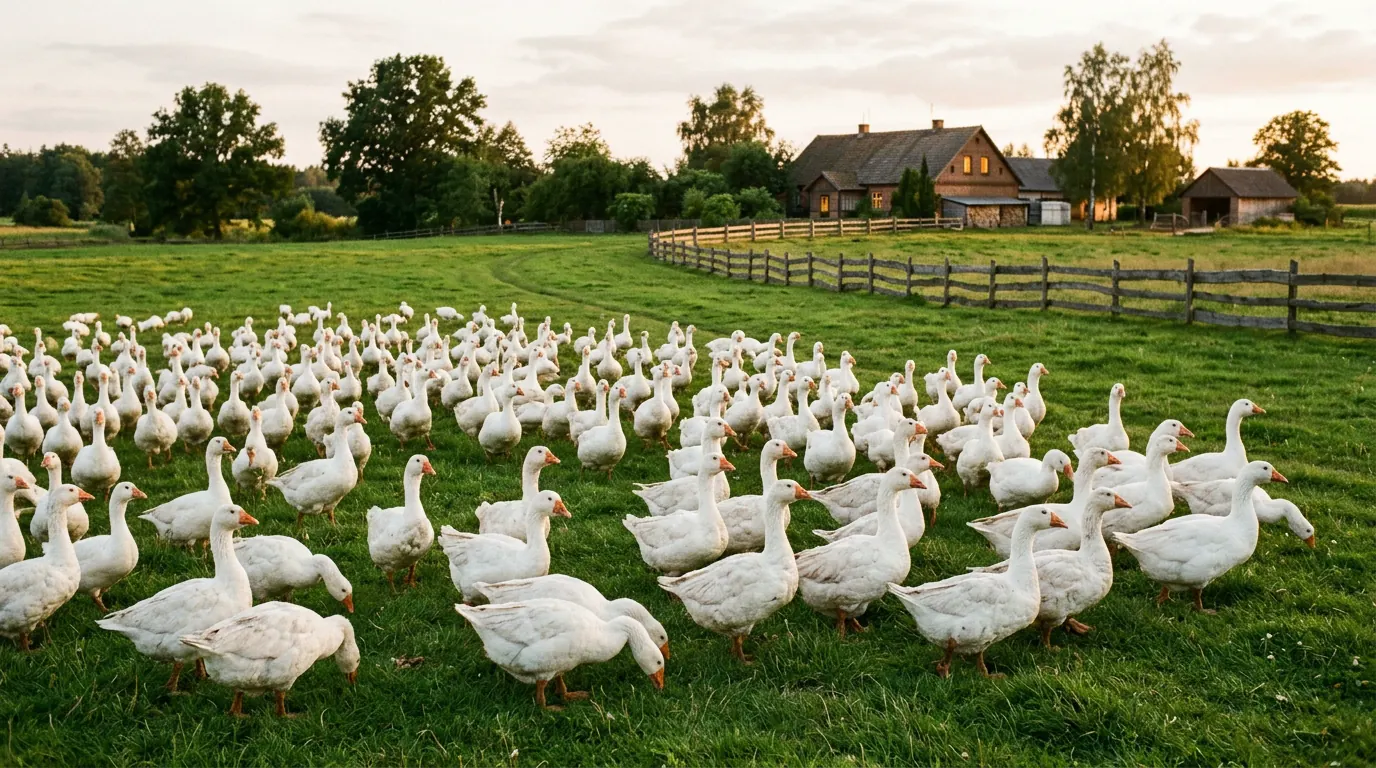
You can tell a gander most reliably by body build and voice, but in young birds a judgment by eye is often wrong. A gander is usually clearly bigger and heavier than a goose of the same breed, with a stronger, more upright neck and a broader head. A goose is smaller, and her head looks softer. These differences are relative, though, and depend on breed, feeding and the condition of the bird. If you run a breeding flock, confirm sex properly instead of guessing. We cover other farm birds in our guide to sexual dimorphism in birds.
Why it matters on the farm
Sex decides how many birds you need in a breeding flock. In practice, breeding flocks are built with more females than males, and the ratio depends on breed and the way you breed. A gander fertilizes the eggs, but too many males in one flock lead to aggression and injuries to the females, especially in the mating season. A wrong call can cost you not only eggs but also the health of your birds. In fattening for meat, sex matters less, but mixed groups grow unevenly, so it still helps to know who is who.
Body shape and head
Weight and size
A gander is usually bigger and heavier than a goose of the same breed and age. The gap becomes clear only in adult birds, and in young birds from one hatch it can be small. So compare birds in similar condition from the same batch, not single birds from different flocks. When you weigh, remember feeding: an overfed or underfed bird can skew the picture. Weight alone is not enough for a sure decision, so combine it with other signs.
Neck and head
In a gander the neck is usually thicker, more muscular and held more upright. The head tends to be broader, with a more pronounced bill and knob. A goose has a slimmer neck and a smaller-looking head. You see these differences best when the birds stand side by side. Judge them calmly, because a stressed bird tenses its neck and its look changes.
Voice, behavior and posture
Voice
A gander usually makes a lower, rougher sound. A goose, especially during laying and brooding, can honk and hiss loudly. Voice is no rule, though: some males call very loudly and some females are quiet. Treat it as a hint next to body build, not as the only proof of sex.
Behavior in the flock
A gander more often guards the flock, stands alert and reacts to strangers. In the mating season he can be aggressive toward people and other males. A goose in the breeding season is more attached to her nest and leaves it less often. These observations are useful, but behavior depends on age, breed and housing, so do not base your whole judgment on it.
How to check sex step by step
Step 1: watch the whole flock
Start by comparing birds from the same group at a calm moment, without chasing them. Stand to the side to see the outline. Pair the birds up by size and head shape. This first sort picks out likely ganders and geese, but it gives no certainty. Write the results in your records so you can return to them after a few weeks.
Step 2: judge by age
After a few months the first size differences appear in geese, but a reliable visual call usually comes only in adult birds. Young geese before sexual maturity can look the same. If you need to know sex earlier, for example when buying goslings, ask the hatchery how it verifies sex and what it guarantees. We cover ordering goslings in our list of poultry hatcheries in Poland.
Step 3: examination by a vet
The most reliable method is cloacal examination, done by an experienced handler or a veterinarian. It takes skill, and wrong handling can injure the bird. Do not try it yourself without training. If you want to be sure your flock is put together correctly, talk to the vet who looks after your farm.
Most common mistakes when sexing geese
Comparing different breeds
Goose breeds differ in size and build, so a sign that points to a male in one breed can look different in another. Identify the breed first and compare only birds of the same breed. You will find the traits of different breeds in our overview of goose breeds, and an example of one breed in the description of the White Kołuda goose.
Judging from one photo or a running bird
A photo is often taken from a bad angle, and a running bird looks different from a standing one. Judging from a single frame or from a distance leads to errors. Look at the bird from both sides, calmly. If you doubt, put off the decision and check again in a few days, when the bird has settled and shows its outline better.
Writing it down in your records
A sex assigned by eye often ends up in the paperwork as certain. Record it with a note on how sure you are, and correct the entry after verification. That way flock accounts and breeding plans rest on data, not on memory. You keep flock records in DlaFerm, in one place with your other data.
What changes once you know the sex
Feeding
Ganders and geese in the breeding period can have different feeding needs. Nutrition studies give standards for each age and production group. Follow the recommendations for the birds in your group, for example the feeding standards for geese and ducks. Do not change rations without talking to a nutrition adviser.
House and run
A breeding flock needs space for water, nests and quiet walkways. Several ganders in a small pen mean more tension, especially in the breeding season. Plan the space so the male has a separate zone and the females can hide from his advances. We cover building requirements in our guide to housing for geese.
Frequently asked questions
How do you tell a goose from a gander?add
A gander is usually bigger and heavier, with a thicker, more upright neck and a broader head. A goose is smaller with a slimmer neck. Certainty comes only from an examination by an experienced handler or a vet.
Can you sex young geese by looks?add
Usually not reliably. Size differences appear gradually, and before sexual maturity the birds can look the same. A visual call becomes reliable in adult birds; earlier, it is better to plan verification by a vet.
How can you tell a gander by his voice?add
A gander usually makes a lower, rougher sound, but voice is no rule. Some females are loud and some males are quiet. Treat voice as an extra hint, not as the only proof.
How many ganders should a breeding flock have?add
The number of males depends on breed, age of the birds and the way you breed. Too many males in one flock raise aggression and the risk of injury to females. Set the ratio with an adviser or from the breeding recommendations for your breed.
Can I vent sex a goose myself?add
We do not recommend it without training. The method takes skill, and wrong handling can injure the bird. It is best to have a vet or an experienced farm worker do it.
Does the sex of geese affect flock health?add
Indirectly, yes. Male aggression in the mating season leads to injuries in females, and a poor ratio makes breeding harder. Write health observations in your records and report worrying signs to your vet.
Sources & resources
- linkNational Research Institute of Animal Production (Instytut Zootechniki PIB) — izoo.krakow.pl
- linkChief Veterinary Inspectorate (Główny Inspektorat Weterynarii) — gov.pl/web/wetgiw
- linkMinistry of Agriculture and Rural Development — gov.pl/web/rolnictwo
Prepared by: DlaFerm Team based on data from the sources listed · Publisher: INSTA-TECH sp. z o.o.
Do you keep a breeding flock of geese or ducks?
The <a href="/program-do-zarzadzania-ferma-drobiu">farm management program</a> lets you record the sex and age of your birds, watch flock ratios and log the results of verification. Create a free farm account on DlaFerm.pl or get in touch, and we will show you how it works in practice.
Phone
+48 796 258 151